




Rare seahorse discovered in London
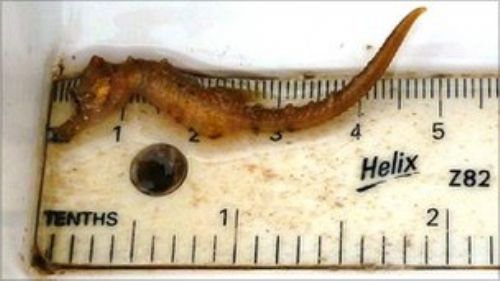
The Environment Agency has found evidence of a colony of seahorses in the Thames, during a routine fisheries survey at Greenwich.
The delicate species, more commonly found in the waters of the Mediterranean and Canary Islands, have often been visitors to the coastal waters around the British Isles, but have never been found so far inland. These recent sightings suggest that there may be permanent populations in the UK, and that seahorses may now be breeding in the Thames.
The short-snouted seahorse, hippocampus hippocampus, can grow up to around 15cm and are one of the few animals that mate for life after elaborate courtship rituals.
The species adds to the growing numbers of wildlife returning to the Thames, including over 125 species of fish such as eels, pike, sea bass, flounder and roach.
Emma Barton, Environment Agency Fisheries Officer said: "The seahorse we found was only 5cm long, a juvenile, suggesting that they may be breeding nearby. This is a really good sign that seahorse populations are not only increasing, but spreading to locations where they haven’t been seen before. We routinely survey the Thames at this time of year and this is a really exciting discovery.
"We hope that further improvements to water quality and habitat in the Thames will encourage more of these rare species to take up residence in the river."
The ongoing recovery of the River Thames was internationally recognised last year when it was awarded the International Theiss Riverprize which celebrates outstanding achievement in river management and restoration.
London’s iconic river has undergone a dramatic transformation - from a biologically dead river in the 1950’s to today’s thriving waterway; teeming with fish, and with returning salmon, otter and sea trout populations.
Since April 2005 over 500 habitat enhancement projects have been completed and nearly 90 km of river has been restored or enhanced.
Tighter regulation of polluting industries and the Environment Agency’s work with farmers, businesses and water companies to reduce pollution and improve water quality, have all helped to make the Thames a living river once again.




