




Slug burden puts successful establishment at risk
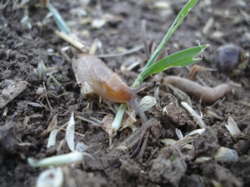
A successful slug control strategy and careful early season management will be as important as getting the cultivations right if autumn 2006 plantings are to succeed.
"The summer drought seems to have had little impact on populations, and recent wet weather means many soils are now heavily populated with slugs. This is placing the new crops, and your profit margin, at risk. Oilseed rape in particular is very susceptible to poor establishment which is costly, and to slug damage which can be devastating," points out Jeff Testut from De Sangosse
"Pellet choice is a key part of an effective slug control strategy, and crucial for successful establishment," explains Dr Testut. "Unlike other pests, slugs have to be enticed to a bait – one that they'll prefer to eat rather than your crop. A good distribution is also essential, so that you know there is an even and consistent spread of baiting points."
Growers should use a wet process pellet made from fine-milled durum wheat, he advises, to ensure it lasts in the testing, wet conditions in which slugs thrive. "You usually get just one chance to protect the crop through the critical early stages. On the De Sangosse stand we're aiming to show why slugs are more effectively controlled by wet process pasta-based pellets, such as Metarex, Regel, Keel Over and ESP. These stay whole in testing field conditions, rather than poor quality mini-pellets which can just turn to mush," says Dr Testut.
"Autumn is the time to get on top of grass weeds, and a suitable adjuvant oil must often be added to your herbicide mix to ensure a good result," says De Sangosse commercial director Kim Christo.
Methylated oils such as Drill, Phase-II and mineral oil Cropspray 11E have been comprehensively tested and are proven to work with autumn-applied herbicides to increase activity and cost-effectiveness. "All are different, with specific strengths and weaknesses, so choosing the appropriate adjuvant for your herbicide programme can be a tricky task."
Crops facing less-than-ideal conditions may need the extra boost provided by root development products. "Poor seedbeds, slug and pigeon damage or late drilling are just some of the factors that lead to backward crops and low yields," says Mr Christo. Route, applied alone or tank-mixed with the post-emergence autumn herbicide, stimulates early root development, nutrient uptake, and reduces susceptibility to frost heave. This helps get the crop established and keeps it in good condition throughout the winter period.




