




The effect of selenium, Vitamin E and zinc on udder health - A review by Dr Colin Shorrock
"In terms of udder health it is widely believed that vitamin E and selenium are by far the most important trace nutrients with zinc playing a supporting role with its involvement in tissue repair.
Vitamin E and selenium exert their effect by their influence on the cow's immune system. When immune function is operating to it's optimum level this enables the cow to deal efficiently with invading bacteria.
To kill invading bacteria the white blood cells release substances called Reactive Oxygen Species (ROS) but unfortunately these ROS can also damage cells. Vitamin E and selenium remove ROS from the cells thus preventing damage. Vitamin E acts on the cell wall, while selenium acts inside the cell wall as part of the enzyme GSH-PX.
So, in summary, Vitamin E and selenium enhance not only the ability of white blood cells to move to the infected udder but also increases their ability to kill bacteria.
Zinc plays a lesser role in improving the white blood cells ability to kill bacteria but plays a more important role in repairing udder tissue.
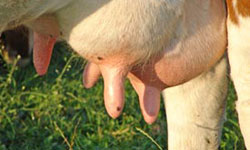
Zinc is important in the formation of keratin, the protective lining of the teat canal and in the formation of the keratin "plug" in the teat orifice. As much as 50% of this keratin layer is removed, along with the "plug" at each milking and has to be replaced. If the cow is slow in replacing the keratin she becomes more susceptible to mastitis type infections.
Additionally, the slower the formation of the keratin "plug" in the dry cow the more chance there is of infection in the dry period.
Additional zinc can be provided in the diet in a variety of ways from a variety of sources. The source more often recognised as having the highest bioavailability and the biggest effect on increasing udder health, and reducing SCC's, is protected zinc.
Over many years research has shown that by reducing SCC's milk yields will increase."




