




Weather and increasing land values force farmers 'to rethink strategies'
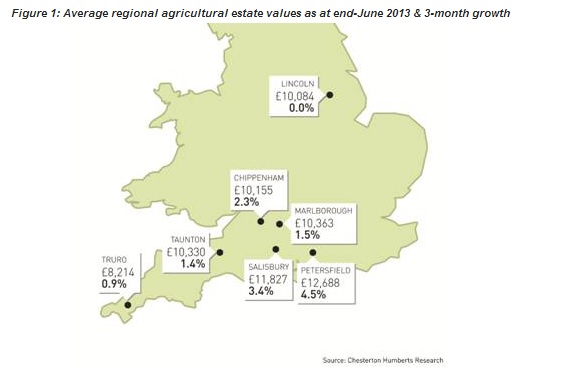
The increase in values of agricultural estates along with the volatile weather that has affected the productivity of arable farmland over the past few years is encouraging farmers to rethink business strategies, or even sell up in some instances, according to the latest agricultural and rural land survey from Chesterton Humberts.
The index recorded growth in average per acre values of 2.1% in the second quarter of this year to stand at £10,523 per acre at the end of June. However, this has coincided with falling agricultural productivity caused by higher than the average rainfall and total income from farming (TIFF) falling 14%.
With income down and costs rising, the agricultural sector continues to be highly reliant on the supportive attitude of banks. However, Chesterton Humberts’ latest CHARLES survey highlights that some lenders are currently reviewing the quality of their loan books, particularly with regard to debt servicing, which could have a significant impact on many small farms. Moreover, seasonally adjusted data from the Bank of England suggests net lending to the sector has been trending downwards since the beginning of the year.
David Hebditch, Head of Rural at Chesterton Humberts says: “Farm operators have had a tough ride over the past couple of years and pressure on balance sheets has been intensifying. There is now added pressure as some banks are looking more closely at farmers’ ability to service debt, although the underlying asset value is seldom an issue. This could result in an increase in farmers selling up while land values remain high, which in turn could create opportunities for investors who have tried unsuccessfully to access the market.
“All of our rural departments experienced growth, although there was of course regional variance. The strongest aggregate rise in estate values was recorded in Petersfield (+4.5%) and Salisbury (+3.4%), which both experienced an increase in the amount of land marketed (Figure 1). This suggests that growth in values is strongly linked to availability at the higher quality end of the market, in particular for commercial blocks and bare land. We maintain our forecast growth of 5% per annum for estates over the next five years.”




