




What’s in an egg? (and what shouldn’t be)
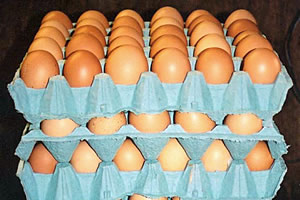
As most producers are only too well aware, it can be difficult to consistently produce high quality eggs as there are so many different factors which can influence egg quality, both internal and external. Shell quality is extremely important. Not only does the colour and general appearance of the shell play an important part in the appeal of the egg to the consumer but good shell strength is vital as an egg with a strong shell is less likely to crack or break. Shell strength and thickness is very much influenced by the age of the bird and nutrition. The bird must have adequate calcium in the diet.
Shell colour can be influenced by disease, particularly viral infection which can damage the lining of the oviduct. Infectious Bronchitis, Newcastle disease and Avian pneumovirus (TRT) may cause loss of shell colour and/or mis-shapen eggs. Part of the reason for the mis-shapes is that the damage to the oviduct results in more "watery" albumen which does not provide a good surface for calcium carbonate deposition to form the egg shell.
In recent years, there have been some cases of loss of shell colour apparently associated with flocks being outside in bright summer weather. The reasons for this are not fully understood. Parasitic problems, such as heavy red mite infestation or a heavy worm burden, particularly with capillaria worms, can result in pale shells. The coccidiostat drug, Nicarbazin, if present in layer feed can interfere with pigmentation of egg shells.
Egg size relates back to the age and body size of the layer. Generally the older the bird, the larger the egg. Egg size may decrease in summer months if there is a decrease in feed consumption. Low sodium levels in the diet may also result in a reduction in egg size.
Yolk colour
This is a topic which has been much in the news lately. Yolk colour has very little bearing on the nutritive quality of the egg but public demand in the past has been for a very "golden yellow" yolk. Yolk colour is formed by carotenoid pigment, mainly Xanthophyll. These pigments occur in green plant material and maize. Yolk colour can be influenced by the addition of synthetic pigments to the feed. The yolk colour from free range birds tends to be more variable than that from birds which are housed all the time due to a variable intake of different types of green plant. A very high intake of green plant material may give a slight khaki colour to the yolk and possibly a greenish-yellow tinge to the albumen. Various weeds such as Shepherd's purse have been said to give a slight olive colour to yolks. Grass silage or acorns may also have this effect. Mottled yolks may be the result of viral infection such as Infectious Bronchitis. The coccidiostat, Nicarbazin, in layer feed can also cause a mottled appearance to yolk.
White (Albumen)
The consumer wants an egg with a high proportion of firm albumen so the egg has a good appearance when broken out. As everyone knows from watching Delia Smith and her series on eggs, a good quality egg should have a yolk firmly held by a good thick surround of white. As the egg ages and becomes more stale, the white loses its firm consistency and both the yolk and white appear flatter with the white more watery. This deterioration is more marked where eggs are stored at high temperatures. Infectious diseases such as Infectious Bronchitis may reduce albumen quality. Heavy parasitic burdens particularly with worms may result in poor quality albumen.
Blood and meat spots
Blood spots are thought to be caused by intrafollicular bleeding, ie haemorrhage occurring at the time the ovarian follicle has ruptured and the yolk is released into the oviduct. Blood spots could also result from the rupture of tiny blood vessels in the oviduct. Blood spots are more common in early lay and may decrease as the birds age. Free range birds are thought to have less of a tendency to blood spots. Diets low in vitamin A are thought to increase the incidence of blood and meat spots. Some workers have suggested that rations containing alfalfa may reduce the incidence of blood and meat spots.
Meat spots are thought to be due to pigmented or non-pigmented pieces of albumen (white) which are incorporated into the egg. The pigment involved is Ooporphyrin. These occur as bits of albumen are left on the lining of the oviduct after the passage of an egg. These move into the shell gland where they are pigmented and then they move back up the oviduct to be incorporated into the next egg which is formed. Occasionally, meat spots are made up of pigmented epithelial cells from the lining of the oviduct. The problem is more noticable in birds laying brown eggs as there is more pigment present. In white egg layers, there is less pigmentation so meat spots, if present, are less obvious. Unlike blood spots, meat spots tend to show a random incidence throughout lay with no age related effect although birds which have a tendency to lay eggs with meat spots are likely to continue to do this through lay. Blood spots and meat spots have been reported as being found in eggs over many years but, for some reason, the incidence seems to have increased over the last 10-15 years, the reasons for this are not known.
Other factors which are thought to increase the incidence of blood and meat spots include genetic factors, extremes of temperature, particularly sudden temperature changes or a very cold environment, continuous light, low vitamin K levels, stress during ovulation or following infections such as IB.
Taints, odours and flavours
Egg shells are porous so an egg can easily absorb odours or flavours from its surroundings. For this reason, eggs should be kept away from anything which has a strong smell, for example, creosote, paint or tar. In birds which are free range, certain plaints, for example rape and garlic, may leave an unpleasant taint to the eggs. The use of high levels of fish meal in the diet can lead to a fishy taste or odour in eggs.
Bacterial contamination
The egg is designed by nature to protect the contents from bacterial invasion. The shell and shell membranes provide a partial physical barrier and possess some degree of bacteriocidal action as does the white. However, the shell of an egg is porous and, as the egg cools, bacteria and all moulds can be drawn through the pores into the eggs. This is more likely to happen when the shell is damaged by cracks. Depending on the bacteria which penetrate the egg and the level of infection, egg contents may break down and rot.
Hopefully you will see few, if any, of the problems listed above. If there are problems with egg quality, it is important to investigate quickly to try and resolve the problems. One final revolting fact – it is not that uncommon to find a roundworm present in the occasional egg from flocks where there is heavy worm infestation. The finding of a worm in one's breakfast egg is not a pleasant experience so it is important to maintain a flock free of parasites by regular monitoring and worming treatment as necessary.




