




World Cup beef campaign urges shoppers to back NI farmers
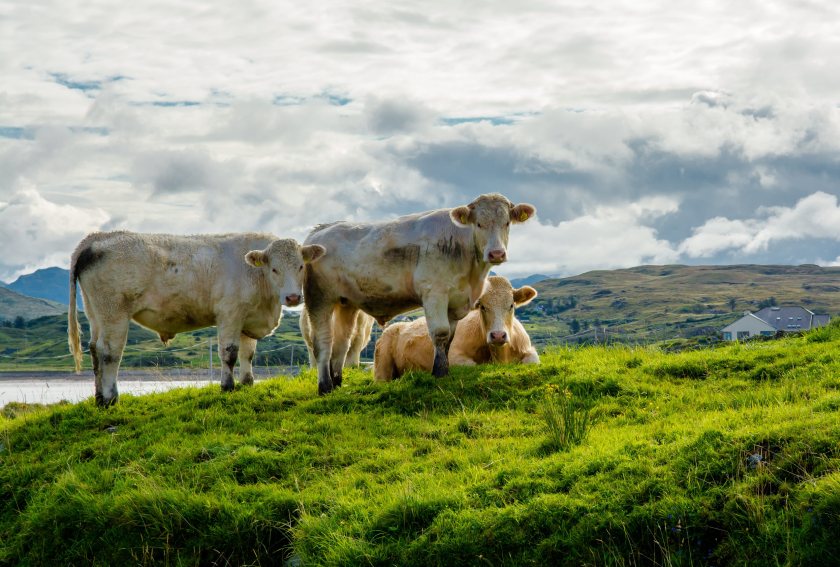
Northern Ireland beef farmers are hoping World Cup barbecues will help put local produce back in the spotlight as the sector faces rising costs, weaker prices and growing competition from imports.
The Ulster Farmers’ Union has launched its “Where Is Your Beef From?” campaign to encourage consumers to check the origin of the beef they buy during the FIFA World Cup.
The union said the tournament, which will see families and friends gather for six weeks of football, was a timely opportunity to highlight the quality, traceability and production standards of Northern Irish beef.
Beef is expected to be a popular choice at barbecues, pubs, restaurants and takeaways throughout the competition.
The UFU said consumers who want to support local farmers should ask one simple question: “Where is your beef from?”
The campaign comes as local beef producers face growing pressure from falling prices, higher production costs and increasing volumes of imported beef entering the UK market.
UFU Deputy President Clement Lynch said Northern Ireland’s beef farmers produced a high-quality product backed by strong standards.
“Northern Ireland beef farmers produce a world-class product to some of the highest standards anywhere in the world,” he said.
“Our Farmers take great pride in the quality of their livestock, their commitment to animal welfare and the traceability that builds consumer confidence.”
Mr Lynch said consumers were increasingly interested in the origins of their food and should be given clearer information when buying beef.
“Consumers increasingly want to know more about the food they eat and where it comes from,” he said.
“We believe they should have access to clear information that allows them to make informed choices when purchasing beef, in a supermarket, restaurant, takeaway or other food service.”
The UFU said the campaign was not about opposing international trade, but about ensuring fairness and transparency for farmers and consumers.
“This is about transparency and informed choices,” the union said.
“If consumers want to support local farmers and local food production, they need the information to make that choice and should be able to clearly identify where the beef originates from.”
As part of the campaign, the UFU is writing to Dame Angela Eagle MP, Minister of State for Food Security and Rural Affairs, and DAERA Minister Andrew Muir MLA to seek urgent engagement on the pressures facing the beef sector.
The union is calling for mandatory country-of-origin labelling across food service, hospitality, catering and processed beef products.
It also wants greater transparency on the origin and production standards of imported beef, alongside a Northern Ireland-specific assessment of how trade agreements and rising imports are affecting local producers.
The UFU is also seeking stronger equivalence measures to ensure imported beef is not produced to standards significantly different from those required of UK farmers.
It said public procurement policies should prioritise beef produced to UK-equivalent standards, and that government must commit to ensuring domestic producers are not disadvantaged by trade policy decisions.
Mr Lynch said the importance of domestic food production had been underlined in recent years.
“Food security must not be taken for granted,” he said.
“Recent years have shown how important it is to maintain strong domestic food production and resilient supply chains.”
He said major sporting events often brought people together around food, making the World Cup an important moment to raise awareness of where beef comes from.
“Whether it is a barbecue with friends, a steak dinner or a burger while watching a match, we want consumers to pause and ask one simple question where is your beef from?
“And we don’t mean the retailer, we mean the country of origin and therefore the standards its produced to and by doing this, they can support their local farmer this World Cup.”
The UFU said its message to consumers was simple: whether buying a burger, steak or barbecue pack during the tournament, ask where the beef was produced — not just where it was sold.




