




Batters warns farming has two years to fix broken economic model
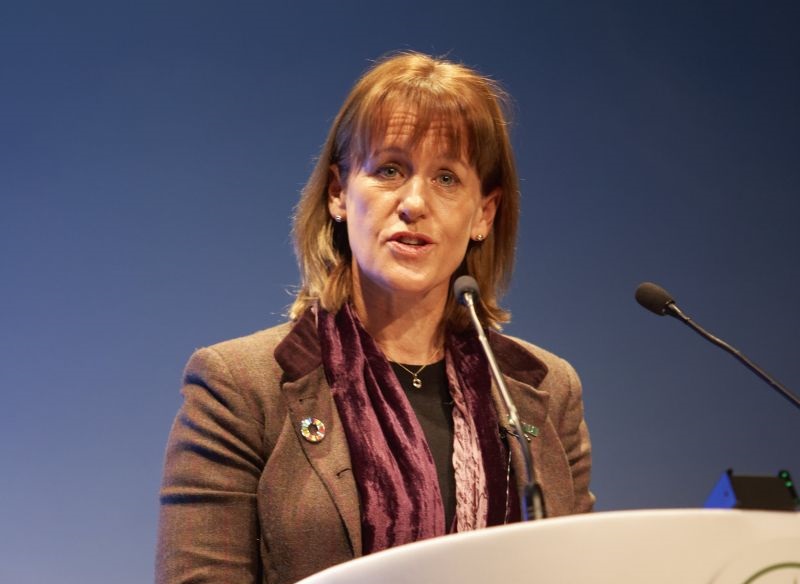
Baroness Batters warned MPs that farming has just two years to fix its economic model, as she delivered a series of stark messages to the EFRA Committee on profitability, planning and policy failure.
Appearing before the committee on Tuesday to discuss her Farm Profitability Review, the former NFU president made clear that the focus of her work was on making food production pay, not encouraging diversification as a substitute for viable farming.
She stressed that without profitability in food production there can be no sustainable future for the sector, arguing that long-term resilience depends on farming making money in its core role.
One of her clearest warnings centred on planning. Asked whether it would be possible to grow agricultural exports without reforming the planning system, Baroness Batters replied simply: no.
She said it was “not rocket science” that higher welfare requirements, such as lower stocking densities and slower-growing birds, mean producers need larger buildings.
Failing to align planning reform with animal welfare policy, she warned, risks repeating past mistakes in the pig sector, leading to higher imports that undercut domestic producers while failing to deliver environmental or welfare benefits.
Baroness Batters repeatedly returned to what she described as a lack of joined-up government, pointing to the disconnect between Defra and other departments as a fundamental barrier to reform.
Using planning as an example, she questioned how departments with “no knowledge of farming” could be expected to design systems that work for agriculture, warning that her recommendations would fail without cross-Whitehall buy-in.
Discussion then turned to livestock and the absence of livestock numbers from the government’s Farming Roadmap. Baroness Batters said farmers need certainty and a clear national vision, including how livestock production fits into long-term policy.
She noted that much of the UK is inherently livestock-based, joking that the uplands are unlikely to be producing broccoli or milling wheat any time soon.
Behind the humour, she argued that production must be separated from consumption. Where domestic demand does not absorb output, she said the focus should shift to exports, praising countries such as New Zealand for their ambition and coherence.
She linked this to the need for accurate, sector-by-sector data, saying recent challenges in the dairy industry highlighted the importance of proper market monitoring and clear production planning.
Trade policy featured heavily throughout the session. On country-of-origin labelling, Baroness Batters said the out-of-home sector, which she estimated represents around half the value of the food market, currently falls outside even voluntary labelling arrangements.
She said the voluntary code should apply to that sector as a first priority, before considering whether regulation is required.
She also warned that SPS alignment does not mean aligned food values, particularly on animal welfare and environmental standards, reinforcing the need for accessible, centralised market data to inform trade decisions.
Reflecting on what surprised her during the review, Baroness Batters pointed to the level of dysfunction between government departments and said much of Whitehall remains structured for EU membership rather than operating as an independent state.
Although her review applies to England, she warned that without a coherent UK-wide approach on trade, biosecurity and food production, divergence risks becoming more complex than when the UK was part of the EU.
Turning to Defra’s capacity to deliver reform, Baroness Batters said she joined the department with a team of five officials, only one of whom had experience of farming.
She contrasted this with other major reviews staffed by dozens of officials, but praised her team for becoming experts and for challenging her recommendations, saying their progress showed the department is capable of reform if it chooses to prioritise it.
She reiterated her recommendation that “Civil Servants need to get out on farms, helping in the lambing shed or spending a day picking fruit and farmers need to work with them. We need to plan much more together how we shape the future of food and farming”.
She said it was encouraging that this recommendation had resonated strongly with Defra’s new Permanent Secretary, Paul Kissack.
On market failure and disease outbreaks, Baroness Batters was blunt. She said Defra does not have the budget to intervene to prevent sector collapse and must seek emergency funding from the Treasury.
She warned there is no clear plan for managing risk during market shocks or disease outbreaks, and said this gap leaves domestic production exposed.
Throughout the session, Baroness Batters returned to the urgency of reform.
She said there is a two-year window to deliver a new economic model for farming, warning that failure to act would trigger “a different kind of change” that many in the sector would not welcome.




