




Beak treatments gets go ahead
For more free range stories visit www.bfrepa.co.uk
Breed company Hy-Line UK has been awarded a derogation by Freedom Food for its pioneering infra-red beak treatment.
The move follows a recommendation from the RSPCA's farm animals department and means that birds destined for Freedom Food approved farms can now have their beaks treated using the infra-red technique as day-olds at the hatchery.
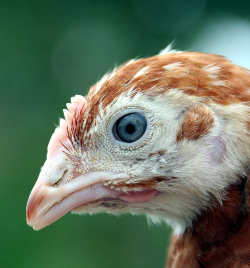
As reported previously in the Ranger, the process involves exposing the tip of the beak to the effects of infra-red which then causes the target area to crumble away, usually by 21 days. The technique is claimed to be extremely accurate and avoids the open wound associated with conventional hot-blade trimming which, for Freedom Food approved birds, is carried out on the rearing farm when the birds are between five and 10 days of age.
Commenting on the derogation—which has been granted for an initial 12 month period—Hy-Line's managing director Andrew Hignett said: "This is excellent news for Hy-Line and the industry.
"We've long championed infra-red beak treatment as the most accurate, safe and humane form of treatment there is and the Freedom Food stamp of approval is a very important endorsement. We are delighted to have the opportunity over the next 12 months to prove the advantages of the technique."
Freedom Food's technical development manager Bob Waller told the Ranger that use of the equipment at Hy-Line's hatchery near Redditch, Warwickshire, would continue to be monitored over the next twelve months as would treated flocks once placed on the laying farm.
"We have been satisfied with what we have seen so far and in terms of bird welfare the technique appears to be a major step forward over conventional trimming methods," he said. "The derogation period will be used to gather more information before we consider a change to the standards."
While Freedom Food is responsible for granting derogations from the standards, the RSPCA's farm animals department offers advice to the Freedom Food certification panel.
Commenting on the decision the department's Alice Clark told the Ranger: "Whilst the RSPCA would like to reach a point where the need to beak trim is overcome, we continue to look at protecting the welfare of birds when beak trimming is carried out.
"Having observed the infra red beak treatment a number of times over the last year and reviewed current scientific evidence we believe that this process offers a promising alternative to conventional hot-blade trimming, taking into account factors such as handling, consistency and efficiency.
"Specific standards have been written for the use of the infra-red equipment at Hy-Line," went on Ms Clarke, "including issues such as maximum time on the carousel and inspection procedure. The 12 month derogation will allow us to gather further information and follow infra-red treated birds through lay."
The news that chicks can have their beaks treated using the infra-red process has been welcomed by rearers.
One of the first to take a flock of Hy-Line birds that had undergone the treatment was Stephen Blake who rears around 100,000 pullets a year near Launceston in Cornwall.
"The main benefit as I see it is the accuracy. The process involves precision equipment and is not subject to human error," says Mr Blake. "With the best will in the world you do get variation when using the hot-blade method, due to chicks' beaks differing in size and blade temperature can also vary.
"We've now got two flocks which have had the infra-red treatment and what is striking is the evenness of the beaks."
Another advantage, according to Mr Blake, was that the young birds didn't have to undergo the stress of catching and handling associated with the conventional trimming procedure.
"Although generally chicks appear to recover quickly from the beak-trimming process it can sometimes set them back at what is a crucial time during the rearing period. It's not a job we are going to miss either," he added.
Although there is an extra cost attached to chicks which have been treated with infra-red of approximately 3p pence a bird, with rearers not incurring the cost of carrying out conventional trimming there should be no net increase in the price of pullets.




