




Double tax breaks for farms choosing renewables until 2020
After last week’s Budget, farms business owners will now be able to get double the potential benefits from their Annual Investment Allowance (AIA) each year until 2020 by opting for renewable energy, according to the UK’s largest solar installer.
Following last week’s surprise announcement from George Osborne that the Government would be fixing the AIA at £200,000 for the duration of this Parliament, firms will be able to offset up to £40,000 this tax year alone.
Not only can businesses now benefit from immediate 100 per cent tax relief on any capital expenditure worth up to £200,000 each year, but by investing in renewables they can also benefit from the Feed-in Tariff (FiT), which pays a set rate for every unit of electricity generated, guaranteed for 20 years.
Steve Wilks, director of finance for EvoEnergy, said: “Not only was this a shrewd political move by George Osborne, it’s also a green light to British business to continue investing and keep the country on the path to growth.
“Being keen to invest is one thing, but knowing what to invest in first is another matter. Going down the renewable route is one option businesses can choose for benefits which last year after year, maximising their tax breaks, earning money on self-generated energy and cutting bills.
“Solar can be installed on empty factory, barn or warehouse roofs and the higher the energy usage on site, the higher the possible savings. For example a PV system costing around £200k before AIA could return £17,500 each year in FiT income and then a further £17,500 in energy savings if 100 per cent of electricity generated is consumed on site.”
“But as is often the case with the Treasury, the left hand giveth while the right hand taketh away. The cuts in corporation tax planned for 2017 and 2020 mean that the sooner firms take advantage of their AIA, the more they’ll be able to offset.”
Craig Simpson, National Head of Corporate Tax for Baker Tilly, said: “Many of the businesses we work for tell us that finding suitable investment opportunities to benefit fully from the AIA can be difficult.
“Renewables are one way for SMEs to do just that - allowing them to bring forward the tax benefits while enjoying the stability of returns over the long-term as well.”
AIA case study: Place UK
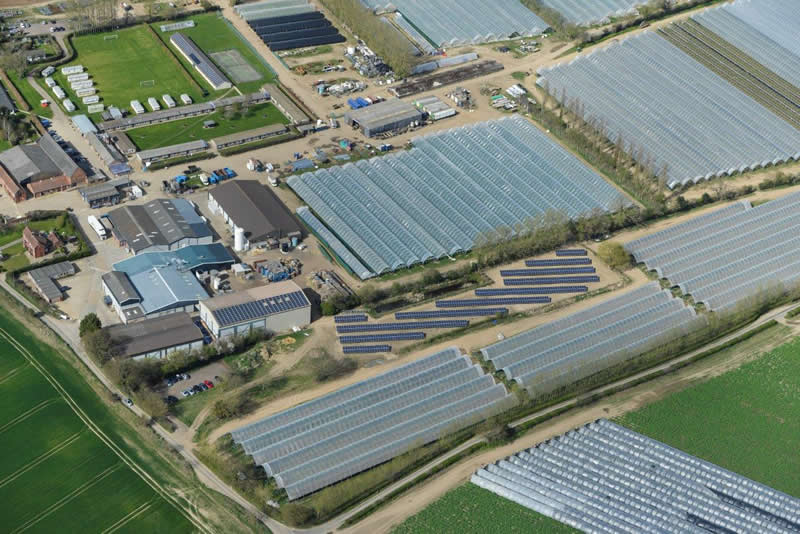
East Anglian soft fruit farm Place UK has cut its energy bills by £30,000 a year and reduced its carbon footprint by almost 100 tonnes thanks to a new 200 kWp ground mount solar array, using its AIA.
The £19m company, which supplies 3,500 tonnes a year of fresh and frozen raspberries, strawberries and blackberries to the likes of Tesco, Sainsbury’s and Marks & Spencer, invested in the 800-panel system at its 900-acre farm this summer.
Having doubled in size since 2009, the company consumed 3 million kWh of electricity each year. After a series of recent price rises, its energy costs had increased significantly, so the second-generation owners contacted EvoEnergy looking to add to the 80 kWp of rooftop solar PV already had on site.
Finance director for Place UK, James Starling, said: ““Being a business that is processing and supplying frozen and chilled produce and equally being a fruit grower of high quality British soft fruit, our green credentials are pretty important to us. However like most businesses we’ve also got one eye on the cost of energy these days too.
“We’d looked at other renewables options but wind turbines weren’t right for us and AD plants were too expensive. PV was still a significant investment but it fitted the bill as an affordable option - and given that we knew we’d use all of the electricity ourselves it also mitigated against some of the risk of future energy price rises.
“When our factory’s not running our cold stores still use a base load of energy. With the extra PV that base load can now be powered entirely from solar power and that’s a real breakthrough for us. Our energy supply is more secure and our carbon footprint’s been reduced. The whole project ran extremely well from start to finish.”
Since the new 200 kWp system went live it’s been generating 20 per cent more energy than forecast, cutting the firm’s electricity bills by 10 per cent and reducing its CO2 emissions by an anticipated 93 tonnes per year. Place UK now has 280 kWp of solar generation on site, generating an estimated £30,000 per year in returns from the FiT.
EvoEnergy’s team installed 800 Sharp 250 Wp panels in a field 100 yards from the site’s mains power supply, close to the buildings where the majority of the power would be used. The array was completed in four weeks, a tight turnaround for a job of this size which was necessary in order to beat an upcoming Feed-in Tariff (FiT) review.
Peter Alder, head of sales and marketing for EvoEnergy, said: “The business model run by Place UK, one with strong historical roots in British agricultural food production, lends itself perfectly to being able to reap the rewards of solar.
“For a firm like Place UK that’s demonstrated impressive growth to date and has ambitions for more of the same in future, securing its energy supply through renewables made sense financially as well as environmentally.
“At EvoEnergy we’ve been working with farms and agricultural businesses over the last five years to help them save money on energy bills through solar PV and provide them with second incomes via the FiT.
“Thanks to the AIA, investing in solar is an attractive, tax-efficient way for agricultural firms and landowners to put their hard-earned cash to good use. We can now offer farms free PV through a Power Purchase Agreement too, saving them around 50 per cent on electricity costs”
Due to the site’s location in rural East Anglia, the local District Network Operator had to impose an export power limit to avoid the grid being overloaded. This would have cut the new array’s size by 90 kWp.
However EvoEnergy devised an innovative Export Power Controller (EPC) using automation technology from the manufacturing sector. It allows for the full system to be installed for self-consumption purposes while preventing the export limit from being exceeded.
Devising a full project timetable, the dedicated project manager worked closely alongside Place UK’s engineering team before the install commenced and then on site daily throughout, making sure deadlines were met and disruption to the site avoided as much as possible.
Engineering Manager for Place UK, Marc Chambers, said “Working with EvoEnergy on our third solar project was a great success and they have a good team of people right from when the initial consultation starts, through the design process, project sign off and installation on site. I would be more than happy to work with EvoEnergy again on another project in the near future.”




