




Farmers still lead buyers as UK farmland market steadies
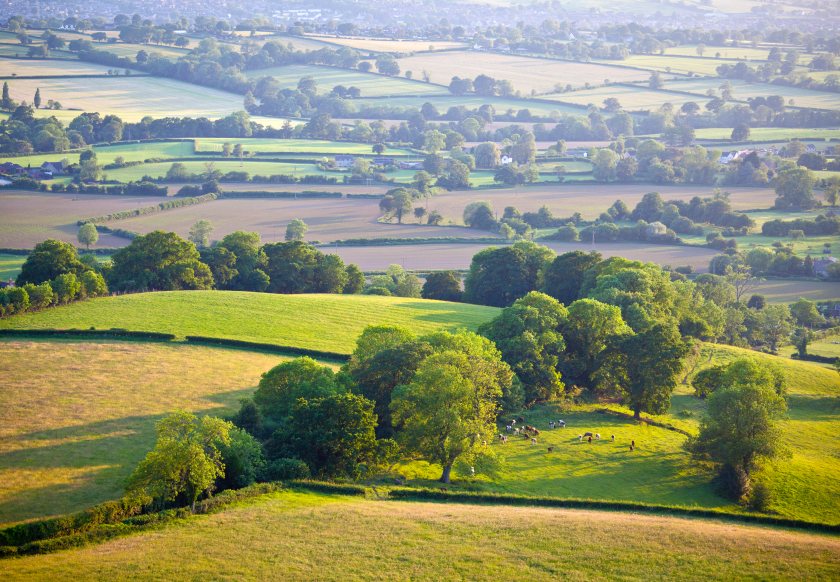
The UK farmland market has proved more resilient than many expected, holding firm through 2025 despite tighter supply, policy uncertainty and uneven price movements.
Savills’ annual report, Spotlight: The Farmland Market, shows publicly marketed farmland fell by 12% year on year to 165,000 acres across 882 properties, while overall average values slipped by around 1%.
Those headline figures mask sharp regional differences, with supply and pricing varying significantly across the UK.
Savills said restructuring pressures remain evident. Its farm machinery dispersal sales monitor, often seen as a bellwether for consolidation, shows sales were 77% higher than in 2019.
Retirement accounted for 32% of machinery dispersals, while policy change drove 30%, with around one in five sales directly linked to a farmland transaction.
The data reflects different stages of agricultural transition. In England, where policy change is largely embedded, machinery dispersal sales surged by 110% between 2020 and 2021.
In contrast, Scotland recorded a 32% fall in machinery dispersals in 2025, although Savills expects restructuring to accelerate north of the border from 2026 as policy pressures build.
Overall farmland supply across Great Britain broadly matched the 2012–2016 pre-Brexit average, but the national picture diverged sharply.
Supply rose by 5% in England and 40% in Wales, while Scotland saw a 23% drop.
Farmers remained the dominant buyer group, accounting for 45% of purchases, with 82% buying land to expand existing businesses.
Non-farmer buyers eased back to 40%, while institutional and corporate purchasers increased their share to 11%, signalling growing interest from longer-term capital.
Cash continued to underpin the market, funding 82% of transactions, while sales were driven by a mix of retirement, probate and the disposal of non-core assets.
Andrew Teanby, director of Savills rural research, said the market’s fundamentals remain strong.
“We expect farmland values to remain broadly firm through the next two years before entering a phase of steady growth as policy clarity improves and profitability prospects stabilise,” he said.
He said this outlook reflects the finite nature of farmland and rising competition for land across food production, environmental markets, development and renewable energy.
On the supply side, Savills expects more land to come forward from 2027 as larger farming businesses address inheritance tax liabilities, although acreage is not expected to return to pre-2000 levels.
Recent planning policy changes have also reshaped capital flows. Since 2021, the number of residential units gaining planning consent has fallen by 40%, reducing development receipts and contributing to a 60% drop since 2019 in the use of capital gains rollover relief by farmland buyers.
Savills said reforms to the National Planning Policy Framework could help reverse that trend, encouraging landowners to reinvest development proceeds back into farmland.
Demand remains strongest around development hotspots, where competition typically drives higher prices, although farmers seeking replacement land are increasingly willing to look further afield.
The report also highlights expanding nature markets, moving beyond Biodiversity Net Gain to wider restoration initiatives, including England’s Nature Restoration Fund and ambitious peatland and woodland targets where land and habitat conditions allow.
Alex Lawson, Savills head of rural agency, said long-term ownership continues to underpin the market.
“Farmland is fundamentally a long-term asset class; with less than 1% of the total available agricultural land in Great Britain publicly marketed each year,” he said.
He said ownership patterns and slow-moving land-use change support long-term demand, adding that the combined pressures of climate change, demographic shifts and evolving policy are likely to intensify competition for land rather than weaken it.




