

Fire chief says farmers were vital in stopping wildfires spreading
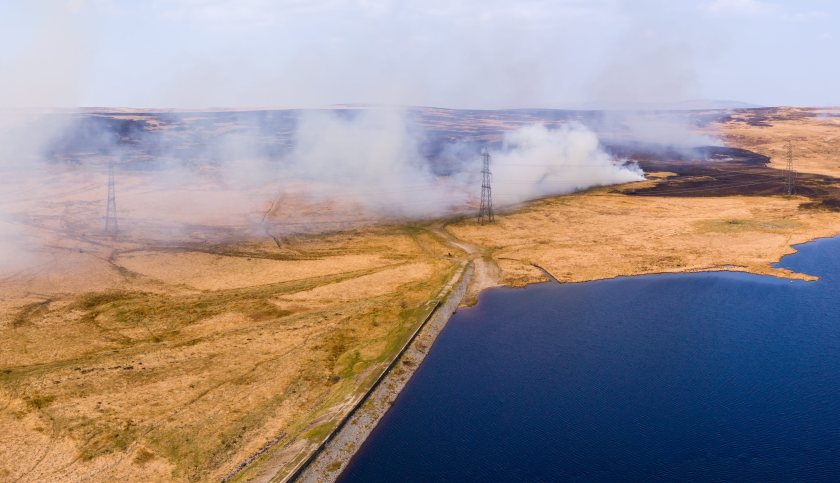
Farmers who deployed tractors, ploughed firebreaks and transported water to tackle devastating wildfires this summer have been praised for their crucial role in protecting rural communities.
Leicestershire's chief fire officer has credited farmers, landowners and other rural residents with helping emergency crews contain fires and prevent further destruction during one of Britain's most challenging wildfire seasons.
Callum Faint, Chief Fire and Rescue Officer at Leicestershire Fire and Rescue Service, said their assistance had made a significant difference to firefighting operations.
In an open letter following a review of the summer's incidents, he said: "We could not have achieved the outcomes we did without the extraordinary support of our farming and rural communities."
Across Leicester, Leicestershire and Rutland, the fire service avoided significant property losses during the incidents it faced, according to Mr Faint.
He said the contribution of rural communities had been particularly important in helping crews reach difficult areas and prevent flames spreading.
Farmers provided tractors, agricultural machinery and water bowsers, while others ploughed fields to create firebreaks and transported equipment across challenging terrain.
Their knowledge of local farmland also helped emergency crews operate in areas where conventional fire service vehicles struggled to gain access.
"That practical assistance made a real difference," Mr Faint said.
He stressed that the help provided by farmers was far more than an additional resource during emergencies.
"The actions of our farming community were not simply helpful additions to the firefighting operation. In many cases, they formed an important part of our ability to contain fires, restrict their spread and bring incidents under control."
The recognition follows an exceptionally difficult wildfire season, with fire services in England and Wales responding to 1,132 wildfires between 1 January and 16 August 2026.
Figures from the National Fire Chiefs Council show that the number had risen to 1,360 by 21 October, surpassing the previous annual record of 1,017 in 2025.
Major fires destroyed homes, damaged countryside and threatened rural livelihoods in several parts of Britain.
The scale of the crisis prompted a government wildfire summit on 23 October, bringing together fire chiefs and other organisations to examine how the country could strengthen its response to future emergencies.
Mr Faint said the summer's experiences demonstrated why closer cooperation between fire services, farmers and land managers would be essential.
Improving emergency access, water availability, land management and firebreaks were among the priorities highlighted for future wildfire preparedness.
The fire service intends to build on lessons from the summer to strengthen its working relationships with rural communities.
Sarah Lee, Director of Policy and Campaigns at the Countryside Alliance, also praised the contribution made by farmers and gamekeepers.
She said: "The successes in battling wildfires this summer are a testament to the invaluable role that rural communities, farmers and gamekeepers play in preserving and protecting our Great British countryside."
Mr Faint acknowledged that many farmers had offered their time and equipment while facing serious risks to their own land, crops, livestock and businesses.
He said the successful response was a shared achievement between emergency services and those who stepped forward to help.
"The excellent outcomes we achieved this summer belong not just to Leicestershire Fire and Rescue Service, but to everyone who stood alongside us and helped protect our communities."
He added: "You have our respect, our appreciation and our sincere thanks."