

Freedom Food make changes to laying hen welfare standards
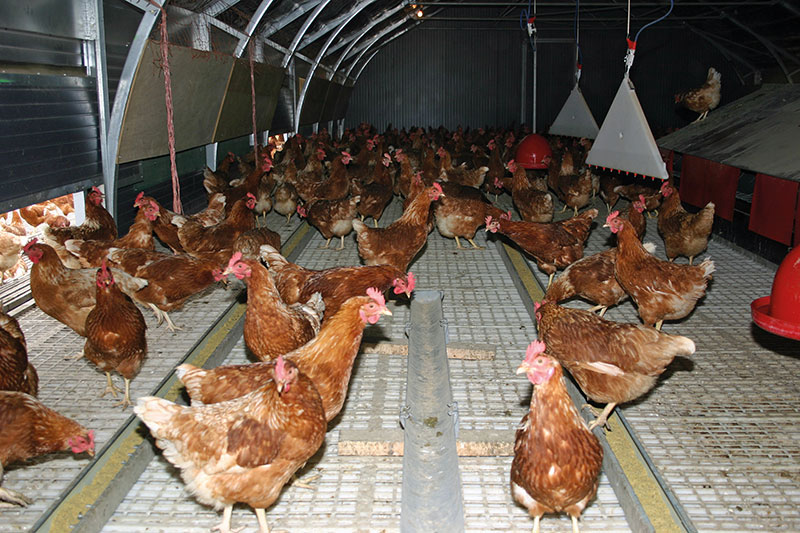
Measures to reduce the incidence of cannibalism and injurious pecking are prominent in a series of proposed changes to Freedom Food’s welfare standards for laying hens.
Freedom Food, the RSPCA’s farm assurance scheme, has outlined a list of changes to its standards in a letter to its current producers – and the changes include what the organisation says is the most up-to-date advice on measures to reduce pecking problems. The measures relate to diet, environment and lighting, space requirements and flock sizes, perching, environmental enrichment, range management and inspection. Alice Clark, senior farm animal scientist with the RSPCA, says the changes are based on the latest available science.
“The review process is done in consultation with the farming industry, veterinary profession and welfare research sector,” she said. “We regularly review the standards so as to ensure they take proper account of the latest scientific research, veterinary knowledge and practical developments, and therefore continue to represent best practice in farm animal care.”
Freedom Food says in the amended document that the most common cause of injurious feather pecking is change. It says that producers should ensure that any changes in housing and facilities are made gradually and that producers should closely monitor birds when changes are made. It says that farmers should also pay particular attention to the birds after any sudden external environmental changes, such as in the weather, noise or light intensity or duration.
The standards suggest that dividing large flocks into smaller, separate colonies can help to minimise pecking problems and stress and reduce the risk of smothering. They say it is important to keep birds in manageable groups and well spaced throughout the building, with adequate access to facilities such as water, feed and nest boxes. Internal divisions need to be constructed to prevent any movement of hens between colonies, they say.
Freedom Food says that aerial perch height should be such that hens are prevented from pecking each other in the vent area and sets out a guideline height of 50 centimetres above the slats or other perches.
In a detailed section on environmental enrichment, Freedom Food says that enrichment has been shown to improve hen health and welfare by encouraging activity and decreasing the risk of injurious feather pecking. It says that “a variety of sufficient items, which are safe for bird use, should be appropriately placed throughout the unit to promote activity and interest and provide all birds with an opportunity to explore them.”
A number of examples are listed. They include hanging knotted rope or string, pecking blocks, vegetables and plastic bottles with coloured water, dust bathing boxes, straw bales and plastic-wrapped bales of shavings. Freedom Food says that the provision of pecking blocks and knotted rope or string has been shown to be particularly beneficial in helping to minimise pecking problems. Breeze blocks are not advisable for pecking, it says, but blocks made with feed may be used.
Freedom Food recommends that producers could read a document entitled ‘Improving feather cover - a guide to reducing the risk of injurious pecking occurring in non-cage laying hens’ for more advice on environmental enrichment. The document has been produced by scientists at the University of Bristol, where a research team led by Professor Christine Nicol is currently undertaking trials on how to manage laying hens without the use of beak trimming.
The guidelines in the new Freedom Food standards could be more relevant than ever if Professor Nicol’s work concludes that commercial flocks can be managed without beak trimming and the Government presses ahead with a ban on the use of tipping. The ban was originally due to come into force at the beginning of 2011. It was put off on the advice of the Farm Animal Welfare Council (FAWC) because of its concerns about feather pecking and cannibalism, but the Government has warned that the position will be reviewed in 2015 and it intends that the ban should be introduced in 2016. The British Free Range Egg Producers’ Association (BFREPA) has urged the Government to further delay the introduction of the beak trimming ban.
In its amended standards, Freedom Food suggests that diet can minimise the risk of injurious pecking. It says producers should consider encouraging foraging behaviours by providing mashed feed and scattering pellets, whole grain and grit evenly on the litter, by providing extra fibre in consultation with a feed supplier and/or nutritionist, ensuring sodium content of feed is appropriate, ensuring the supply of an appropriate balance of essential amino acids, minimising or making any changes to the diet gradual, including content, taste, texture, energy level and stepping down protein levels.
It says that early access to the range can increase ranging behaviours and decrease the risk of injurious pecking and recommends that birds be introduced to the range area as soon as possible after arrival at the laying unit.
Freedom Food says lighting levels should be maintained to allow and encourage birds to explore their environment, although, as a last resort in an emergency, and with the ongoing use of other possible solutions, lighting levels could be reduced or coloured light bulbs used to help birds settle.
It says that frequent flock inspections and varying the routine, people, numbers of people and clothing, as well as increased inspections immediately after housing, has been shown to help reduce fearfulness in hens, which in turn can help to minimise the risk of injurious feather pecking.
All of the amendments have been outlined in two documents – one for laying hens and another for pullets, which have been sent to Freedom Food producers, hauliers, transporters and abattoirs. Existing Freedom Food members have until September 19 this year to make any necessary changes.