




HRH The Prince of Wales sows the seeds for countryside campaign
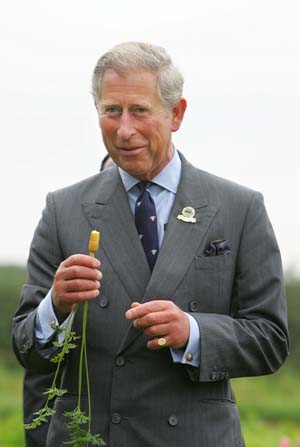
Highgrove and Duchy Home Farm host official launch of the Year of Food and Farming
HRH The Prince of Wales today re-iterated his commitment to reconnecting children to the land, welcoming more than fifty school children as the first farmer in the country to open his gates to support the Year of Food and Farming.
In response to growing concerns about young people's agricultural literacy – their knowledge and understanding of the food chain - His Royal Highness has agreed to act as Patron for the Year.
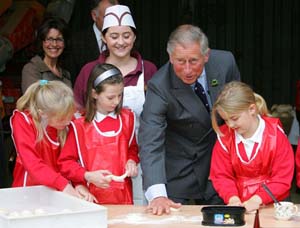
To launch the campaign, primary and secondary school students were invited to take part in a visit to Highgrove. During the morning, HRH The Prince of Wales and his farm manager, David Wilson, helped children roll up their sleeves and get involved with the daily business of Duchy Home Farm.
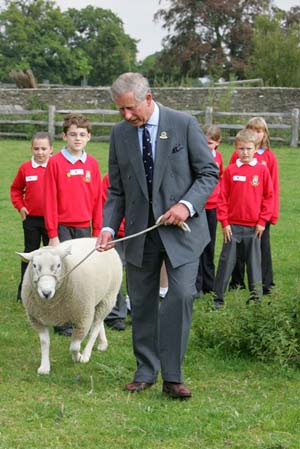
The students, from Oathall Community College in West Sussex, and local Avening Primary School, learnt how to bake bread from scratch, spent time understanding the management of Highgrove's cattle and sheep, and tried out their cultivation skills in Home Farm's vegetable fields. The children also saw their efforts immediately rewarded, when the loaves they cooked were presented to guests at the official reception for the Year.
His Royal Highness, who has long supported school gardens and farms,took time during the visit to speak with Howard Wood, teacher and manager of the school farm at Oathall Community College, which His Royal Highness visited in 2000. Mr Wood commented:
"We passionately believe in the need for every child to have access to the countryside – not just to help inform their diets, but to turn around their appetite for life in general.
"The new research from the Year of Food and Farming confirms my 35 years of experience: contact with the countryside does more than just give children a taste for fresh air. We work with students from all walks of life, and I've witnessed the impact that hands-on involvement in the land and with animals can have: from inspiring children about new careers, to giving them a sense of confidence in their own abilities. Food appreciation – growing, cooking, understanding - is a critical life skill. When children in cities can't identify eggs removed from their packaging, or tell me where cheese comes from, it's time for schools, farmers and families to take urgent action."
Diana Boulton, head of local Avening Primary School which is a regular visitor to Duchy Home Farm, added:
"Although our school has a fairly rural setting, some pupils still struggle to understand how the countryside fits in with the everyday food they eat. We're delighted to have taken part in this inaugural visit, as we've seen at first hand the power of giving pupils direct experiences of the countryside. This summer students picked their first crop from our new vegetable patches – with the produce landing on their plates that same lunchtime. The pupils were so excited to see their salads in the school canteen that they let out a spontaneous round of applause – we knew then that we'd managed to capture their imagination about green things on their plate!
"Other teachers will relish the chance to give children this sort of appetite for learning, and it's great to see a campaign like the Year which will help even more schools get involved on the farm, in the classroom, and at home."
In addition to backing from individual teachers, the campaign has also been welcomed by figures from across food and farming communities, as well as from Government, environmentalists and educationalists*. This widespread support comes on the same day that new data is published linking agricultural literacy to children's appreciation of the food chain.
A new research study, overseen by psychologist Dr Aric Sigman, indicates that a generation of "concrete children" is cut off from the countryside, with clear risks to both their health and wider prospects. According to the findings:
• One in five pupils never visit the countryside – indicating that more than a million children across the country have absolutely no contact with the land.
• 21st century youngsters are more likely to have holidayed abroad than to have explored England's fields and farms.
• A further 17% have only been to the countryside "once or twice", meaning a third of children have little, if any, experience of the rural world.**
The Year of Food and Farming research also demonstrated that children with limited or no experience of the countryside are significantly less likely to care where their food comes from. Two thirds of children with regular rural interaction say it matters where their meals comes from, versus just 40% of children who admit they never visit the countryside. These "concrete children" are also less willing to help with meal preparation at home, and are twice as likely to admit they don't know where everyday fruit and vegetables are grown.
Encouragingly, however, Dr Sigman's review also indicates that interaction with the countryside can also do more than give children food for thought about their diets. Many research studies have shown the benefits of "green time" – simply being in the countryside, school garden or a leafy environment - are significant.
• Children with views of and contact with nature score higher on tests of concentration and self-discipline. The greener the view, the better the scores
• Exposure to natural environments improves children's cognitive development by improving their awareness, reasoning and observational skills
• Results for schools with outdoor education programs show better performance on standardised measures of academic achievement in reading, writing, maths, science and social studies. Classroom behaviour also showed improvements***
With all the gains to be had from reconnecting children to the countryside, the Year is now urging farmers, food producers and schools to register on its Megamap – www.yearoffoodandfarming.org.uk – to give pupils hands-on, memorable learning experiences that they'll never forget. The programme will also complement programmes like British Food Fortnight and the Government's Learning Outside the Classroom Manifesto, both of which aim to create more opportunities for pupils to study the core curriculum outside of traditional classroom settings.




