




Lion subscriptions raised
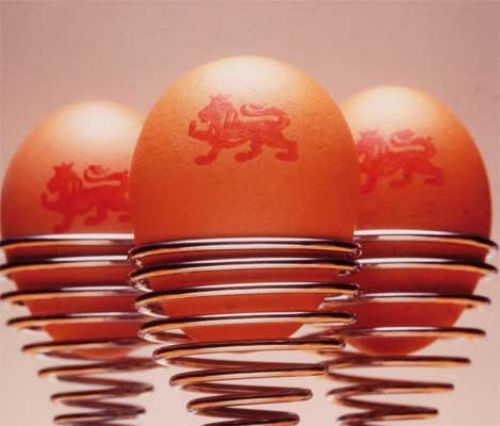
The British Egg Industry Council has confirmed to the Ranger that it plans to make changes to the way in which Lion subscriptions are charged.
Proposals drawn up by the BEIC represent a major shake-up in subscriber contributions. The most notable change is the introduction of a minimum annual levy of nearly £10,000 – a move that will inevitably be felt most severely by smaller operators and one that may prove controversial amongst some sections of the egg industry.
The planned changes were outlined to the Ranger by BEIC chief executive Mark Williams. He said that for new subscribers joining in 2011 the annual levy would be set at a minimum of £9,750 (pro-rata to the remainder of 2011) or 11 pence per case of 360 eggs, whichever was greater. As far as we are aware this is the first time that such a minimum fee will have been introduced for Lion subscribers. Until now members have simply been charged 11 pence per case.
The new subscription structure will significantly increase cost-per-case fees for smaller packers. An operator with control of 24,000 birds will pay the equivalent of 55 pence per case under the new pricing, which equates to 1.8 pence per dozen. A 48,000 bird operator will pay 27.6 pence per case (0.92 pence per dozen), a packer with 72,000 birds will pay 18.4 pence per case (0.61 pence per dozen), someone with 96,000 birds will be charged 13.8 pence per case (0.46 pence per dozen) and a packer with 120,000 birds at his disposal will pay the equivalent of 11 pence per case (0.36 pence per dozen).
Under the current structure, without a minimum fee, a total of 24,000 birds would result in an annual levy of £2,000, 48,000 birds would attract a £4,000 charge, 72,000 birds would result in a £6,000 levy, 96,000 birds an £8,000 levy and 120,000 birds an annual charge of £10,000.
We understand that BEIC has agreed to a concession for packers who already subscribe to the Lion. The minimum fee for them will be limited to £5,000 for the next two years before subsequently increasing to the full £9,750 level. This is seen as one way of easing the transition to the new charges for smaller packers who will face significant increases in the size of their contribution to BEIC coffers.
Mark Williams told us that the minimum annual levy had been calculated by adding together the BEIC’s basic operating costs and dividing the figure by the number of current subscribers. He said the basic operating costs included property costs (rent, rates service charge), office costs, depreciation and salaries. They did not include such things as advertising, marketing and auditing.
The BEIC is also increasing the level of the joining fee paid by new entrants to the Lion scheme. This fee will rise to 50 pence per case from the current level of 30 pence per case. The calculation is based on the previous 12 months’ Class A packing centre throughput. New entrants will not benefit from the reduced fee concession offered to existing Lion subscribers for the next two years.
In a statement prepared for the Ranger, Mark said, "As you are aware, there has been a review of the joining fee and the annual BEIC levy. In particular, the method by which the annual levy is calculated has remained broadly unchanged since the Code of Practice was reintroduced in 1998. At the meeting of BEIC subscribers held on 10th May 2011, the review was completed. Members noted the significant value of the Lion brand that has been created over the years by the members."
He said the new charges had been agreed by a consensus of subscribers present at the meeting on May 10, although we understand that the charges will have to be ratified at a meeting of the British Egg Industry Council on June 8. Organisations represented on the council are the British Egg Association (BEA), the British Egg Products Association (BEPA), the British Free Range Egg Producers Association (BFREPA), the National Egg Marketing Association Limited (NEMAL), the National Farmers Union of England and Wales (NFU), the NFU Scotland (NFUS), the Northern Ireland Poultry Breeders and Hatcheries Association (NIPBHA), the Pullet Hatcheries Association (PHA), the Pullet Rearers Association (PRA), the Scottish Egg Producer Retailers’ Association (SEPRA) and the Ulster Farmers Union (UFU).
The NFU has already expressed some concerns about the changes. It says that the NFU poultry team and board members have received phone calls from both Lion and non-Lion producer/packers since the new levy rates were announced and that there are concerns that these rates will disadvantage smaller packers. "As the NFU we believe there should be no commercial barriers to joining an industry assurance scheme providing the required standards are met," says the NFU in a statement of its position.
Charles Bourns, the NFU poultry board chairman is also the vice chairman of the BEIC Council and he has spoken to senior office holders and the chief executive of the BEIC about the NFU’s concerns. The Ranger was told that he would raise these concerns at the BEIC Council meeting on June 8.
The NFU believes that there should be more tiers within the subscription fees and that these fees should be based on farm/production size.
The BEIC has said that in the past packers have dropped in and out of the scheme depending on who they were supplying. This has been viewed as unfair by BEIC subscribers, especially for those who have been part of the Lion scheme from the beginning and paid significant amounts (millions of pounds) into developing the Lion brand and scheme and raising its profile through promotion.
They believe that if other companies now wish to join this successful scheme, which will add value to their business and open up new markets, they should pay a ’fair’ price and take their commitment to the scheme seriously. The NFU says that, where there are concerns over commitment to the scheme, rather than increasing costs for subscribers a minimum sign-up period should be agreed.
The NFU is warning that by making the Lion scheme too costly producers/packers may look at developing other industry assurance schemes, which could undermine the Lion scheme and split the industry.
In its statement of position, the NFU says, "The NFU represents both Lion and non-Lion packers and producers. Those producers/packers outside the Lion scheme do not need to be part of the scheme to market their eggs (i.e. it is not required by their customers).
"The NFU remains highly supportive of the Lion scheme. The British Lion mark is seen as a high quality food safety mark, which played a significant role in helping the British egg industry following the Edwina Curry salmonella scares of the 1990s.
"There is no doubt that the Lion scheme will play an important role in ensuring that consumers and retailers buy British eggs from legal production systems when the conventional cage ban comes into force across Europe on the 1st January 2012. Through a promotional campaign the BEIC will encourage consumers to look for the Lion to ensure they are purchasing British eggs from legal systems. However, for NFU members outside the Lion scheme producing free range, organic and enriched colony or barn eggs after 1st January 2012 this promotion may be to the detriment of their business and put them under pressure to join the scheme.
"As the NFU we will continue to promote Lion, British and locally produced eggs from all legal systems. We will also ensure that those buying eggs outside the Lion scheme are aware that all commercial pullets are vaccinated against salmonella and all producers with over 350 hens have to meet the same salmonella testing requirements under the National Control Programmes as Lion producers (with the exception of those selling small quantities direct to the final consumer)."
The NFU says it is currently looking into the SALSA (Safe and Local Supplier Approval) scheme to see whether this would be a credible and affordable alternative for smaller packers who may be concerned over the cost of joining the Lion scheme. Currently SALSA accredits two egg packers. Andrew Opie of the BRC (British Retail Consortium) told the Ranger they too are looking at the SALSA scheme to provide a credible alternative for smaller packers and regional egg.
News of the planned changes emerged shortly before the Ranger went to press. The indications are that other representative organisations within the egg industry were meeting to discuss their views on the BEIC’s proposals. We will, of course, bring you news of any developments on this story in next month’s magazine.




