




Lower grazing levels fuelling moorland fires, sheep body warns
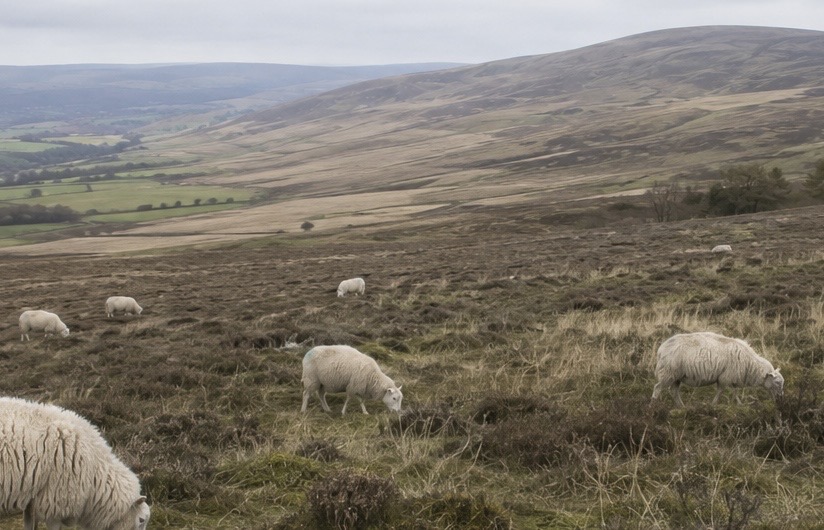
Moorland wildfires are being made worse by years of reduced sheep grazing and rising fuel loads, the National Sheep Association has warned.
The organisation says policies designed to reduce grazing pressure have unintentionally allowed combustible vegetation to build up across large areas of moorland.
Its warning comes as firefighters continue to tackle major moorland blazes, including a recent fire on Tintwistle Moor in Derbyshire.
The NSA said the debate must move beyond how fires start and focus more closely on why they become so destructive once they take hold.
It said agri-environment schemes have encouraged significant reductions in sheep numbers and grazing pressure across many upland areas over the past 20 years.
Alongside tighter restrictions on other land management practices, including controlled burning, this has allowed dry grass, ageing heather and dead molinia to build up across some moorlands.
This build-up, often referred to as fuel load, can help fires spread rapidly during hot and dry weather.
However, the NSA stressed that it is not calling for a return to the heavy stocking levels seen in previous decades.
Instead, it wants a more balanced approach that gives experienced upland farmers greater flexibility to decide appropriate grazing levels for the landscapes they manage.
Michael Priestley, NSA Policy Manager, said the scale and frequency of recent fires was a growing concern.
“The intensity and frequency of recent wildfires is concerning,” he said.
“Although wildfires are not a new phenomenon, the warmer, drier weather we are experiencing is a factor in increasing incidents.”
He said government policy had spent the last 20 years reducing grazing across many upland landscapes.
While those policies were introduced with good intentions, Mr Priestley said they had often “tipped the balance too far”.
He said this had left large areas with little or no grazing and an increasing build-up of combustible vegetation.
“Grazed grass initially grows back green and lush, and is far less flammable,” he said.
“Grazing is not the whole answer to wildfires, but it is undoubtedly part of the solution.”
The NSA said sheep grazing should be treated as one part of a wider land management strategy.
Mr Priestley acknowledged that overgrazing had been a problem in the past, particularly when payments in the 1980s and 1990s led to too many sheep on some hills.
But he said well-managed grazing should sit alongside cutting, controlled burning and other appropriate management techniques.
The aim, he said, should be to create a varied “mosaic” of vegetation heights, rather than large expanses of ageing heather and dead molinia grass.
The NSA said this would support a wider range of wildlife while reducing the amount of combustible material available during dry weather.
The organisation warned that unmanaged fuel loads increase the threat to rural communities, firefighters, livestock, wildlife and important peatland habitats when fires break out.
Mr Priestley said hill farmers had managed upland environments for generations and should have a stronger voice in local land management decisions.
“They should have a greater voice in deciding what level of grazing is appropriate for their land, rather than being constrained by blanket prescriptions that do not reflect local conditions,” he said.
He added that years of policy focus on reducing grazing had not been matched by enough attention to the unintended consequences.
“If we are serious about making our uplands more resilient to climate change and extreme weather, we need policies that support active land management, not discourage it,” he said.
The NSA’s warning comes amid growing concern over wildfire risk across the UK.
The Environment, Food and Rural Affairs Committee recently issued a call for evidence on wildfires, which closed in May.
An All-Party Parliamentary Group for wildfire prevention was also created in June, while England has seen investment in wildfire response capability.
Fire chiefs and local fire services have intensified public messaging urging people to avoid disposable barbecues.
Jon Pearce, MP for High Peak in Derbyshire, has campaigned with local retailers to stop selling disposable barbecues following concern over moorland fire risk.




