




NI agriculture minister announces emergency flooding assistance for farms
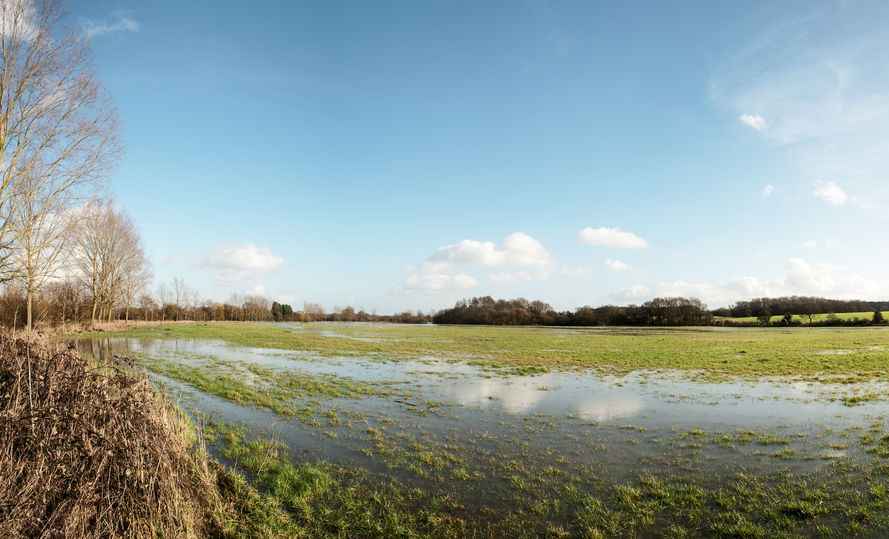
Agriculture Minister Michelle O'Neill today announced an emergency financial aid package to help non-domestic organisations impacted by the recent flooding.
Speaking after today's Executive meeting after her proposals were agreed, the Minister said: “I welcome the Executive’s agreement for the Emergency Financial Assistance Scheme for non domestic properties, including small businesses, community groups and farms affected by recent flooding.”
The scheme, developed following a commitment made by Minister O’Neill when the Executive met on January 21, is a one-off programme which will provide £1,000 to many organisations which were significantly impacted by recent exceptional flooding.
It will assist those responsible for non-domestic properties - including small businesses, farms, recreational and community buildings and places of worship - who have suffered severe inconvenience as a result of the recent flooding.
The Minister added: “This is the latest in a package of measures which demonstrates the Executive’s commitment to supporting those affected or threatened by flooding.”
The Minister went on to say: “I have long held the view that flood prevention must be the priority and that is why, in January, I launched the Homeowner Flood Protection Grant Scheme which is a £1million scheme to help people who wish to protect their homes from flooding.
“The scheme will provide 90% funding to owners of residential properties at risk of flooding to install physical barriers and equipment to help reduce the impact of flooding on their homes.
“I also extended this scheme more widely to ensure small businesses and farmers get help to protect their properties from the impacts of flooding.
“Work on the business case has started and I expect this scheme to be available later this year.”
In January, the Executive secured £1.3million of additional resource and decided to use this to fund preventative measures and prepare for future flood incidents.
This demonstrates a commitment to ensuring that homes and other properties are protected from the worst effects of flooding and that our infrastructure, where possible, should remain useable to minimise the impacts on communities.
Rivers Agency is using its allocation to inspect watercourses in areas affected by recent flooding and to carry out essential maintenance work identified in order to strengthen protection for the future.
The Minister concluded: “I hope that the Emergency Financial Assistance Scheme for non-domestic properties will help repair damage and restore normality to those impacted.
“While flooding is a natural occurrence and it is impossible to provide 100% protection, today's announcement recognises the hardship some people faced this winter.
“It is a welcome addition to a package of measures which helps better protect homes, community groups and businesses from future flooding events.
“I encourage those who feel they may be at risk of flooding, to view the Flood Maps (NI) on the DARD website to understand the risks faced by their properties.”
Positive response
The Ulster Farmers’ Union says it is pleased that agriculture minister, Michelle O'Neill, has responded positively to its call to support farmers and other rural businesses affected by the recent exceptional flooding.
UFU deputy president, Barclay Bell, who visited farmers in the areas affected, said that while farmers had done their best to cope with the conditions, damage in some cases had been severe and costly.
“We are fully aware that this grant will not cover the cost of damage in some cases but it is a gesture at a time when unexpected bills for flood damage are appearing on top of the cash crisis facing many farm families,” said Mr Bell.
The UFU recently held two public meetings in the Lough Erne and Lough Neagh areas for its members to discuss the impact of flooding and solutions for the way forward.
“It is clear that what we had this year cannot be written off as something that is inevitable in these areas.
“It creates havoc for people's normal day-to-day activities when the floods are there, and when they are gone the damage they cause is still there for farm businesses.
“There has to be a coherent inter-department plan by the Executive to tackle this problem in both the short and long term.”




