




Nurture oilseed rape to guarantee profit
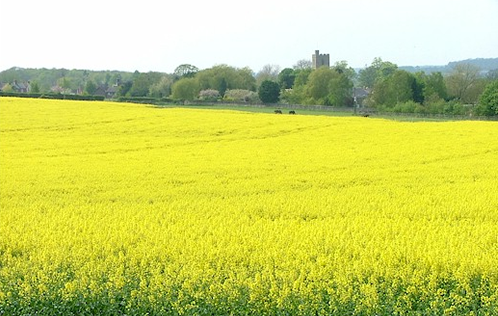
Scottish oilseed rape growers with crops ravaged by the hard winter will imminently have to make the tough decision on which crops to keep and which to chop-in. But they must consider the incredible power of recovery of oilseed rape plants and the potential to achieve good yields from even low populations of small plants, according to Aberdeenshire-based agronomist, George Duncan.
"We do have some badly hit crops and a lot that are very backward, but with some extra care and attention the majority can still be saved," he believes. "It will be essential that growers make every effort to encourage and maintain available green leaf area right through to harvest for these backward plants to complete pod fill and oilseed levels."
Mr Duncan, of Agri Solutions, Alford, advocates an early application of fertiliser to get small plants growing, but only using a small split-dose as part of the overall allocation – to minimise the risk of wet weather washing nutrients away. "Overall there shouldn’t be the need to adjust fertiliser rates; the lower plant population will still require the same level of nutrients to build the potential yield," he adds.
Trace elements through the spring will be important to avoid plant stress and ensure good nutrient uptake for continuous growth, with early control of Light Leaf Spot a key consideration for growers in Scotland.
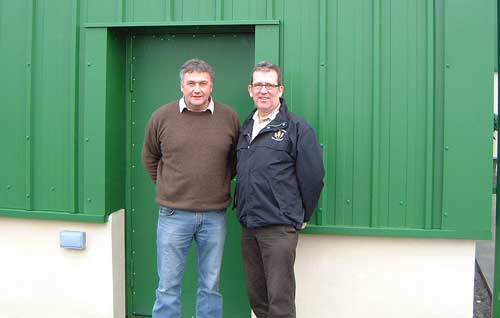
But the real potential for extending healthy green leaf retention this season could come from Amistar applications at early to mid-flowering. Mr Duncan’s experience has seen good results from a two-spray strategy, with the first application at yellow bud stage, where trials have shown the best performance for enhancing green leaf performance, followed by a second treatment at full flower for disease control, primarily targeted at Sclerotinia and Alternaria.
"We are really looking for the yield increasing physiological effects of Amistar, as much as the disease control. Sclerotinia is not typically a major issue where rotational breaks are good, but we want to keep on top of the disease, and growers also have to consider the increased risk where they have potatoes or pulses in the rotation," said Mr Duncan. "Preventing late Alternaria is also important in holding onto the green leaf to increase both yield and oil content of the seed."
Last year Ian Nicol of Cluny Home Farm, Sauchn, faced the same scenario experienced by many growers this year, where his oilseed rape crop had been decimated by successive floods, snow and cold weather. However, the remaining plants recovered remarkably well and, with the help of a two-spray strategy for Amistar advised by Mr Duncan, yielded a welcome 4.8 t/ha, with an oil content of 45.8%.
Mr Nicol added that the option of a Syngenta-backed Profit Guarantee on his investment in Amistar gave real confidence that the result would be positive, and fully vindicated his decision to retain the crop.
George Duncan points out the alternative of planting spring oilseed rape may be useful to patch parts of fields where the damage has been irreparable, but the success of spring sown crops will be largely dictated by the weather. Some fields may go into spring barley, but that will negate the important value of oilseed rape as a break crop, he adds. "Looking after what you’ve already got may prove the better option wherever possible. From past experience growers may be pleasantly supplied at what can be achieved come harvest."




