




Putting stewardship into practice
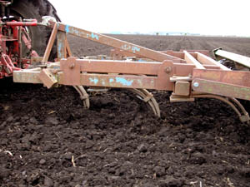
Cambridgeshire potato grower Matthew Murfitt is finding the latest nematicide stewardship guidelines take no extra time or effort to put into practice.
"This year we're making a point of cultivating headlands to ensure full incorporation at row ends where the planter's lifted out of the ground", says Matthew. A partner in P&M Produce, growing 30ha of Maris Piper near Littleport, Matthew hosted a Bayer nematicide stewardship training course this February.
"Today we have to be seen to be doing all we can to be operating safely and attending these courses keeps us up to date. Another important practice we've adopted from this year's course is to fill up the applicator on a part of the field waiting to be planted, so if any nematicide's spilt it's in the working area and gets buried immediately.
With typical fenland peaty loam soils, many of the fields used by P&M Produce have a history of wireworm and or PCN. "Quality standards for chipping potatoes are just as demanding as for pre-pack these days, so in fields with a known risk we treat with Mocap at 60kg/ha for wireworm or 100kg/ha for PCN. From experience we know it does the job and it's a small investment to make sure we hit market spec."
Nematicide is applied and incorporated in front of the planter and row ends are cultivated the same day to ensure full incorporation. "We've already got a man and a machine in the field for seed-bed preparation so there's no extra cost involved, and it only takes a matter of minutes to shoot round the headlands twice with the cultivator before leaving the field."
Every year, 200 to 300 operators attend Bayer's nematicide stewardship training programme, which sets the standard in the safe and responsible use of all nematicides. Incorporation practices have been the focus of this season's updated courses according to the company's stewardship manager Steve Higginbotham.
"Even if operators have previously attended training, it's important to get a refresher every three years", he emphasises. "The course enables growers to comply with the requirements of the Assured Produce Scheme, qualifies attendees for six NRoSO points and prepares them to take the NPTC PA4 module, if they don't already have it."




