

Rare chalk streams to benefit as more farms join environmental co-op

World famous chalk streams in Hampshire and Wiltshire are set to benefit from an expanded Environmental Farmers Group (EFG) after dozens of new farms have agreed to join the cooperative.
The EFG, a co-op based in Wiltshire and Hampshire which takes a farmer-led approach to landscape-scale conservation, now totals 178 farms, covering over 80,000 hectares, the largest of its kind.
It was set up to help farmers in the region to navigate the carbon, phosphate and biodiversity offset market, giving them an opportunity to replace the loss of subsidy.
Thirty-one farmers of the Test and Itchen catchments in Hampshire have now joined the EFG, with the expansion set to further restore rare chalk stream habitats.
The farming businesses involved already have a proven track record of delivering measurable improvements on the ground.
Joe Edwards manages the Middleton Estate, which has dramatically improved the water quality along its three-mile stretch of the Test.
He said: “We set out to recover the river combining a wide range of measures including bringing back ranunculus and other habitats that the insects will naturally thrive in and encouraging wild brown trout reproduction.
"The result was when we tested the water for 300 chemicals, it showed that the water’s cleaner when it leaves Middleton than when it entered.
"There are other private land managers on the Test who are starting to think about implementing similar management and I believe the EFG’s conservation plan, led by GWCT Chief Exec Teresa Dent, will succeed in protecting the river.”
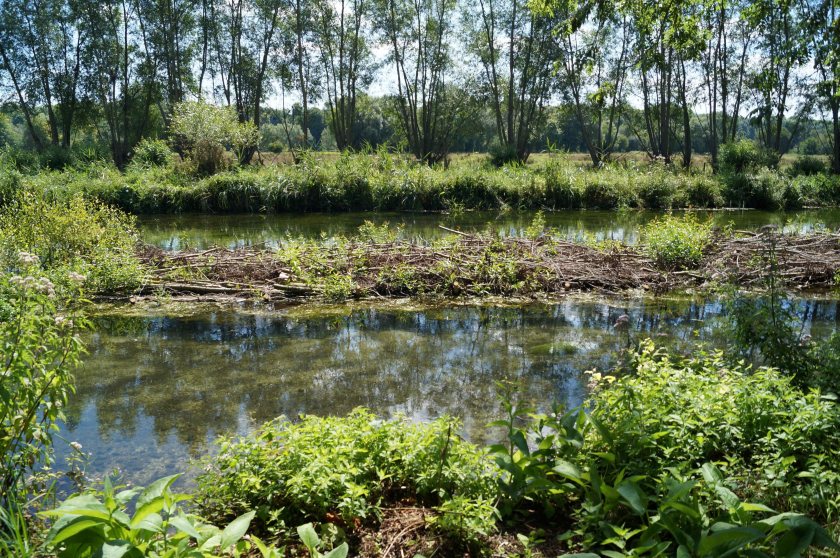
Improving water quality will be a central aim, but the two catchments have many other natural habitats and species which need protecting and enhancing, including rare chalk downland wildflowers.
James Hewetson-Brown runs Ashe Warren Farm near the source of the Test catchment. Alongside his arable operation, he and his wife Claire set up Wildflower Turf Ltd.
James said: “Recently research showed that half our native plants have declined over the past 20 years. Hampshire chalk downland is famous for its wildflowers and we have encouraged their return through managing margins round the edges of our fields.
"The EFG has great potential to unlock funding to create new and better networks of these type of measures and restore wildflowers to the countryside.
"Farmers are in so many ways best placed to deliver really good biodiversity because they have the equipment and practical understanding to make it work and by joining together, they can achieve it on a scale that will make a real difference.”
While benefitting from being part of a larger cooperative, the Test and Itchen group’s local knowledge and cultural identity will be key to its success.
Many of the families involved have farmed the same land for generations representing centuries of continuous connection with the local countryside.
They are experts at delivering practical land management and personally invested for the sake of future generations.
The EFG is convened by the Game & Wildlife Conservation Trust (GWCT), whose scientific research lies behind pioneering agri-environment schemes.