




Sheep farmers say new reporting rules should clarify lamb prices
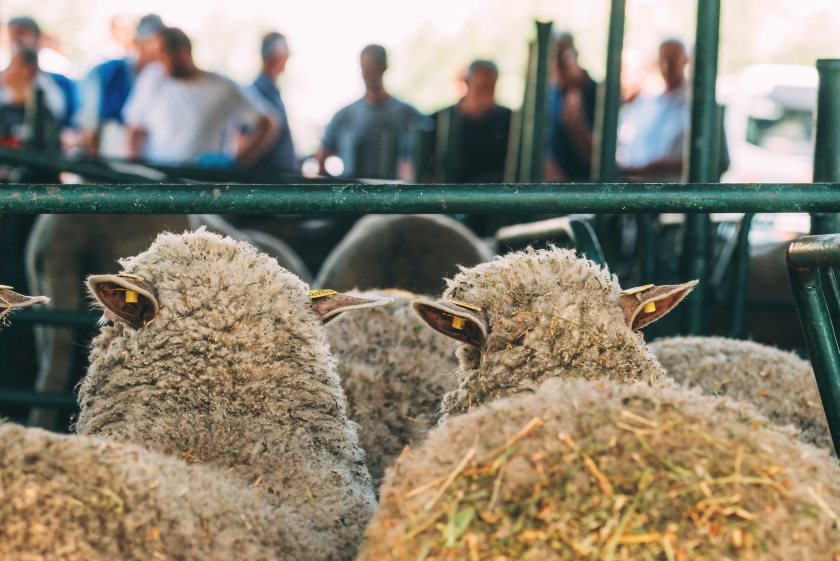
Sheep farmers have broadly welcomed new carcase reporting rules, with industry leaders saying the changes should help clarify how lamb prices are set.
The regulations introduce mandatory deadweight carcase classification and price reporting from most abattoirs, excluding only lower-throughput plants, giving producers access to more consistent and comparable data.
Classification will be based on the EUROP grid, helping farmers better understand how prices are determined across different cutting specifications and market outlets.
The changes bring lamb into line with the beef and pig sectors, where mandatory reporting is already in place and overseen by the Rural Payments Agency (RPA).
The National Sheep Association (NSA), which worked closely with Defra on the development of the rules, said the move should help reduce confusion and rebuild trust in the deadweight trade. The regulations came into force in England on Monday 12 January.
NSA chief executive Phil Stocker said the reforms marked a positive step. He said: “I welcome the introduction of this new regulation on which Defra has worked closely with industry. It’s a helpful step to simplify and give more clarity to sheep farmers over deadweight price comparisons between processors.”
He said the changes would also align sheep grading more closely with other livestock sectors. “It also means that for all but the smallest abattoirs we will now see sheep carcase grading come under the control of the RPA, bringing us in line with cattle grading,” he said.
Stocker said this should strengthen confidence across the supply chain. “Both these improvements further ambitions to create better transparency and trust through the supply chain,” he said.
He added that farmers selling lambs live through marts would not be directly affected. “Farmers selling live through marts won’t be directly affected and we are in a better place with choices and greater transparency in how we choose to sell our lambs,” he said.
Around 45% of lambs in the UK are sold deadweight, with the remaining 55% traded liveweight through marts, meaning the majority of producers will see no direct change to how they sell.
NSA policy manager Michael Priestley said differences in trim specifications had long caused confusion over deadweight pricing. He said: “It has been common to hear of confusion over a sizeable gap in price of two deadweight buyers due to differences in carcase weight due to trim specification.”
He said moving from a voluntary to a regulated system would help address that. “Moving from a voluntary to a regulated, standardised approach will demystify the lamb market for many,” he said.
Under the new system, prices will be reported against two cutting specifications – domestic retail and export – using a coefficient to standardise values.
Following the introduction in England, Welsh abattoirs will begin reporting under Wales’s new regime from Wednesday 28 January.
Equivalent regulations are also expected to be introduced in Scotland and Northern Ireland later in the year, creating a more consistent UK-wide approach and helping farmers make more informed marketing decisions as the deadweight lamb trade becomes more transparent.




