




Spare a thought for the rearer
The biggest single influence on performance in the laying house is arguably the quality of the pullets placed in it.
Yet producers know only too well that not every flock of pullets comes up to scratch. So when they don't make the grade does the blame lie with the rearer? To find out more about the challenges facing rearers, the Ranger visited Olivia Potter of midlands-based Potters Poultry.
Olivia, who is a member of BFREPA's national council, is responsible for rearing over one million pullets a year, mostly for free range and organic farms and says it's an increasingly tough job fulfilling customers' expectations.
"With egg producers' margins currently wafer-thin quite rightly they are seeking optimum performance every time—but it's getting harder and harder to get the right quality of bird delivered to producers," says Olivia. "Although it's inevitable that the rearer is going to get blamed for a flock that isn't up to weight or is perhaps uneven, there are a lot of factors that are completely out of our hands."
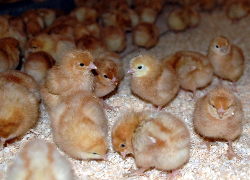
Much in the same way as the egg producer cites the quality of the pullets as determining how well the birds will do in lay, for rearers, it's the quality of the chicks delivered at day-old that is likely to be the main factor behind how well the pullets perform in rear.
"But the reality is that chick quality can be extremely variable," Olivia told the Ranger, "even to the point that we can see quite high mortality in day-old birds.
"Flocks like that are always going to struggle to meet target growth rates despite our best efforts. It can also leave us having to cull substantial numbers of birds that aren't going to make the grade."
That can leave rearers with another problem come delivery time, for most rearers operate a 'rear to order' policy which means placing the required number of chicks plus two per cent to cover losses. Higher losses than this can mean having to find extra birds to make up flock numbers, a situation Olivia admits is far from ideal but one that she would always discuss with customers beforehand.
"Customers will sometimes choose to take less than a full flock rather than have other pullets mixed in," she says.
The age of the parent flock the chicks are derived from may also have a bearing on performance in the rearing house.
"Egg producers know that the size and quality of eggs from their hens is going to vary depending on the age of the flock. Well it's no different when it comes to chicks," explained Olivia.
"It would be great if we could have chicks every time from breeder flocks that were aged between 40 and 50 weeks but of course it can't be like that for breed companies have to maximise output in the same way as commercial egg producers do."
However, for the rearer that can mean ending up with chicks that may be small because they've come from a young parent flock, or if they've been hatched from eggs laid towards the end of lay, then quality can suffer.
"It's all part of the job but it's something that pullet customers aren't always aware of," says Olivia, who recently took in an intake of chicks that had come from four separate breeder flocks.
"In an instance like that, achieving even growth rates isn't going to be easy."
Once the day-olds are placed in the rearing house, the first three weeks are probably the most crucial of the rearing period.
"If we can get them off to a good start and achieve target bodyweight by three weeks then we are almost assured of success," says Olivia, whose houses are fitted with automatic weighing equipment which means bodyweights are monitored on a daily basis.
But a packed vaccination programme can mean the task of achieving optimum growth rate is not easy.
"There are an awful lot of vaccines that we have to get into the pullets in a relatively short space of time and some of these vaccines can check the birds' performance.
"ILT at seven weeks is a good example of a vaccine that can hit the birds hard, particularly if it's a poorer flock, in which case the following two to three weeks we can be left playing catch-up with bodyweights."
The issue of Mareks disease has recently put further pressure on rearers, some of it unduly thinks Olivia.
"The increasing incidence of Mareks is a big worry and the spotlight has been turned on rearers," she says. "While it could be due to a build up of the virus on the rearing site there are a variety of reasons why we could be seeing this apparent breakdown in immunity."
Olivia believes causes could include vaccines losing their efficacy—although manufacturers say this is not the case—or vaccines not being administered correctly at the hatchery. The problem could even be on some laying sites.
"I know of a batch of pullets, the same breed and from the same rearing house, that ended up on four separate laying sites and only one went down with Mareks. Instances like that make it even more difficult to understand where the problem lies."
But with a growing number of producers suffering big losses due to Mareks, Olivia knows it is a problem that needs addressing and she believes one answer may lie in double vaccination at the hatchery.
"There's a school of thought that by administering the vaccine into the leg as well as the neck, it's not the double dose that will lead to protection, but the fact that the process should ensure no chick is missed. The difficulty I'm going to have is persuading customers to pay the extra 3½ pence a bird when they perceive it to be my problem in the first place."
And while egg producers find themselves under increasing economic pressure, rearers too say they are feeling the pinch.
"We've had no choice but to pass on some of the direct cost increases such as the price of chicks—which have just gone up by a penny—along with higher feed and vaccine costs.
"But putting variations in these costs to one side, the actual cost of a pullet hasn't budged for years," says Olivia, "even though meeting the requirements of assurance schemes such as Freedom Food means we're actually putting less birds through because we've had to reduce stocking rates.
"Cash flow can be a problem too and it's quite noticeable that when the egg price is down, paying for the pullets can get pushed back a few weeks.
"Flocks can often be weeks into lay before the rearer ever sees any of the egg cheque!"
But in the main, Potters have built up a loyal and reliable set of customers, who benefit from a comprehensive back-up service. This involves regular visits from the company's field staff—and even includes a hand to unload the pullets. But there's another purpose for this first visit, as Olivia explained.
"As well as wanting to see the birds settled and off to a flying start, we need to know that everything is as it should be on the laying farm.
"It probably takes some believing but we once had the pullet transporter turn up on a unit where they were still washing the slats in the yard—this was after the customer had confirmed he could accept the delivery.
"Our fieldsman went on the pressure washer for a couple of hours but realised it was a lost cause so at the customer's request we unloaded the pullets into the scratch area, where there was no food or water.
"This was hardly the best of starts for a flock of pullets and if we hadn't been there to witness it, I wonder if we'd have had a phone call a few weeks later to say the flock wasn't doing very well because we hadn't done a very good job!"
Despite incidents such as this, Olivia still has enthusiasm and determination in sufficient quantity for her customers to rest safe in the knowledge that everything possible has been done to ensure that a Potters' pullet delivers the goods.
"As pullet rearers, we don't expect sympathy—




