




Survey result show Freedom Food level of support for stocking density increase
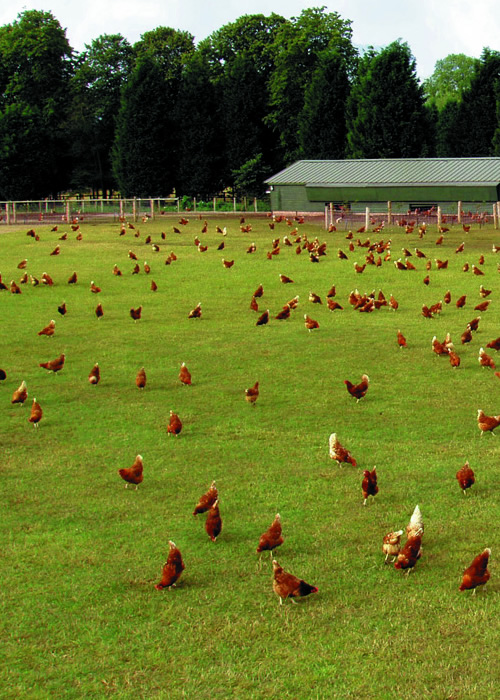
More than 80 per cent of BFREPA (British Free Range Egg Producers Association) members who took part in a survey on the impact of increased external stocking densities said they would increase hen numbers.
The survey was conducted by the association in an attempt discover whether free range egg producers are likely to expand production as a result of the change to the stocking density rules.
Maximum stocking densities were increased following a decision by BEIC Lion code subscribers last year. They voted to amend the code to enable external stocking densities to be increased from 1,000 to 2,000 birds per hectare. The amended code came into effect in January. Freedom Food and the RSPCA have so far refused to give their blessing to the change, even though the new figure is still lower than the maximum of 2,500 allowed under the EU egg marketing regulations. The RSPCA says it needs to see evidence that there will be no detrimental effect on animal welfare before giving its blessing.
Scientists from Bristol University are now conducting trials on three Noble Foods farms, and BREPA has agreed to share the cost with Noble in order to provide the RSPCA with the evidence it is demanding. BFREPA feels it is vital to resolve the issue as soon as possible. The association, Noble Foods and others in the industry say there will need to be a substantial increase in free range production in the years ahead – especially when the EU’s ban on conventional cages comes into force in January 2012. The survey conducted by BREPA was an attempt to get an early indication of whether increasing external stocking densities would help to increase production.
Survey forms were inserted into the May edition of the Ranger with a request from BFREPA chairman Tom Vesey. "We are trying to establish how many producers would increase their total hen numbers if the RSPCA/Freedom Food decision is positive," it read. "If you are likely to increase your numbers within the next two years as a result of this decision would you please indicate below. It is accepted that this is not a binding commitment but it would give us an indication of future growth on existing sites."
Members were asked to complete a form indicating the current size of their flock and what the future size of the flock may be. A deadline for returns was set at June 30.
Of the 65 producers who responded, only 11 said they would be reducing hen numbers or keeping them at the same level. A total of 54 respondents said they would increase hen numbers if the RSPCA agreed to the increase in stocking densities. The net result would be an increase of 641,000 hen numbers from the 65 producers who took part in the survey.
A number of producers attached comments to their responses. One respondent said, "We suggest BFREPA consider coming out of RSPCA as Lion covers everything." Both BFREPA and the NFU have warned that the RSPCA runs the risk of losing its influence in free range egg production if it drags its feet over the issue of external stocking densities.
Another producer said the RSPCA’s delay in making a decision was delaying his decision-making. "The delayed decision is also preventing us buying more land to increase flock numbers. How much land do we buy? We hope to add another 6,000 hens on a new site."
BFREPA chairman Tom Vesey said the results of the survey provided the industry with an indication of a possible trend. "The indications are that the majority of producers, if they were able to cut down on the range, would be able to double up their numbers." He said some ranges would not be suitable for the increased stocking densities, but many ranges would be suitable and a large percentage of those who had taken part in the survey had indicated that they would increase hen numbers.
He said that the market was facing a shortage of eggs come January 1 2012. He said it was not only the ban on conventional cages that would help to cause a shortage, but also the enforcement of reduced internal stocking densities on longstanding egg producers. When the EU decided to reduce internal stocking densities from 11.7 birds per square metre to nine, longstanding producers were allowed a derogation to give them more time to make the switch. That derogation ends in 2012 at the same time that the ban on conventional cages comes into force.
"We did a survey a couple of years ago to see how many producers currently on 11.7 birds would be spending money to increase the size of their buildings so that they could carry on with the same number of birds," said Tom. "Some 70 per cent said they would not. If that happens we will have more lost production.
"When you combine that with the ban on conventional cages and the increasing demand for free range eggs, there is going to be a shortage of eggs and the issue of external stocking densities is something that needs sorting out quickly. Producers cannot expand their operations overnight. Once they have decided to go ahead it takes about 18 months to sort everything out."
BFREPA and the BEIC (British Egg Industry Council) are continuing to talk to Freedom Food and the RSPCA about the issue.




