

Welsh dairy farmers face mounting losses as costs rise, unions warn
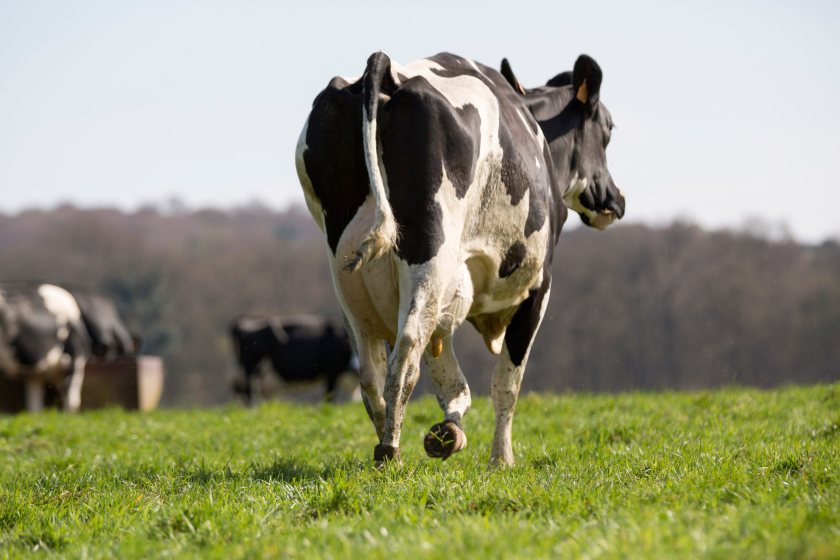
Welsh dairy farmers are facing mounting financial pressure, with some producing milk below the cost of production as rising input costs and volatile prices continue to squeeze already tight margins.
NFU Cymru and the Farmers' Union of Wales (FUW) have raised concerns over the sector's profitability ahead of the Welsh Dairy Show at Carmarthen Showground on Tuesday, 20 October.
Although farmgate milk prices are beginning to recover following more than 12 months of volatility, the UK average price in August 2026 remained 16.3% below its August 2025 level.
Higher fuel, fertiliser and feed costs have added to the pressure, raising concerns about the financial resilience of dairy businesses heading into winter.
NFU Cymru Dairy Board Vice Chair Martin Griffiths warned that some producers were struggling to cover their costs.
“In some instances, our farmers are supplying milk below the cost of production – they are operating on a day-to-day loss.”
According to Agriculture and Horticulture Development Board (AHDB) figures highlighted by the union, red diesel prices have increased by 50% compared with September 2025, while ammonium nitrate fertiliser costs have risen by around 20% since February 2026.
The exceptionally hot, dry summer has compounded the difficulties, with poor grass growth forcing many dairy farmers to begin using winter forage supplies earlier than planned.
Although some producers hope to secure late silage cuts this autumn, others face entering winter with reduced forage stocks and concerns over feed quality.
Mr Griffiths said: “The problem at present is that our members’ confidence and financial resilience is being eroded by significant pressures and cost increases that are squeezing what are, already, very tight margins.”
NFU Cymru estimates that the Welsh dairy sector contributes £929 million to the economy and supports thousands of jobs across farming, processing and associated industries.
The union argues that profitable businesses are essential to maintaining production and giving farmers the confidence to invest.
Meanwhile, the FUW is calling for a long-term strategy to strengthen domestic milk processing and reduce the industry's exposure to market volatility.
Wales produces around 1.8 billion litres of milk annually, yet almost half is processed outside the country.
FUW Deputy President Dai Miles believes expanding processing capacity could create jobs, strengthen rural economies and retain more of the value generated by Welsh milk.
Mr Miles, an organic dairy farmer and founding member of the Calon Wen dairy co-operative, warned that improved efficiency alone could not compensate indefinitely for rising costs and falling prices.
“We need a supply chain that recognises the investment, skill and risk involved in producing milk, and a pricing system that gives farmers greater confidence to plan for the future.”
The FUW wants a clearer strategy for the industry's development over the next 10 to 20 years, including greater investment in processing infrastructure and stronger supply chains.
It has also welcomed the Welsh Government's National Food Strategy for Wales as a step towards more coordinated investment in domestic food production.
NFU Cymru is separately urging ministers to make further changes to the Sustainable Farming Scheme (SFS), arguing that greater accessibility could provide additional stability for dairy businesses.
With just over 50% of dairy farms currently participating, the union believes improvements could encourage more producers to join while supporting wider environmental objectives.
It wants temporary habitat options expanded to include clovers, alongside more practical rules for multi-species leys that balance environmental benefits with agricultural productivity.
The pressures facing producers are reflected at Godregarreg Farm in Llangadog, where the Hughes family has diversified into free-range egg production and renewable energy.
After losing its entire dairy herd to bovine TB in 2016, the family rebuilt the enterprise, with its herd now standing at 140 cattle and milk supplied to Leprino for mozzarella production.
The farm also operates a free-range egg unit with capacity for up to 32,000 hens, alongside solar installations that help reduce exposure to volatile energy costs.
Despite eight decades of dairy production, ongoing concerns over bovine TB, changing regulations and unstable milk prices mean further dairy expansion is unlikely to be the family's priority.
Both farming unions are calling for greater financial stability and long-term investment, with NFU Cymru focusing on improvements to farm support and the FUW seeking a stronger domestic dairy supply chain.
The FUW also believes the industry's contribution to food security, employment and rural communities deserves greater recognition.
Mr Miles said: “With 99.6% of British households buying dairy products, it could be argued that the sector should be recognised as critical national infrastructure.”
He added: “Our products are valued, our industry matters, and we have a firm foundation on which to build for the future.”