




Welsh government sets out farm-to-fork plan for food sector
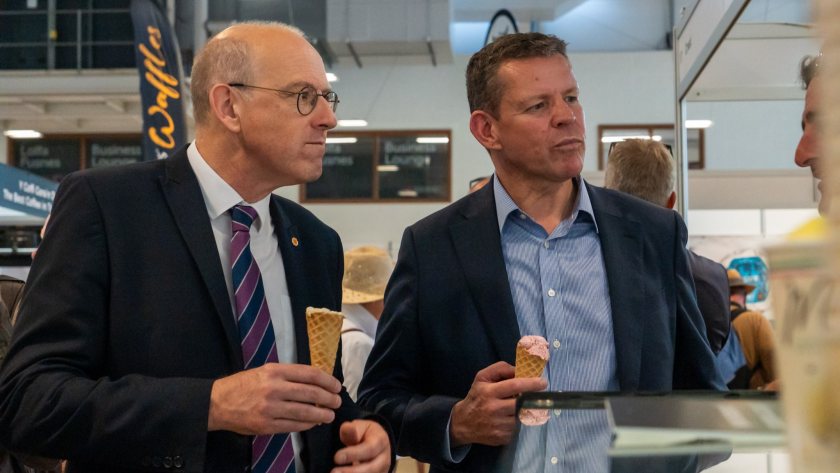
Welsh farmers and food producers are to help shape a new national strategy aimed at connecting agriculture more closely with processing, retail, public procurement and healthy eating.
The Welsh government announced plans for the National Food Strategy for Wales at the Royal Welsh Show on Tuesday (21 July). It will cover the entire food system, from primary production and processing to retail, schools, health policy and the circular economy.
According to the Welsh government, Wales’s food and drink supply chain is worth more than £28 billion and employs around one in six workers in the country.
Ministers said the strategy would identify what is working well and where gaps remain. It will also consider how producers can be better supported, how more value generated by Welsh food can be retained in Wales, and how food literacy and healthy eating can be improved.
Simon Wright, owner of Wright’s Food Emporium in Llanarthne, has been appointed to chair an Expert Working Group that will advise the Welsh government as the strategy is developed.
Wright has more than 30 years’ experience in the Welsh hospitality and food sector. He will lead discussions with producers, businesses and communities across Wales.
The group will examine the main challenges and opportunities facing the Welsh food system, recommend how progress should be measured and advise on long-term collaboration between government, the public sector and industry.
It will have no legal or decision-making powers, while its membership and terms of reference have yet to be finalised. The announcement did not include specific policy measures or a dedicated funding package for the strategy.
Llyr Gruffydd, Cabinet Minister for Rural Resilience and Sustainability, said the plan would connect farmers and fishers more closely with the wider food system.
“This strategy will bring together the whole food system; from our farmers and fishers to our retailers, schools and communities, so that we can make better, more joined-up decisions for the benefit of everyone in Wales.”
Wright said the process offered an opportunity to strengthen the industry and improve the way food policy is developed.
“Wales punches well above its weight in food and drink, but there’s so much more we can do. This is a real opportunity to cut through and get things right for our industry and the country.”
Wright was named Food Ambassador for Wales in 2010 and helped establish Cegin y Bobl, a charity that works with schools and communities to improve food literacy through cooking.
The National Food Strategy is one of the new government’s first 100-day commitments, with the final plan expected to be presented to Welsh ministers during 2027.
Separately, the Welsh government has committed longer-term support for agriculture through the Sustainable Farming Scheme.
Farmers are set to receive more than £1 billion through the scheme over the next three years, replacing annual funding settlements with a longer-term commitment.
The Welsh government has committed £340 million a year until March 2030. Of that annual settlement, £238 million will go to the Universal Layer and £102 million to Optional and Collaborative actions.
The 70:30 split means the Universal Layer will remain the main source of support for participating farm businesses.
Optional and Collaborative funding will support additional work, including environmental projects and joint initiatives involving groups of farmers.




