

Wildfire surge sparks calls for more upland grazing
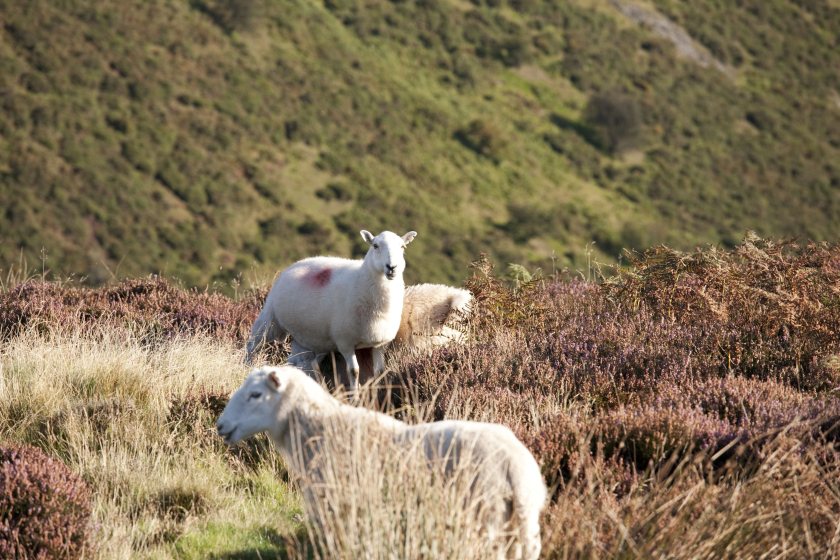
A series of prolonged wildfires across the UK has intensified calls for livestock grazing to play a greater role in managing combustible vegetation on the uplands.
The National Sheep Association will put its case to Defra minister Stephen Morgan at the NSA Sheep Event at the Three Counties Showground in Malvern, Worcestershire, on Tuesday, 28 July.
Mr Morgan was appointed Parliamentary Under-Secretary of State at the Department for Environment, Food and Rural Affairs on 22 July.
NSA chief executive Phil Stocker MBE will discuss how traditional mixed grazing, active shepherding and modern technology could be combined to manage upland vegetation.
The intervention follows several major wildfires during a period of hot and dry weather in July.
A major incident was declared at Tintwistle Moor in Derbyshire on 12 July because of the scale and complexity of the fire.
Firefighting operations were still continuing on 27 July, with crews dealing with remaining hotspots and the risk of the fire reigniting. Heavy rain had dampened some vegetation but had not brought the incident to an end.
In Scotland, a wildfire near Glenmore in the Cairngorms National Park began on 15 July and affected an estimated six square kilometres.
The operation continued for a 12th day on 26 July after firefighters, specialist vehicles and helicopters were deployed across difficult and remote terrain.
Firefighters and environmental agencies also responded to a wildfire in the Rhinogydd mountains near Harlech, North Wales, after it was first reported on 12 July.
The incidents do not demonstrate that declining livestock grazing caused the fires. Their official reports have focused on the emergency response, weather, terrain and fire conditions rather than attributing them to a particular land-management practice.
However, they have renewed attention on how dry vegetation is managed in places vulnerable to wildfire.
The UK Health Security Agency said in July that hot, dry weather could remove moisture from vegetation and provide fuel for fires. It also warned that climate projections suggested conditions favouring larger and more severe wildfires would become more common.
The NSA argues that carefully managed grazing could help control the spread of bracken, gorse, molinia and other coarse vegetation that can contribute to fuel loads.
It wants the Government to support a modern approach to upland management, combining mixed grazing with more active shepherding and technology such as GPS livestock tags.
Mr Stocker said policymakers should consider “how can we incentivise, encourage and reward traditional mixed grazing in our upland regions” while protecting soil, peatlands, water and air quality.
He said farmers could use livestock technology to manage sheep and cattle more precisely across large areas, but warned that the additional work must be economically viable.
“If we can graze sheep and cattle in ways to deliver high value nature and vegetation habitats, and it costs money to do this, then in my view it’s a good use of agri-environment funds,” Mr Stocker said.
“In doing so, we would reduce the risk of out of control wildfires and protect nature.”
Conservation grazing is not a single solution for every upland area. Its effectiveness and environmental impact can depend on the type of livestock used, stocking levels, the time of year and the habitats being managed.
The NSA nevertheless believes reduced grazing and a decline in active livestock management have allowed combustible vegetation to accumulate in parts of the uplands.
“Ongoing grazing reductions in many of our uplands and the impact of climate change is hitting us more severely and more quickly than many expected,” Mr Stocker said.
Wildfires can release carbon, damage peatlands, pollute the air and threaten people, livestock and wildlife.
Mr Stocker said their timing was also a concern because fires following dry springs could break out during important nesting and breeding periods.
“Wildfires are bad at any time – they cause air pollution, emit carbon, damage peatlands and put human and animal safety at risk,” he said.
He added that recent dry springs meant fires were occurring at “peak nesting and breeding time”.
The NSA also rejected the suggestion that farmers have little interest in protecting nature.
It said farmers and shepherds often had detailed knowledge of the birds, mammals and insects found on the land they managed, while traditional agricultural practices had helped maintain upland habitats.
The association first highlighted what it saw as a connection between changing land use, reduced stocking levels and wildfire risk in its 2012 publication, The complimentary role of sheep in Less Favoured Areas.
Mr Stocker acknowledged that agricultural policies introduced decades ago had encouraged damaging levels of overgrazing by sheep.
He argued, however, that the balance had shifted, with undergrazing and insufficient management now causing greater problems in many areas.
Declining returns from upland livestock systems had also made it more difficult for farmers and shepherds to justify the time required to manage animals across remote hills, the NSA said.
This could result in livestock becoming concentrated in accessible areas while larger stretches of land were left undergrazed and increasingly dominated by bracken, molinia and gorse.
The association wants future upland policy to support carefully planned grazing, more active shepherding and technology-led livestock management.
It says farmers should be paid where that work delivers measurable benefits for habitats, natural resources and wildfire prevention.