




Defra food labelling plans risk misleading shoppers, NFU warns
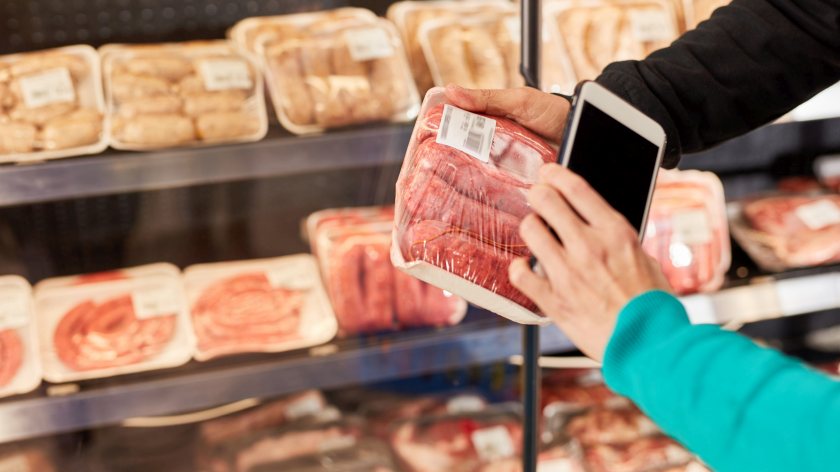
Government plans to expand animal welfare labelling risk misleading shoppers and adding costs for farmers, the NFU has warned.
Defra has said it will explore whether method of production labelling — which identifies how animals are reared, such as indoor or outdoor systems — could improve transparency as part of its wider animal welfare strategy. However, the union argues the approach oversimplifies a far more complex reality.
NFU food and business relationship adviser Cara Rhodes said comparisons with existing egg labelling are limited, despite often being held up as a success.
Egg production systems are clearly defined in law and widely understood by consumers, she noted, meaning additional regulation risks adding unnecessary complexity to a category that is already relatively clear.
By contrast, applying similar labelling to meat and dairy products would be significantly more challenging.
Livestock systems vary widely, with animals often moving through different environments during their lifetime. A dairy-bred calf, for example, may be born indoors, reared outdoors and finished indoors — making it difficult to capture its journey through a single label.
The NFU said scientific evidence shows that production method alone is not a reliable indicator of welfare. Instead, outcomes depend more heavily on stockmanship, day-to-day management and consistent care.
Reducing these factors to a simplified label risks confusing consumers and obscuring what actually drives high welfare standards, the union argued.
It also warned that a tiered system could reinforce the misconception that one method is inherently superior, despite the diversity of UK farming systems.
The organisation said there is little evidence that mandatory method of production labelling would improve transparency or lead to better welfare outcomes.
While supporting clear and accurate information for consumers, it argued that compulsory labelling would be costly to introduce and difficult to implement, particularly in sectors without clearly defined production systems.
There are also concerns about the financial impact. Additional labelling requirements could increase costs for producers, potentially feeding through to higher prices for consumers while further squeezing already tight farm margins.
Independently audited assurance schemes remain the most effective way to demonstrate high standards, the NFU said, as they evolve with scientific understanding and provide consistent, trusted benchmarks.
Higher-welfare products currently remain a niche choice, largely due to cost, raising questions over whether additional labelling would significantly influence purchasing decisions.
Rhodes also cautioned that rigid labelling categories could hinder progress. “Welfare is best advanced through flexible, outcome-focused assurance schemes that reward good practice,” she said, rather than static systems that fail to reflect management quality.
Instead, the NFU is advocating a market-led approach, supported by robust assurance schemes, innovation and evidence-based claims.
The union is urging the government to strengthen transparency by embedding animal welfare and environmental standards in law for imports, maintaining a largely voluntary approach to labelling, and improving country-of-origin information.
It added that consumer confidence is best built through trusted assurance schemes and clear, evidence-based information — not simplified labels that risk misrepresenting how food is produced.




