




Duchy unveils rare 25-year tenancy for flagship regenerative farm
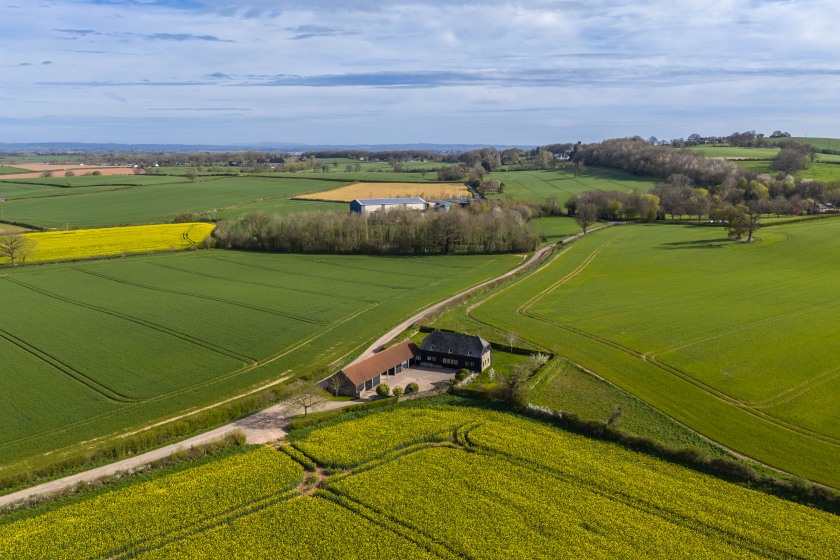
A flagship 900-acre farm in Herefordshire is being lined up as a testbed for the future of British agriculture, as the Duchy of Cornwall launches a rare long-term regenerative tenancy.
The estate is seeking a “forward-looking and dynamic partner” to take on Monkhall Farm, near Hereford, with a mandate to deliver a large-scale shift towards regenerative farming.
Offered on a 25-year agreement — an unusually long term in the sector — the tenancy is designed to give farmers the confidence to invest in soil health, biodiversity and business resilience at scale. Applications are now open.
Monkhall is a ring-fenced, predominantly arable unit extending to around 900 acres. It comes equipped with modern infrastructure, including irrigation across much of the land, a 3,600-tonne potato cold store and a farmhouse currently being created through the conversion of the Duchy’s Hereford office.
Around two-thirds of the holding is Grade 2 land, with a history of potato and combinable crop production — offering what the Duchy sees as a strong commercial foundation for a regenerative transition.
The move forms part of the Duchy’s wider ambition to reach net zero across its communities by 2032, with regenerative farming positioned as a key route to balancing environmental goals with profitable food production.
At Monkhall, the successful applicant will be expected to enhance the natural environment while reducing reliance on external inputs — a shift that reflects broader pressures on the sector, from rising costs to tightening environmental targets.
The tenancy will be offered under the Duchy’s new Regenerative Farm Business Tenancy (rFBT), set to launch at Groundswell in July. The model aims to go beyond a traditional agreement, providing farmers with practical advice, help accessing grants and ongoing collaboration through the Duchy’s Farming and Nature programme.
Its start date in September 2026 aligns with the reopening of the Government’s Sustainable Farming Incentive, giving the incoming tenant an early opportunity to draw on public funding streams tailored to soil health and biodiversity improvements.
Matthew Morris, Rural Director at the Duchy of Cornwall, said: “Monkhall Farm is a rare opportunity to develop a forward-looking, regenerative farming business.”
He said the project would help “shape and demonstrate what regenerative farming looks like in practice”, adding that the long tenancy “provid[es] the certainty needed for a farmer to invest, adapt and be part of that journey at scale”.
Ceres Rural has been appointed to support the search for a tenant. Viewings will take place in May, with applications closing on 15 June — a timeline likely to attract strong interest for what is one of the most substantial regenerative farming opportunities currently available in England.




