




Government told to replace 'farm fresh' claims with clear welfare labels
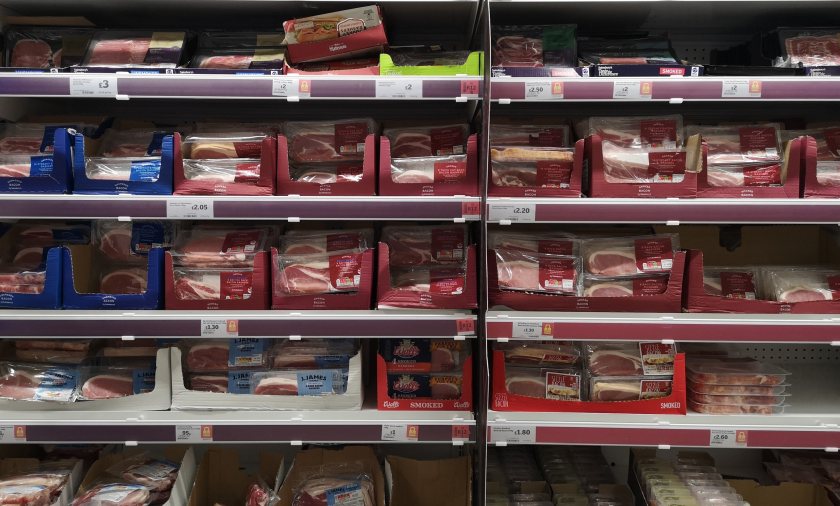
Shoppers struggle to establish how animals were reared from many food labels, according to a report calling for mandatory welfare information across meat, dairy, eggs and other animal products.
Animal welfare charity Four Paws UK is urging the government to introduce Method of Production labelling, which would tell consumers about the farming systems used rather than relying on broad claims such as “farm fresh” or “responsibly sourced”.
The charity argues that the current mixture of assurance marks, voluntary schemes and marketing language makes it difficult for shoppers to compare products accurately.
It says labels often provide little clear information about housing conditions, stocking densities, pasture access or other factors affecting an animal’s quality of life.
The report also warns that inconsistent labelling can disadvantage farmers who face additional costs to meet higher welfare standards but compete against products carrying vague or unverified claims.
Under the proposals, packaging would identify the system in which animals were kept, such as whether they were caged, housed exclusively indoors or given access to pasture.
The information would be supported by validated welfare indicators to create a more consistent framework for farmers, retailers and consumers.
Four Paws UK wants the rules to cover domestically produced and imported food, including processed products and meals sold through restaurants, catering businesses and other food-service settings.
The report was launched at an event in Parliament hosted by Alistair Carmichael MP, chairman of the Environment, Food and Rural Affairs Committee.
A temporary supermarket aisle was installed to demonstrate how regulated welfare labels could appear in practice.
The charity said welfare information differed from details such as price or ingredients because shoppers could not independently verify how an animal had been treated at the point of sale.
Consumers must therefore rely on the claims, symbols and descriptions shown on the packaging.
Four Paws UK points to egg production codes as evidence that standardised information can help shoppers distinguish between farming systems and influence buying decisions.
However, an animal’s overall welfare can depend on several factors beyond its housing system, including health, handling and management.
Research commissioned by the charity in 2025 found that almost 80% of respondents supported Method of Production labels on animal products sold in supermarkets.
The same research found four in five supported banning cages for farmed animals, while two-thirds backed ending systems in which animals are raised exclusively indoors.
The charity did not provide further methodological details alongside the report.
Emily Wilson, head of programmes at Four Paws UK, said consumers often believed food labels revealed more about animal welfare than they actually did.
“Most people assume the information on a food label tells them something meaningful about the life an animal led. Too often, that simply isn’t the case,” she said.
“When shoppers are standing in front of a supermarket shelf, they should be able to tell, at a mere glance, the difference between one product and another.”
Ms Wilson said clearer rules would also help recognise producers investing in stronger welfare standards.
“Consumers deserve honest, straightforward information. Farmers who are already investing in higher welfare deserve recognition for the standards they’re setting,” she said.
“Most importantly, animals deserve a system that encourages a better standard of life.”
Mr Carmichael, who wrote the report’s foreword and chaired a panel involving farming, certification and retail representatives, said shoppers had a right to know how their food was produced.
“The current landscape is clouded with marketing spin and meaningless messages, which only do a disservice to shoppers and the many farmers who are already investing in raising standards,” he said.
“The Government has an opportunity to deliver a practical reform, with benefits for consumers, producers and animals alike.”
Four Paws UK said voluntary assurance schemes could provide useful information but remained uneven across imported food, processed products and meals served outside the home.
It argues that mandatory rules should apply consistently across the market so farmers investing in higher-welfare systems can be distinguished from products carrying vague or incomparable claims.
The report does not set out the likely cost of introducing the proposed system or how welfare claims on imported and processed food would be independently verified.
Those questions would need to be addressed before a market-wide labelling regime could be introduced.
Four Paws UK is now urging ministers to bring forward legislation and calling on MPs from all parties to support measures designed to improve transparency and give greater recognition to higher-welfare farming.




