




Iran-linked disruption fuels calls to delay UK carbon border tax
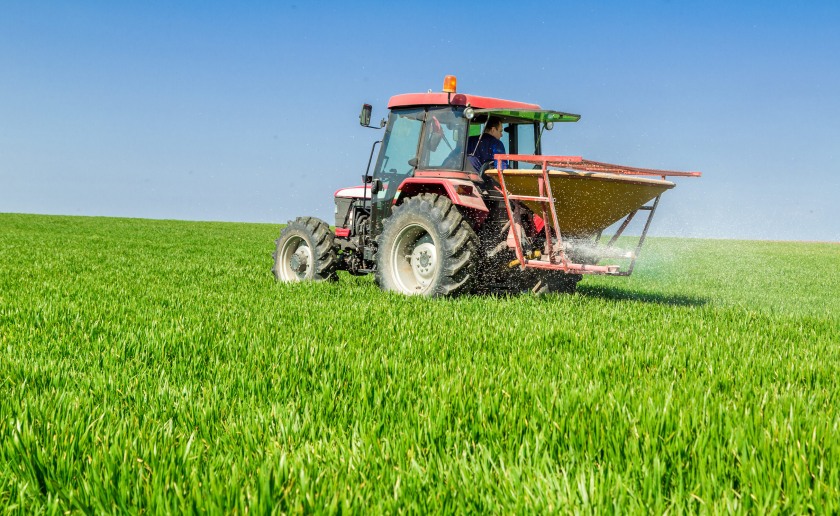
Farmers warn a new carbon tax on fertiliser imports could further squeeze margins and threaten UK food production.
The NFU is calling on the government to delay the introduction of the carbon border adjustment mechanism (CBAM), due in January 2027, as global instability adds fresh pressure to already stretched farm businesses.
Farmers are already under pressure, with rising input costs and falling returns creating a renewed financial squeeze, as agricultural input inflation has risen to 7.6% annually as of March 2026, well above general inflation (3.0%) and food inflation (3.2%), according to Andersons.
At the same time, farm output prices have fallen by 6.5% year-on-year, leaving producers facing a clear “cost of farming” squeeze.
The pressure is being intensified by disruption linked to the Iran conflict, with the Strait of Hormuz — a key route for oil, gas and fertiliser inputs — facing blockades. Around a fifth of global ammonia and urea supplies pass through the channel, pushing up costs for fertiliser production.
Concerns over supply have also been highlighted in a recent report by the National Preparedness Commission, which warned the UK’s reliance on imported fertiliser leaves farming exposed to geopolitical shocks. It said disruption in the Strait of Hormuz earlier this year showed how quickly prices can rise, underlining the fragility of supply routes.
The CBAM would place a levy on the carbon emissions generated during the manufacture of certain imported goods, including fertiliser, as part of wider efforts to prevent “carbon leakage” and align with climate targets.
However, the NFU says the policy risks increasing costs for UK farmers who already rely heavily on imported fertiliser, with domestic production no longer in place.
Deputy president Paul Tompkins said the timing could not be worse.
“British farmers largely rely on fertiliser to grow and produce our food, yet we no longer make it here. Adding a CBAM to this essential input as it arrives at our ports would pile even more costs onto farms already under intense pressure,” he said.
He warned that without equivalent measures on imported food, UK producers could be left at a clear disadvantage.
“I worry that if government fails to apply the same charges to imported food, we’ll simply be penalising British farmers while giving overseas producers a free pass.”
Industry leaders say lower fertiliser costs in countries outside the CBAM framework could give overseas producers a built-in advantage, making it easier for imports to undercut British farmers and potentially shifting production abroad.
That risk is being intensified by volatility in energy markets.
Natural gas, which accounts for between 60% and 80% of nitrogen fertiliser production costs, has been heavily impacted by recent disruptions, feeding directly into rising input bills for farmers.
Mr Tompkins said the impact would extend beyond the farm gate.
“Every extra cost on fertiliser runs the risk of feeding through the food chain, increasing the cost of producing food and adding to inflation for consumers,” he said.
“Natural gas remains the dominant input cost in nitrogen fertiliser production and disruption linked to the Iran conflict is already driving up costs for UK farmers. Many are facing rising fuel and fertiliser bills with little certainty.”
The NFU is urging ministers to pause the policy and reassess market conditions before moving ahead.
“We believe the best option would be to postpone CBAM and conduct a market review in 12 months,” Mr Tompkins said.
“Without that pause, CBAM risks having a material impact on growers’ and farmers’ ability to produce food at a time when boosting domestic food production is increasingly critical.”
The union warned that, without careful timing and wider alignment with import policy, the measure could undermine UK competitiveness and add further strain to the sector.




