




Sugar beet industry calls for trade safeguards at Westminster reception
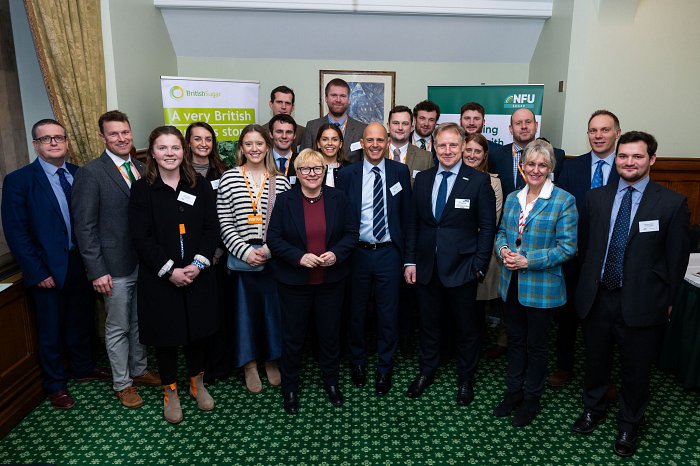
With trade pressures mounting and food security rising up the political agenda, Britain’s sugar beet sector has taken its case directly to Westminster.
Industry leaders and growers gathered in parliament to showcase the value of homegrown sugar and press ministers for a policy environment that protects domestic production.
Participants from the NFU and British Sugar-backed Sugar Industry Programme (SIP) met 17 MPs at a parliamentary reception to discuss the challenges and opportunities facing the sector.
Talks focused on food security, the need for trade policy that supports British agricultural interests, and the potential of agri-tech innovations such as precision breeding.
The event comes at a time of mounting uncertainty for arable farmers, with growers facing rising input costs, climate pressures and concerns that future trade deals could undercut domestic production.
Sugar beet remains a cornerstone of many arable rotations and underpins a significant part of the UK’s homegrown sugar supply.
Farming Minister Dame Angela Eagle addressed the reception, outlining the government’s priorities for farming in the months ahead and recognising the industry’s contribution.
She described the beet sector as a “vital part of our agri-food economy in the East” and said she had “welcomed the opportunity to hear about its opportunities and how the government can support its continued success”.
Baroness Minette Batters, referencing her recent Farm Profitability Review, stressed that the beet sector is critical to UK agriculture and long-term resilience.
She praised the Sugar Industry Programme for helping to prepare future leaders and said: “Events such as today provide a vital touchstone between government and industry, and an important opportunity to consider ways in which we can collaborate together towards a sustainable future.”
NFU Sugar Board chair Kit Papworth described the SIP as a “true feather in the cap of our homegrown sugar beet industry”.
Now in its thirteenth year, the programme offers participants insight into the full supply chain — from research and seed development to factory operations and policy.
“We remain extremely proud of it and the more than 100 farmers that have been through it,” he said.
Papworth warned that growers are navigating pest and disease pressures, climate volatility and trade policy risks that could undermine domestic production.
“In the context of the multitude of challenges we currently face as a sector… it’s vital that we continue to invest in upskilling the next generation of industry leaders,” he added.
The reception was hosted by Charlie Dewhirst, MP for Bridlington and the Wolds and a member of the Efra Committee.
He said: “Sugar beet is a very important part of the arable rotation, and I am proud to represent a constituency which is home to several beet growers.”
“Programmes such as the SIP are highly valuable in developing and upskilling the farming industry’s future leaders,” he added.
British Sugar managing director Keith Packer said it had been “fantastic” to meet growers and professionals at what he described as a pivotal moment for the sector.
“The SIP reception gives us the opportunity to take this message straight to the heart of Westminster, and bang the drum for the British beet sugar industry,” he said.
“At this pivotal time for British farming, we urge the government to foster a policy environment which ensures the very best for our whole sector – from field to factory.”
Industry figures said clear, stable policy and trade frameworks will be essential if homegrown sugar is to remain competitive in an increasingly uncertain global market.




