




£43.5m slug problem targeted with high-tech imaging breakthrough
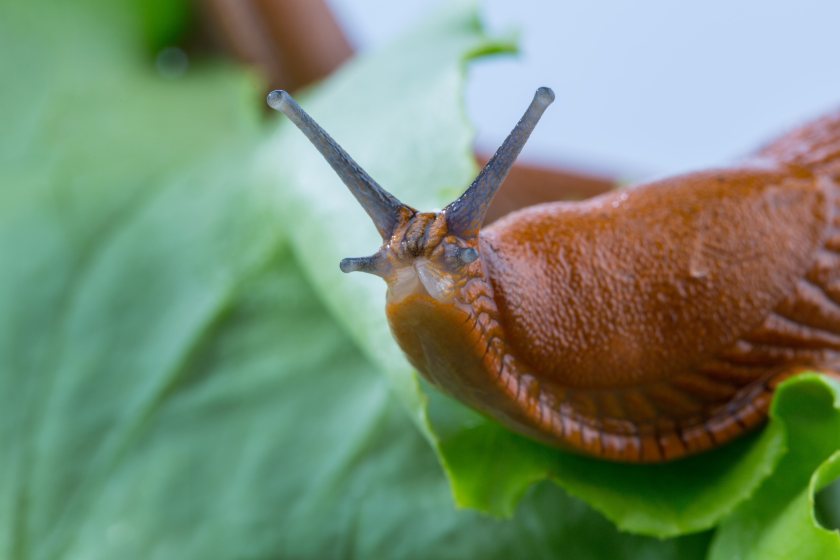
Slug damage costing farmers an estimated £43.5 million a year could soon be tackled with the help of high-tech imaging capable of spotting the pest in real time.
Researchers from the UK Agri-Tech Centre and Rothamsted Research say they have identified a method using multispectral imaging to detect the grey field slug, opening the door to automated in-field monitoring and more targeted control.
Slug pressure has been particularly acute in recent wet autumns, with cereals and oilseed rape crops vulnerable at establishment.
With chemical options under increasing regulatory scrutiny, growers are under pressure to reduce blanket applications of pellets while maintaining crop protection.
The newly published study explored whether advanced imaging techniques could reliably distinguish slugs from soil and crop residues on the field surface.
Researchers found that multispectral imaging could successfully identify the slugs using as few as five specific wavelengths of light — spanning ultraviolet (365nm), blue (405 and 450nm), green (570nm) and near-infrared (880nm).
Fluorescence imaging, however, did not detect a slug-specific signal.
The team believes the identification of these wavelengths could underpin automated monitoring systems, enabling more precise treatment decisions rather than routine field-wide applications.
Dr Jenna Ross, technical lead for the SLIMERS project at the UK Agri-Tech Centre, described the findings as “a game-changing solution for improved monitoring of pestiferous slugs”.
“This exciting piece of work brought together a fantastic multidisciplinary team,” she said.
“By identifying these unique wavelengths of light, we can start to use these data to develop real world applications for improved slug monitoring and subsequent control.”
If successfully commercialised, the technology could support patch prediction and precision mapping tools, allowing growers to target hotspots and potentially reduce input costs and environmental impact.
The research combines findings from two Innovate UK-funded projects, SlugBot and SLIMERS, backed through SMART and Defra’s Farming Innovation Programme.
SLIMERS – Strategies Leading to Improved Management and Enhanced Resilience against Slugs – is a three-year £2.6 million programme involving more than 100 farms and seven partner organisations.
Led by the British On-Farm Innovation Network (BOFIN), the consortium includes Harper Adams University, the John Innes Centre, Fotenix, Farmscan Ag, Agrivation and the UK Agri-Tech Centre.
The project aims to develop commercial services from proof-of-concept technologies, including AI-based autonomous systems capable of targeted biological control using nematodes, alongside work on ‘slug resistant’ wheat varieties.
Researchers caution that further validation under varying field conditions will be required before the imaging approach becomes widely deployable. Factors such as crop cover, surface residue and lighting variability may influence performance.
However, with slug damage continuing to cost the sector tens of millions annually, precision detection tools are increasingly seen as a critical step towards more sustainable crop protection.
Farmers are being encouraged to join the project’s Slug Circle knowledge exchange platform as development continues.




