




Disease problems anticipated in peas
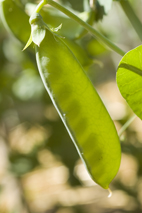
The return to wetter weather is likely to bring increased disease pressure in peas. As flowering approaches growers should be inspecting crops for disease on the lower leaves and be prepared to spray, warns Simon Francis, Agronomy Manager for BASF.
"The weather usually dictates the use of fungicides in peas, with damp and humid conditions at flowering and pod set encouraging rapid development of disease. But there is normally very little time between risk assessment and the need to apply the fungicide. So growers will need to act fast and apply a fungicide for the preventative control of the three most important diseases in the crop, namely, leaf and pod spot (Mycosphaerella and Ascochyta) and grey mould (Botrytis). BASF has two fungicides recommended for use in peas – Walabi in combining peas and Caramba in combining and vining peas," says Simon.
"Mycosphaerella pinodes, Ascochyta pisi and Botrytis cinerea all affect the yield and quality of peas, particularly when it is damp and humid at flowering. PGRO report that these diseases can reduce yields by as much as 30%. A series of ten trials demonstrates this yield penalty; with a treatment of Walabi giving an extra yield of 0.84 t/ha over the untreated," says Simon.
Walabi is recommended at a dose rate of 2 l/ha and can be applied to any combining pea variety. It can be used towards the end of flowering, providing there is a two week interval between the first and second treatments.
The leading pulse fungicide in France, Walabi is an effective combination of two complementary fungicides, chlorothalonil and pyrimethanil. "Chlorothalonil offers strong protectant activity whereas pyrimethanil has protectant, translaminar and vapour phase activity throughout the crop canopy. This reflects in better all round disease control," says Jonathan Ball, BASF Peas and Beans Product Manager.
Jonathan reminds pulse growers that Caramba (60 g/l metconazole) also offers effective, broad-spectrum disease control of Mycosphaerella pinodes, Aschochyta pisi, Botrytis and rust in both combining and vining peas. It is recommended at a dose rates of 1.2 l/ha and has a relatively short Harvest Interval of 14 days.
Both fungicides can be tank-mixed with a range of insecticides, including Contest, for the combined control of pea pests and diseases, a useful option as pea aphid populations increase.
Walabi contains 150 g/l pyrimethanil and 375 g/l chlorothalonil formulated as a suspension concentrate. It is approved as a protectant treatment against Botrytis cinerea, Ascochyta pisi, and Mycosphaerella pinodes in all varieties of combining peas. It is recommended at dose rates of between 1.5 to 2 l/ha and up to two applications can be made. Walabi has a harvest interval of 6 weeks in peas.
Caramba contains 60 g/l metconazole, formulated as a soluble concentrate and packed in a 5-litre pack. It is a broad-spectrum fungicide with curative and protectant activity. It controls Mycosphaerella pinodes, Ascochyta pisi, and Botrytis in combining peas, vining peas and lupins as well as rust in these crops and field beans at a dose rate of 1.2 l/ha. Up to two applications can be made with a Harvest Interval of 14 days.
For further comment and information please contact Jonathan Ball, BASF on 0161 488 5785 or mobile 0771 7782768




