




Green campaigners urge ban on pre-harvest glyphosate use
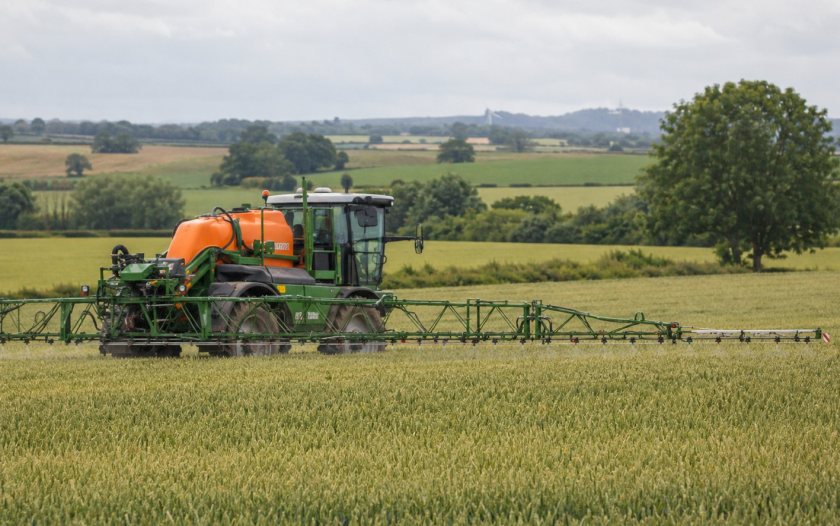
Campaigners are calling for a ban on the pre-harvest use of glyphosate, as the herbicide’s future in UK farming comes under renewed regulatory scrutiny.
The Soil Association is urging ministers to end the use of glyphosate as a pre-harvest drying agent after nearly 60,000 people signed a petition backing tighter controls.
The petition reached the milestone within 28 days of being launched.
The campaign focuses specifically on glyphosate-based herbicides being applied shortly before harvest, rather than an immediate ban on all glyphosate use.
It comes as the Health and Safety Executive is assessing whether glyphosate should continue to meet the legislative approval criteria for use in Great Britain.
The current approval has been extended until 15 December 2026 while the renewal process is completed.
The public will be able to comment on HSE’s draft conclusion before any renewal decision is made.
While the Soil Association and organic veg box company Riverford are pushing for tighter controls, many growers argue glyphosate remains an important tool for weed control, reduced tillage and harvest management.
Glyphosate is widely used in farming to manage weeds and can play a role in reduced cultivation systems, where growers seek to limit soil disturbance, manage difficult grassweeds and reduce cultivation costs.
It is also used in some systems to control cover crops as an alternative to ploughing, helping farmers maintain soil structure and prepare land for following crops.
Growers using glyphosate say pre-harvest applications can help some cereal and oilseed crops dry and ripen more evenly, reduce disease risks and allow harvesting to be completed more efficiently during narrow weather windows.
For many arable businesses, particularly those dealing with resistant grassweeds, unsettled harvest conditions or tight drilling windows, any loss of glyphosate would require changes to crop management and could increase costs.
Pre-harvest desiccation involves spraying some crops shortly before harvest to dry them and speed up combining.
Campaigners argue that the practice increases the risk of residues being found in foods such as bread, breakfast cereals, oats and beer.
The Soil Association and organic veg box company Riverford are calling for the UK to ban glyphosate’s use in this way.
They say public concern is growing over pesticide residues in everyday foods.
Riverford research found that 83% of people were concerned about long-term exposure to chemical residues in food, while 67% said they would support a ban on using glyphosate in British food production.
More than 90 public figures, including chefs Rick Stein and Hugh Fearnley-Whittingstall, have supported Riverford’s “Grievous Biological Harm” campaign.
An open letter to the Defra Secretary has also called for a ban on pre-harvest desiccation in the UK.
The letter was co-ordinated by the Soil Association and signed by 27 environment and health groups, including Riverford, the Nature Friendly Farming Network, Greenpeace and The Wildlife Trusts.
Guy Singh-Watson, founder of Riverford, said the speed at which the petition had gained support reflected public concern about food production.
“The fact that this petition has reached nearly 60,000 signatures in such a short time reflects a growing public unease around how our food is produced,” he said.
Mr Singh-Watson said farmers should not be blamed for the current reliance on chemical inputs.
“Farmers are not to blame here, many are operating within a system, dominated by the supermarkets, that has pushed them towards chemical dependency through relentless pressure on price and efficiency,” he said.
He said any move away from practices such as pre-harvest glyphosate spraying would require support from government and the food industry.
“There are many farmers already proving that low-input, agroecological approaches can work,” he said.
“But they need practical backing, fair returns and long-term policy support, while shoppers need their trust in the food system restored.”
Glyphosate is the active ingredient in many herbicide products, including Roundup, and has been subject to long-running debate over potential health and environmental risks.
Regulatory positions on glyphosate have differed internationally, with pesticide approvals assessed through scientific risk assessments.
A 2023 EU assessment of glyphosate’s health and environmental impact did not identify “critical areas of concern”, although some data gaps and outstanding issues remained.
Campaigners cite UK testing across wheat, barley and oats which found glyphosate in nearly half of crop samples.
Pesticide Action Network UK has also reported that 28% of bread samples tested by the UK government contained glyphosate residues.
The Soil Association said pre-harvest desiccation was not used to support soil health management and argued that glyphosate could have wider environmental impacts.
Soil Association campaign co-ordinator Cathy Cliff said many people had been surprised that pre-harvest spraying was not already banned.
“Our government must listen to the public who are rightly concerned about the health implications,” she said.
“We are urging them to do the right thing and remove glyphosate from our foods, while supporting farmers to find alternatives that protect nature and public health.”
Campaigners say ending pre-harvest use would be a first step towards reducing direct exposure through food.
For growers, however, any policy shift would need to recognise the role glyphosate plays in weed control, reduced tillage and harvest planning.
The key question for farm businesses will be whether any restrictions are matched by realistic alternatives, fair support and enough time to adapt.




