




Natural bacteria may protect crops from rising salinity threat
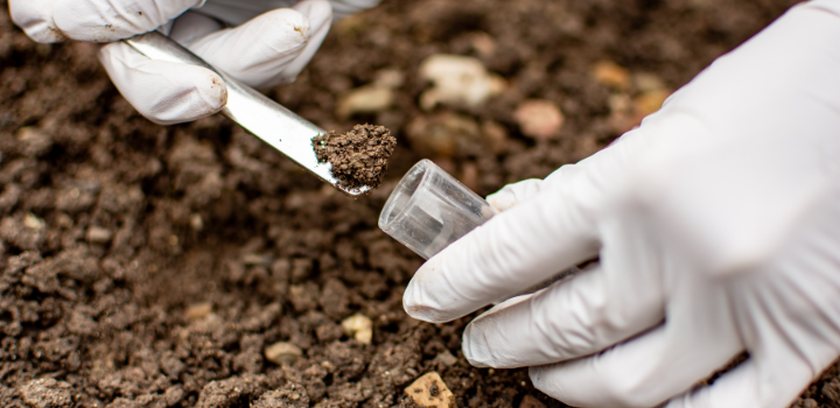
Naturally occurring soil bacteria could help farmers protect crops from salty soils caused by climate change, irrigation and rising sea levels, new research has found.
Scientists at the University of East Anglia helped uncover how beneficial microbes can boost the ability of crops to survive in saline conditions.
The study, led by Chinese collaborator Dr Yanfen Zheng, found that certain bacteria can help crops including maize, tomato, rapeseed and soybean cope with salt stress.
Researchers say the discovery could have major implications for global agriculture, as salinity can stunt growth, damage roots and make farmland less productive or unusable.
Prof Jonathan Todd, from UEA’s School of Biological Sciences and the Quadram Institute on the Norwich Research Park, said: "The build up of salt in farmland is a major and worsening problem - driven by climate change, irrigation and rising sea levels."
He warned that the issue could put food production at risk.
"Salt chokes plant growth, damages roots and severely impact entire harvests - putting global food supplies at risk," he said.
Scientists already know that plants depend on communities of microbes around their roots, known as the root microbiome, to help them cope with environmental stress.
However, researchers said it had remained unclear exactly how those relationships worked, and whether they were consistent across different crops and soils.
The study found that plants appear to attract beneficial bacteria when growing in salty conditions, with those microbes triggering internal changes that strengthen plant structure and resilience.
Prof Todd said: "We found that plants appear to recruit beneficial bacteria in salty soil conditions, which in turn trigger internal changes that strengthen their physical structure and resilience."
He said the findings could lead to new approaches for agriculture.
"If scientists can harness this natural process, it could mark the beginning of a new era in climate-resilient agriculture," he said.
Researchers analysed plant root microbiomes across several crop species and soil types, finding that naturally occurring bacteria called pseudomonads were consistently drawn to plant roots under salt stress.
The pattern was seen across several crops, suggesting a widespread biological response rather than an isolated effect.
Genetic analysis showed that pseudomonads carry genes that help them tolerate high salt levels, including sodium transport systems and stress resistance mechanisms.
The researchers then introduced pseudomonad strains into soybean plants, where the bacteria successfully colonised the roots and improved plant growth under salt stress in both greenhouse experiments and field trials.
Prof Todd said: "We found that plants treated with the microbes showed stronger root systems, better development and higher yields compared to untreated plants grown in salty soils."
The study also revealed a surprising explanation for how the bacteria helped plants.
For many years, scientists believed plants mainly survived salinity by controlling sodium levels and keeping harmful salt out. But the researchers found no evidence that the bacteria affected sodium transport or ion balance.
Instead, the bacteria appeared to stimulate plants to produce more lignin, a tough woody substance found in plant cell walls.
Lignin strengthens plant tissues and helps roots withstand environmental stress.
Prof Todd said: "Instead of helping plants manage salt directly, the bacteria stimulated the plant to produce more of a substance called lignin."
Roots of bacteria-treated plants showed a significant increase in lignin content, with some measurements rising by more than 30% under salt stress.
Researchers also identified key genes involved in the process. When those genes were artificially overexpressed, plants performed better in salty conditions, while plants unable to produce lignin lost the benefit even when the helpful bacteria were present.
Prof Todd said: "We hope this discovery opens up new possibilities for agriculture."
He said naturally occurring microbes such as pseudomonads could be used to develop bio-based treatments that help crops grow in saline soils without relying heavily on chemical inputs.
"With vast areas of farmland already affected by salinity and more under threat, microbial solutions could become an essential tool for maintaining crop yields and ensuring food security," he said.
The research has been published in Science Advances.




