




Oat growers face 40-point checks as weather risks grow
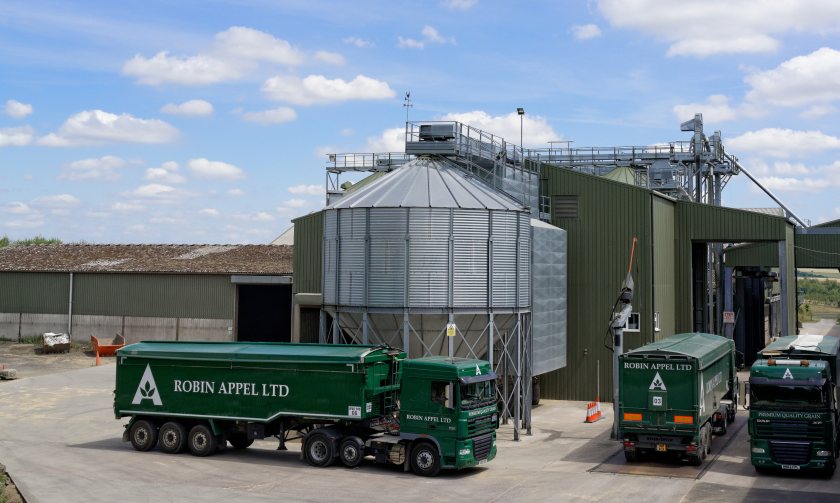
Oat growers are being assessed across 40 environmental measures as extreme weather threatens production and processors and food brands demand stronger evidence about how crops are grown.
Fifteen farms supplying grain trader Robin Appel Ltd are taking part in the programme, which will establish baselines across carbon, soil, water, biodiversity, animal welfare and social responsibility.
The partnership with Soil Association Exchange is designed to give growers a whole-farm picture rather than focusing solely on carbon.
Each farmer will receive one-to-one support from an independent adviser to identify where resilience and performance could be improved, alongside a practical workshop to share findings across the group.
The scheme will fund soil sampling and laboratory costs, while technicians will gather information on areas including plant diversity, hedgerow quality and bird populations.
That information will be combined with other data to give growers around 40 measures covering the performance of their businesses.
The initiative follows several damaging seasons for UK arable farmers.
Research cited by the partnership from the Energy & Climate Intelligence Unit estimated that three poor UK harvests this decade resulted in cumulative weather-related cereal losses of £2.3 billion.
Those losses were linked to extreme rainfall in 2020 and 2024, followed by extreme heat and drought in 2025.
Tom Frampton, Operations Manager at J M Stratton & Co, a diversified arable farming business at Codford in Wiltshire, said growers were already seeing changing weather patterns first-hand.
“We’re seeing the effects of climate change first-hand, with increasingly wet winters and dry summers,” he said.
“It’s becoming more important to understand how resilient our farm is, and that starts with our soils.”
Frampton said having detailed information on soil performance could help farmers identify where improvements were needed and prepare for more volatile conditions.
“For me, the value of this programme is having the data to show us how our soils are performing now, where improvements can be made, and how we can make them more resilient for whatever weather conditions we may face in the years to come.”
Oats may be particularly exposed to changing weather patterns because the crop performs best in cooler and wetter growing conditions.
Robin Appel believes oat production could increasingly need to move further west if current climate trends continue, making resilience and the ability to maintain grain quality a growing concern for growers and buyers.
Commercial pressure for more detailed farm information is also increasing further along the supply chain.
Processors and oat drink brands supplied by Robin Appel are seeking stronger evidence about how crops are produced, both to protect the resilience of British oat supplies and support sustainability claims.
Robin Appel supplies oat groats to Somerset-based processor Framptons Ltd, which specialises in product bases for the UK oat drinks market.
Tom Wood, Trading Director at Robin Appel Ltd, said growers needed a system that delivered practical value rather than simply generating sustainability claims.
“Our growers are some of the best in the country, and this gives them the tools to prove it,” he said.
“There’s a lot of loose talk about sustainability in our industry, and I wasn’t interested in green window-dressing or a box-ticking exercise.”
Wood said the independent advice was an important part of the approach, allowing farmers to use their results without the process being tied to the sale of other products or services.
He added: “That’s good for the farmer first and foremost, and it’s what our customers are asking for too.”
Soil Association Exchange Sales Manager Mike Bond said the programme showed how detailed farm information could benefit both growers and the wider supply chain.
“This is exactly the kind of supply chain leadership we want to see,” he said.
The programme is already under way, with results from the 15 farms set to feed into individual action plans as well as reporting for processors and brands.
Soil Association Exchange said the initial group could also provide a model for wider adoption as pressure grows on arable businesses to demonstrate resilience and environmental performance.




