




UK needs 1.6m tonnes of beans to cut reliance on imported soya, report says
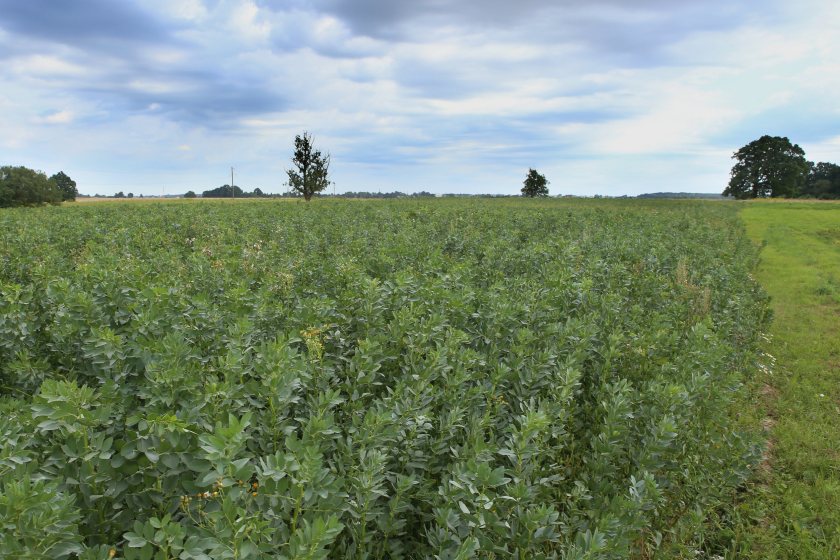
Replacing imported soya with UK-grown beans could cut emissions by hundreds of thousands of tonnes, but without urgent incentives across the supply chain the opportunity will be missed, new analysis has warned.
The UK would need an additional 1.6 million tonnes of home-grown beans to replace 50% of the soya currently fed to livestock, according to research presented at the From Soya to Sustainability event in Peterborough.
Senior economist James Webster-Rusk of the Andersons Centre is outlining the findings as part of the Defra-funded Nitrogen Efficient Plants for Climate Smart Arable Cropping Systems project.
The work examines the impact of increasing pulses to 20% of UK arable rotations and scaling up domestic protein production over the four-year project period from 2023 to 2027.
The analysis suggests the environmental prize could be substantial. Increasing pulses to 20% of arable rotations could reduce emissions by up to 600,000 tonnes of carbon dioxide equivalent, or 9.4%, largely through lower fertiliser use in the arable supply chain.
The biggest gains could be delivered in the poultry sector, where the environmental benefits of feeding beans to layers and broilers could outweigh the costs by as much as 20 times.
Early broiler trials indicate that lower inclusion rates may both reduce emissions and improve producer margins, although the research so far has been carried out at small scale, highlighting the need for further trials.
Results for grazing livestock are less clear-cut. “Beans may reduce the emissions from feed, but any decrease in growth rates can offset the gains,” Mr Webster-Rusk said.
However, dairy trials included in the analysis showed that “the benefits to society of reduced emissions do outweigh the cost to the farmer of increased feed”.
Despite the environmental upside, the report warns that current economics do not stack up for arable growers. While livestock producers see a net benefit from increased pulse use, arable margins are squeezed as rotations move towards 20% pulses.
“If we don’t incentivise arable farmer to produce the beans then the beans won’t be there to deliver the vast improvements that could be realised in the intensive livestock sector,” Mr Webster-Rusk said.
“We will need 1.6 million tonnes of beans to make it happen, and we simply don’t have that at the moment.”
The findings underline the need for targeted intervention across the supply chain, according to Tom Allen-Stevens, founder and managing director of the British On-Farm Innovation Network, which leads the project’s on-farm trials.
“This analysis shows very clearly that the environmental gains are there for the taking, but the system is currently misaligned,” he said.
He warned that while livestock producers and society stand to benefit from lower emissions, arable farmers are being asked to shoulder the financial risk.
“If we want UK-grown pulses to replace imported soya at scale, we must put meaningful incentives in place to make bean production a viable and attractive option for growers,” he added.
Without that support, the report concludes, ambitions to boost domestic protein production, cut emissions and reduce reliance on imported feed are unlikely to be realised.




