

Britain's barley harvest slumps to lowest level in 15 years
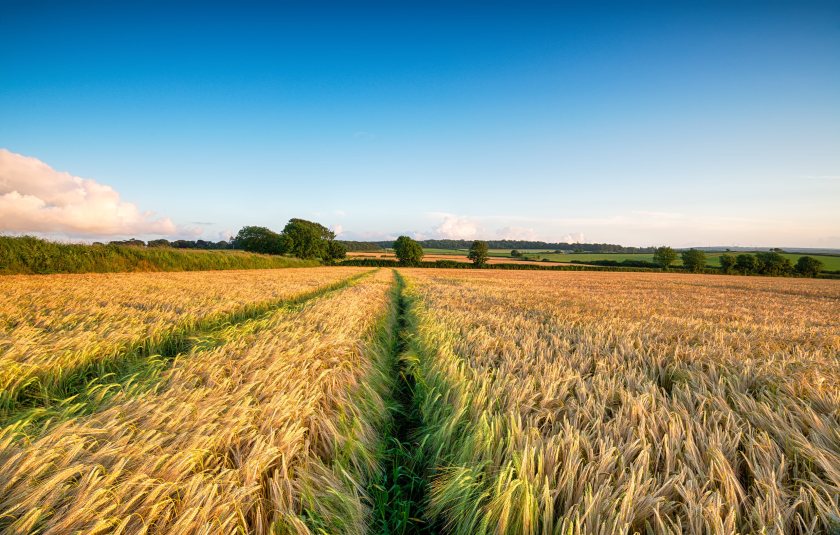
Britain's barley harvest has slumped 14% to just 5.5 million tonnes, its lowest level since 2011/12, as new figures reveal a record squeeze on domestic supplies.
Early estimates from the Agriculture and Horticulture Development Board (AHDB) show production is also 21% below the five-year average, following reduced spring barley plantings and drought-hit yields.
The sharp decline has pushed the barley supply-demand balance for 2026/27 down to just 1.086 million tonnes, the lowest level on record.
Figures published on Thursday 22 October reveal the balance has fallen 40% compared with last season, reflecting the impact of a significantly smaller harvest.
AHDB warned: “This leads to a very tight balance sheet for barley in 2026/27.”
After allowing for 750,000 tonnes of operating stocks, the levy board estimates that just 336,000 tonnes will remain available for exports or additional free stocks.
That represents a 67% reduction compared with last season, highlighting how little flexibility may remain in the market if demand increases.
Total barley availability, including opening stocks and imports, is forecast at 7.087 million tonnes, down 10% year-on-year.
The tighter supply outlook could have implications for livestock farmers, particularly where grain is needed to replace forage lost during the summer drought.
AHDB forecasts barley use in animal feed at 4.393 million tonnes, broadly unchanged from last season despite the smaller harvest.
With drought conditions restricting grass growth and leaving forage supplies depleted on some farms, demand for supplementary feed could remain significant during the winter.
AHDB cereals and oilseeds analyst Helen Plant wrote: “Grain directly or in compound feed will be needed to replace forage during the winter, with winter weather set to influence the amounts needed.”
Although feed barley is currently competitively priced against other grains, AHDB warns that changing supply conditions could affect its position as the marketing year progresses.
The difficult growing season has also affected malting barley quality, with some drought-hit crops failing to meet the required specifications.
However, weaker demand from brewing, malting and distilling businesses, alongside existing stocks, is expected to leave sufficient supplies of suitable grain available.
AHDB suggests greater movement of malting barley between UK regions could be needed to meet demand.
Overall domestic barley consumption is forecast to decline slightly to 6.001 million tonnes, while imports are expected to rise by 17% to 250,000 tonnes.
Wheat supplies are also expected to tighten, with opening stocks estimated at 1.514 million tonnes, down 24% compared with last season.
Although UK wheat production is forecast to increase slightly to 12.074 million tonnes, the improvement is insufficient to offset the reduction in carryover stocks.
AHDB expects wheat imports to reach 2.750 million tonnes as buyers respond to tighter domestic availability.
The figures remain provisional, with additional uncertainty surrounding production estimates for Scotland, Wales and Northern Ireland.
The Scottish Government was unable to publish provisional crop production estimates this year, meaning AHDB relied on industry consultation and other available data.
The first official UK cereal supply and demand balance sheets for 2026/27 are scheduled for publication on 26 November, with final UK crop production estimates expected in December.
With barley supplies already under pressure and wheat stocks significantly reduced, grain buyers face an uncertain outlook for the remainder of the marketing year.
The November figures will provide a clearer picture of whether imports and changing demand can help ease pressure on Britain's cereal markets.