




Farms at risk as peers call for urgent drought resilience plan
England could face daily water shortages of up to five billion litres by 2055 unless urgent action is taken to protect farms, food production and wider water supplies, peers have warned.
A new report from the House of Lords Environment and Climate Change Committee said drought was no longer a rare event, but a chronic risk being intensified by climate change, population growth, leakage and rising demand from water-intensive industries.
The warning has major implications for farmers, with the report recognising agriculture as one of the sectors most exposed to drought.
Peers said the UK was not short of rainfall, but was failing to capture, store and reuse water effectively.
They warned that improving how water is managed would be essential to reduce the impact of drought, while also helping to cut flood risk.
The committee’s report, *Surviving drought: reclaim the rain*, follows an inquiry into England’s drought preparedness launched in October 2025.
As part of the inquiry, NFU national water resources specialist Mark Betson gave evidence on the growing risks facing farm businesses.
He told peers that future farm productivity would depend on better water access, more flexible abstraction rules and greater investment in on-farm storage.
NFU survey data also underlined the scale of concern within the industry.
Its 10-year weather survey found that 68% of respondents had seen an increase in drought.
Many farmers also highlighted the need for easier rainwater harvesting and reservoir storage.
The report said dry weather could have serious implications for farmland viability and long-term resilience.
It also echoed NFU concerns that farming businesses often feel the effects of drought early and severely, before public water supply restrictions are introduced.
Despite this vulnerability, peers noted that most agricultural businesses are still not formally involved in drought planning.
The committee called for better drought data, improved monitoring and a full assessment of the environmental and economic impacts of drought.
It also urged ministers to examine the cost of inaction compared with investment in water security.
Peers said a whole-society approach was needed to balance supply and demand.
This should include public awareness campaigns, improved household water efficiency and greater use of water reuse and rainwater harvesting.
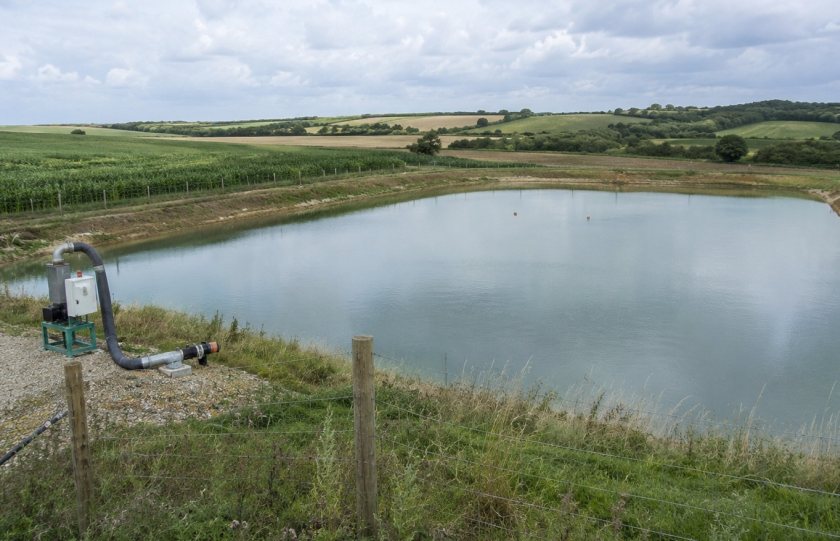
For agriculture and other sectors dependent on abstraction, the committee said regulations should be changed to make it easier to build on-farm reservoirs.
It also called for more flexible abstraction licensing to support catchment-scale water sharing and storage.
On-farm reservoirs allow farmers to capture water during wetter periods and use it during dry spells, helping support crop production while reducing pressure on public supplies.
The report said the government should publish an emergency drought prioritisation plan by autumn 2026 to strengthen planning and response.
Peers also called for nature-based solutions to be used more widely to improve drought preparedness and water management.
The warning comes after England experienced its driest spring in 132 years last year, leading to prolonged drought across the country.
The report said drought planning must now reflect the growing risk to food production, rural businesses and the wider economy.
It comes amid wider concern over the impact of climate disruption on British agriculture.
In a separate report, the Climate Change Committee warned that extreme weather was already affecting yields, incomes and long-term business confidence across UK farming.
Its report, A Well-Adapted UK, called for greater support for on-farm water storage, soil resilience, crop diversification and climate-proofed food supply chains.
The CCC said difficult weather conditions were increasingly occurring in consecutive seasons and with greater severity.
It warned that without adaptation, some farms could become unviable in the worst years.
The NFU has repeatedly argued that improving access to water is essential for food production, business resilience and long-term agricultural productivity.
Peers warned that without better water planning, storage and abstraction rules, drought could become a growing threat to farm productivity, food production and rural businesses.




