

Fifty rural mobile masts upgraded as farmers struggle for signal
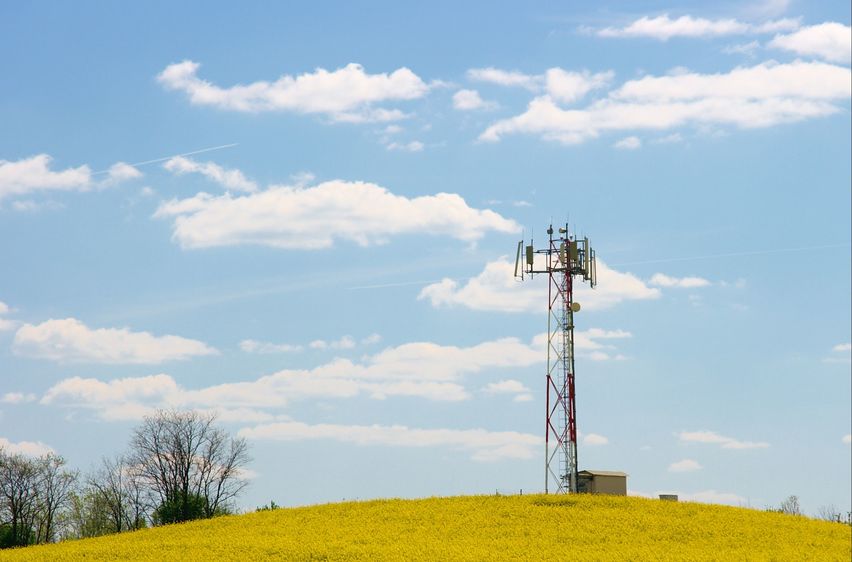
Fifty rural mobile mast upgrades have gone live across England as farmers continue to grapple with poor signal, safety concerns and barriers to digital technology.
The government announcement comes less than two weeks after FarmingUK reported that just 17% of farmers surveyed had reliable mobile coverage across all outdoor areas of their farms.
The NFU’s Digital Access Survey, involving 642 farmers and growers, found that the proportion had fallen from 22% in 2024 to 17% in 2025.
The survey, conducted in February and March 2026, reflects farmers’ experiences before the latest upgrades were announced.
The government confirmed on Tuesday (24 November) that the publicly funded upgrades are providing around 640 square kilometres of additional 4G coverage across rural England.
Yorkshire has benefited from 21 upgrades, followed by Cumbria with 12, while other areas include Devon, Somerset, Cornwall, Northumbria and Shropshire.
The improvements are being delivered through the Shared Rural Network, a partnership between the government and mobile network operators.
Existing masts are being upgraded to provide commercial coverage from all UK mobile network operators, rather than constructing new infrastructure.
Telecoms minister Ian Murray said: “For farmers, businesses and families, better coverage means less time hunting for a signal”.
The government highlighted how improved connectivity is already supporting livestock management at Exmoor Bunk Barn in Exmoor National Park.
GPS-enabled collars are being used to track cattle grazing on open moorland, with their locations shared through a live map to help dog walkers avoid the herd.
The business can also monitor reservoir water levels remotely.
However, unreliable mobile signals remain a significant concern for farmers, particularly those working alone in remote locations who may struggle to contact emergency services.
Poor connectivity can also disrupt everyday farm operations, from submitting digital records and accessing government services to adopting precision farming technologies and connected machinery.
Previous trials of virtual fencing technology on Scottish farms have also highlighted unreliable connectivity as a barrier to adoption.
Despite these challenges, the NFU survey recorded some improvements, with access to 5G rising from 23% in 2024 to 38% in 2025.
However, 5% of respondents still lacked access to either 4G or 5G, despite 96% identifying mobile coverage as important to their businesses.
The government says more than 96% of the UK’s landmass now has 4G coverage from at least one operator, up from 91% in 2020.
The Shared Rural Network exceeded its 95% coverage target more than a year ahead of schedule, with 175 upgraded masts now operational across England, Scotland and Wales.
Up to 18 further government-funded mast upgrades are expected before the programme’s main delivery phase concludes in January 2027.
However, NFU vice-president Robyn Munt has previously highlighted the disparity between national coverage figures and farmers’ experiences on the ground.
The union is calling for clearer delivery deadlines, continued investment in rural digital infrastructure and greater support for agricultural digital skills.
Ms Munt said rural communities were not seeking preferential treatment, adding: “They simply want reliable connectivity and the same opportunity as everyone else to benefit from a digital future.”