




Forty sea eagles to be tracked over sheep and lamb losses
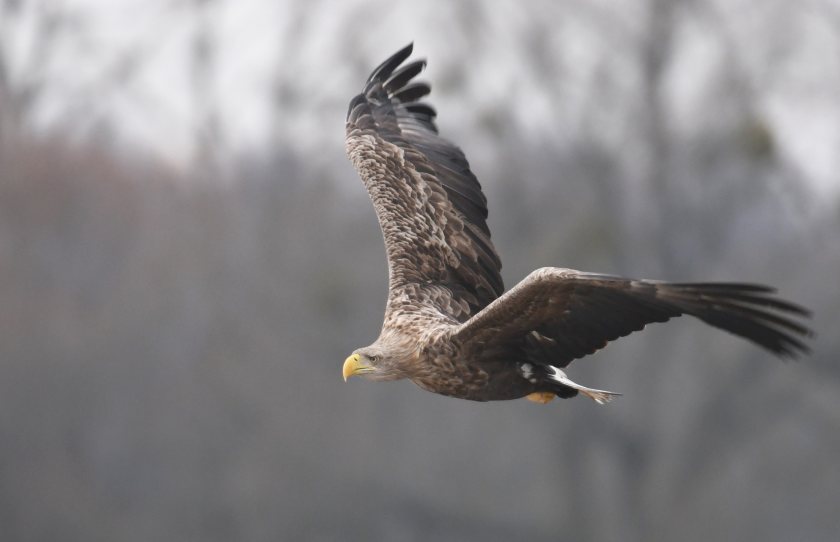
Up to 40 sea eagles will be tracked across western Scotland in a two-year study aimed at establishing when and where the birds interact with sheep and lambs — and whether reported losses can be linked to specific eagle movements.
The project will use satellite tags to monitor adult and juvenile birds across Argyll, the Highlands and the Western Isles. Separate SRUC research is fitting GPS collars to lambs in Argyll, giving researchers the chance to compare livestock and eagle movements directly.
NatureScot is funding the tags, with RSPB Scotland, Scotland’s Rural College, Natural Research Ltd and independent ornithologists involved in the research. NFU Scotland and the Scottish Crofting Federation will provide farming and crofting input.
Farmers and crofters have reported increasing losses as the sea eagle population has expanded, although the scale, timing and circumstances of suspected attacks remain contested.
Faye Bryce, National Sheep Association (NSA) Scottish Region policy officer, said producers had been seeking clearer evidence for several years.
“Many sheep farmers have experienced the impact of sea eagle predation and have been calling for greater understanding of the issue for a number of years,” she said.
“NSA Scotland welcomes this research as an important step towards building a robust evidence base on how sea eagles and livestock interact.”
The study is intended to support future livestock and wildlife management decisions.
Up to 35 tags will be fitted to chicks at around eight weeks old, with the remaining five intended for adult breeding birds. The long-lasting transmitters will allow researchers to follow juvenile birds after they leave their natal range.
Adult sea eagles are more difficult to capture, although one was successfully trapped, tagged and released in the Western Isles earlier this year using techniques shared by European specialists.
Farm managers willing to host trapping work may also take part.
Andrew Stevenson, senior ornithologist at NatureScot, said immature eagles were a key focus because they can travel widely before establishing territories.
“A key gap in our knowledge is what role immature eagles play in predating livestock, given they wander widely during their first three to four years until they settle on a territory,” he said.
“Tagging is the best way to get a handle on what they may be doing.”
Sea eagles were driven to extinction in Scotland by the early 20th century and reintroduced on Rum between 1975 and 1985. Their expanding range has since led to growing conflict with some upland and hill sheep farms, while the birds remain protected by law.
Georgia Watson, NFU Scotland policy manager for climate, land and business, said the research needed to lead to practical action.
“This research must lead to practical, targeted management solutions that give farmers confidence that impacts on livestock are being properly recognised and addressed,” she said.
RSPB Scotland said the data would also inform wider conservation and land-management decisions, including how sea eagles use different habitats.
The project has not yet explained how reported livestock losses will be verified against tracking data or what practical management options may follow from the findings.
Findings will be reported to the National Sea Eagle Stakeholder Group over the next two years and are expected to inform future livestock and wildlife management policy.




