




Future of Maris Piper under scrutiny as growers question its role
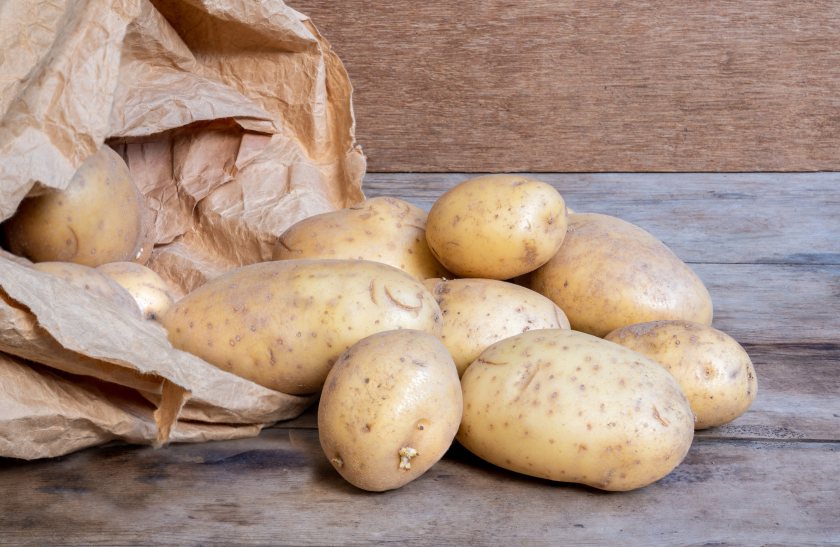
Britain’s best-known potato variety is facing renewed scrutiny as growers and processors question whether Maris Piper can still meet the demands of a changing industry.
The issue was debated at the British Potato Industry Event, where a GB Potatoes session asked whether “Maris Piper has had its day”.
Chaired by GB Potatoes chair Alex Godfrey, the discussion brought together contrasting views from Katy Pook, head of brand and marketing at Greenvale, and Gordon Stark, director at Taygrow.
Ms Pook argued that while Maris Piper has been a mainstay of the sector for decades, the market it was bred for no longer exists.
“It would be fair to say that the food and farming industry looked a little different then, than it does now,” she said, pointing to the shift from smaller, locally focused growers to today’s national supply chains.
She highlighted how the sector is now more industrialised, with larger machinery, fewer chemical control options, rising pest and disease pressure and increasingly volatile weather.
“When Maris Piper arrived in the market in 1966, the variety Majestic accounted for 60% of the market,” she said, suggesting the decline of Majestic due to pest and disease vulnerabilities should act as a warning.
Ms Pook said Maris Piper’s resistance to potato cyst nematode, consistency of yield and versatility helped it establish a dominant position, but market trends are moving on.
At its peak in the early 2000s, Maris Piper accounted for almost a quarter of the UK potato area. Today, it represents around 10%, while its share of the fresh retail market has fallen from 19.5% to 16.5% over the past four years.
Quality concerns were also raised. “Importantly, consumers complain of poor quality, bruising and too much waste at certain times of the year,” Ms Pook said.
She said that between March and July, Maris Piper can account for around 40% of all complaints, despite a much smaller share of retail units, and that figure has reached as high as 54% in some seasons.
Despite its strong recognition, Ms Pook said Greenvale research showed that 93% of consumers who buy Maris Piper would switch to another variety if it was unavailable.
“And, the fact is it is already changing,” she said, adding that retailers are increasingly exploring alternatives and using Maris Piper “when it is at its best”.
Defending the variety, Mr Stark said Maris Piper has repeatedly proved its resilience.
“Maris Piper has seen off lots of different varieties,” he said, pointing to its long history across chipping, packing and even salad markets.
He argued that its original resistance to potato cyst nematode remains relevant as pest pressures evolve, saying Maris Piper would continue to play a role within a broader resistance strategy.
Mr Stark said between 500,000 and 700,000 tonnes of Maris Piper are still grown each year, with around 60m tonnes produced over the past six decades.
“You look at Piper, it’s cheap to plant, you can get any market for it, it’s never had a penny of royalties paid on it,” he said, adding that seed rates are often lower than for newer varieties.
From a consumer perspective, he said Maris Piper continues to be promoted by well-known chefs including Delia Smith, Jamie Oliver, the Hairy Bikers and Nigella Lawson.
Mr Stark acknowledged that climate change is making the variety harder to grow in parts of England but said this has driven production further north.
“So it's great for us that you guys can't grow it anymore,” he said. “Don't get ambition and ability mixed up lads and lasses!”
The audience discussion also explored blight pressure, the role of genetic engineering in future varieties and the eating and mashing quality of Maris Piper compared with newer alternatives.
Summing up the vote, Mr Godfrey said: “I believe those who believe Maris Piper has had its day may just have the edge, but it is narrow victory and I don't doubt the debate will rumble on.”
While opinions remain divided, the discussion underlined that Maris Piper’s future is no longer taken for granted, with growers increasingly weighing familiarity and market demand against agronomic performance and long-term resilience.




