




Growers encouraged to test their black-grass for resistance
In a survey conducted by BASF last year it was revealed that the main reasons for not testing black-grass for resistance were cost, that it was believed unnecessary and that farmers were unsure to how sample correctly.
Tackling these issues BASF and ADAS want to encourage and support growers to test their black-grass populations, every three to five years if possible, to encourage a better understanding of how resistance is developing across problem areas of the farm.
Herbicide resistance in black-grass has been steadily increasing, particularly to ALS inhibitors such as Atlantis and ACCase inhibitors such as Topik(clodinafop) and Laser (cycloxydim).
All herbicides are at risk of resistance developing and understanding the status of black-grass populations in the field is an important component of a resistance management strategy, particularly where high risk active ingredients are widely utilised, like ALS inhibitors
“Resistance testing is an early warning sign to a bigger problem down the road. Knowing what you are dealing with will help to plan better targeted and effective herbicide programmes for both the short and long term,“ says Sarah Mountford Smith, cereal herbicide product manager with BASF.
Resistance testing is offered by ADAS. Tests cost £200 for a full analysis, including enhanced metabolism and target site resistance to ALS and ACCase inhibitors. There are also tests for black-grass ALS resistance only (£150), ACCase resistance in Italian ryegrass (£125) and a resistance test for wild oats (£100).
Seed sampling
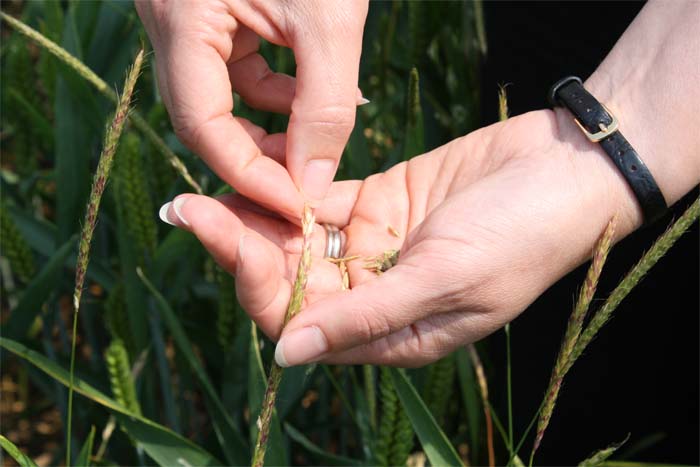
“Sampling seed is pretty straightforward once you know what to do, and follow some straightforward guidelines,” says Lynn Tatnell of ADAS.
“What is critical to get right is the timing of collection - black-grass seed must be collected when it is ripe and mature, which for most fields, is likely to be in the next week or so, up until the third week of July.”
“Each field should be tested separately as the resistance status can vary from field to field, usually its best to take the sample form the worst field.”
“Keep moving through the black-grass collecting small amounts of seed as you pass through the crop, don’t just collect from one small area. Move through at least two or three tramlines so that the black-grass seed sampled is representative of the field.”
“Seed must be mature, brown and fall from the top of the black-grass head at a gentle touch. Heads that are still green are not suitable, and do not cut entire heads off.”
“Once the seed is collected, about a small mugful, then put this into an envelope and let it dry off for a couple of hours. Then this is ready to post off with the resistance testing form to us at ADAS. Once the results have been established, which usually takes about 6-8 weeks, an email will be sent to growers notifying them” says Mrs Tatnell.




