




Innate Phoma resistance needed to protect slow to emerge rape
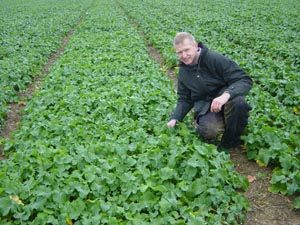
With rape still taking its time to emerge following the dry conditions and the risk of Phoma canker expected to be high this year, the natural resistance to infection in oilseed rape varieties will be particularly valuable in the early growth stages this season. The oilseed rape variety Es Astrid has the highest and most persistent resistance rating of the conventional varieties on the HGCA list and will play a key role in the effective prevention of this damaging disease, says Neil Groom, Technical Manager of Grainseeds Ltd.
Neil explains that the scene was set earlier on for a high risk year for Phoma, and that many geographic areas will be achieving the 20 days of rain from the 1st of August in the few weeks that will trigger the infection process. "The accumulative rain event, which can be as little 0.1 mm each day, triggers the release of air-borne spores from nearby rape stubbles and these wind-borne spores go onto infect emerging and small oilseed rape plants. The added problem this year is that many crops have taken their time to emerge in the very dry seedbeds and are small and under developed. It is an unfortunate combination of weather and growing conditions that has lead to the potential of early and severe infections of Phoma in small plants."
He points out that this is the worse scenario as the most damaging effects of the fungal infection are seen in these smaller plants. "This is because the fungus has to grow a much shorter distance down the leaf petiole to reach the stem base where it starts to form cankers. If you are growing a resistant variety such as Astrid, the plant will be protected from this early and very damaging attack and will allow you much more time and peace of mind before fungicide treatments will need to be applied."
Neil adds that using resistant rape varieties such as Astrid gives growers greater flexibility in controlling Phoma. "Resistant varieties won't obviate the need for chemical treatments altogether, especially as many fungicides are also used for their growth regulation effects, but offer more flexible timings and possible fewer applications."
"With the establishment and early growth phases being so vital to the overall success of the rape crop, sowing a resistant variety such as Astrid will give the young crop the best opportunity to survive against Phoma this autumn," says Neil.
Neil also points out that there is no need to worry about resistance breaking down as the Phoma resistance of Astrid has remained stable and persistent over time. "Its Phoma resistance is based of several different genes and so its resistance will remain firm. Experts in France at the national farmer-funded Technical Centre for Oilseed Crops, CETIOM, have concluded that Astrid displays a different type of resistance, based on new specific resistance genes as yet unidentified and/or a high level of multigene resistance to the pathogen. Its strong and persistent resistance to Phoma has helped to make this variety very popular in France as well as in the UK."
He concludes that rape growers in the UK have remained loyal to Es Astrid once again as they appreciate not only its excellent yields and high Phoma resistance, but also its ease of management through its excellent combination of shortness of stem, stem stiffness and resistance to lodging.




