

New carbon tax could leave British farmers worse off, NFU warns
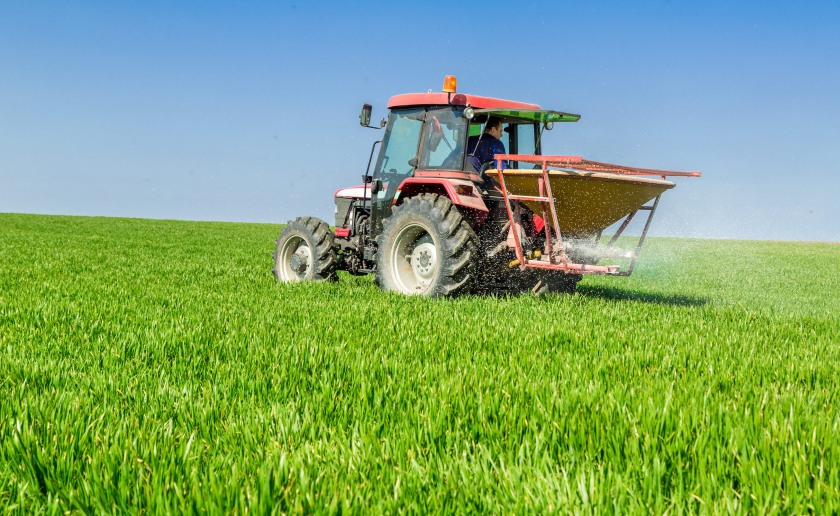
British farmers could face higher fertiliser bills under a new carbon border tax, while imported food avoids equivalent charges, the NFU has warned.
The union is urging the chancellor to introduce safeguards in the upcoming budget to prevent domestic food producers from being placed at a competitive disadvantage.
The Carbon Border Adjustment Mechanism (CBAM), due to take effect on 1 January 2027, will apply carbon-related charges to certain imported goods, including fertilisers.
The mechanism is designed to tackle carbon leakage by ensuring imported products face carbon costs comparable to those paid by UK manufacturers.
However, the NFU fears that additional charges on imported fertiliser could ultimately be passed on to farmers already struggling with rising production costs.
The warning follows the government's publication of illustrative CBAM rates on 16 October, ahead of the tax's introduction next year.
The provisional fertiliser rate stands at £1.45 per tonne of CO2-equivalent emissions, although the final rate for early 2027 has yet to be confirmed.
Rates will be reviewed quarterly, reflecting changes in carbon pricing and other factors, creating uncertainty over future costs.
NFU Deputy President Paul Tompkins warned that Britain's reliance on imported fertiliser supplies could leave farmers particularly exposed.
“Fertiliser is essential for British farmers and growers as we work to produce the nation’s food.”
He highlighted that ammonia used in fertiliser production is no longer manufactured in the UK, leaving the industry dependent on overseas supplies.
The union argues that additional import costs could place further pressure on farm profitability, particularly where producers have limited ability to absorb increases or pass them on.
Mr Tompkins said: “A tax on those fertiliser imports is most likely to be felt by farmers who are already operating on the tightest of margins and can't simply absorb these extra costs or pass them on.”
A major concern is the potential imbalance between British food producers and overseas competitors.
While domestic farmers could face higher fertiliser costs under CBAM, imported food grown using fertiliser overseas would not face an equivalent charge under the mechanism.
The NFU believes this risks making British agricultural production less competitive against imported food.
Mr Tompkins warned: “Unbelievably, food grown overseas with fertiliser will not be subject to the same tax, leaving domestic food production at a competitive disadvantage.”
The union is calling on the government to ensure the new mechanism does not undermine domestic food production or weaken the competitiveness of British agriculture.
It wants the upcoming budget to include measures that reduce production costs, strengthen farm business resilience and restore confidence across the sector.
The NFU argues that protecting food security must remain a central consideration as ministers introduce new environmental and taxation policies.
Mr Tompkins said: “If government is true to its word that ‘food security is national security’, then the chancellor must announce measures at the budget that actually reduces the cost of producing food, not increases it, builds resilience in the sector and restores farm business confidence.”