




OSR damage risks early Sclerotinia infection
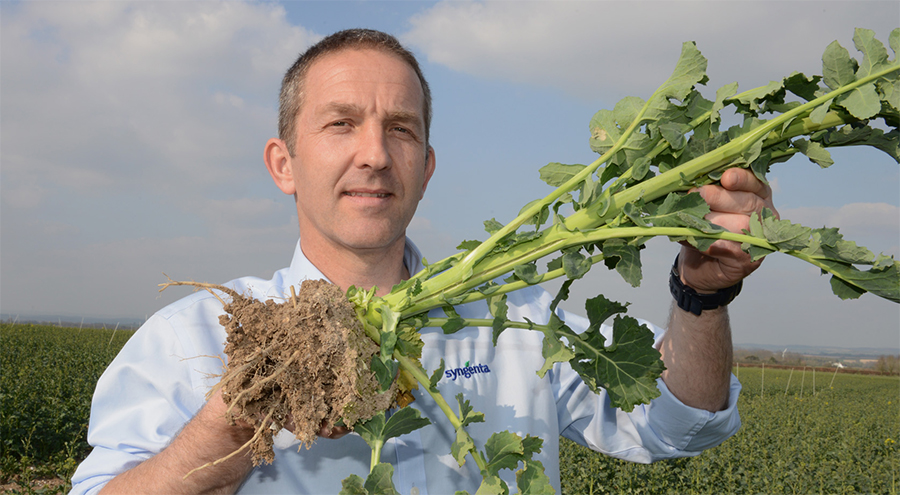
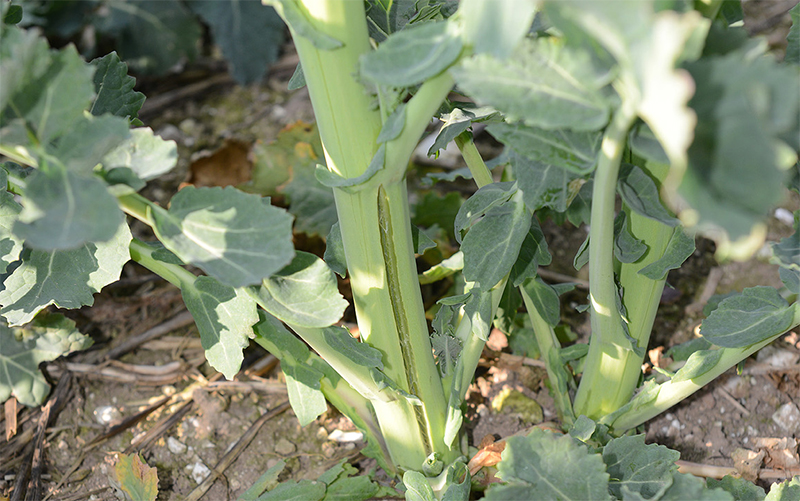
Rapid stem extension, after a slow start to spring, is likely to create splits in oilseed rape plant stems that could increase the risk of Sclerotinia infection, warns Syngenta Field Technical Manager, Simon Roberts. Furthermore, high levels of Cabbage Stem Flea Beetle larvae emergence now being seen will also create an easy entry point for disease.
Some trial plots on the Syngenta Innovation Centre in Hampshire have put on over 60cm of height and more than doubled their green area index (GAI) in less than two weeks, he reported. “Typically such rapid growth results in weak stems with a greater frequency of splits and breakage at the axial leaf joints.
“In many crops we are also seeing large numbers of holes appearing in stems around the leaf axial joints, where Flea Beetle larvae are burrowing out from the stems to complete their life cycle.” In some areas Mr Roberts has found evidence of over 80% of plants affected and up to nine larvae in a single plant.
Any damage to the plant allows Sclerotinia to get in, especially if spore presence coincides with petal fall; the pathogen uses the decaying petals as a food source to develop. Sclerotinia will exacerbate any weakness in stems, leading to yield loss from extensive canopy collapse and early die back.
Mr Roberts advocates growers ensure crops are protected from infection early this season with Amistar Technology, either with a two-spray Amistar programme, or using new Symetra as an initial application.
“The added advantage of using Amistar or Symetra for the flowering spray fungicide programme is the additional physiological greening effects on the plant, leading to higher yields and increased oil content of seed - even in the absence of disease.”
In previous years extremely damaging high levels of Sclerotinia have been recorded in conditions that were considered low risk. Mr Roberts believes this may have been attributed to crops that were weakened and more susceptible to infection.
“We will also use the Innovation Centre trials to assess the effect of Toprex as a PGR to suppress crop height, and how that might impact on stem strength and preventing damage,” he added.
Beetle mania
Simon Roberts also points out that the high presence of CSFB larvae in the crop highlights potential control issues last autumn, when adults would have laid eggs around the base of plants. “Even crops that escaped the worst effects of leaf shot-holing from adult beetle feeding in the autumn, are now showing the damaging effects of larvae activity.
“It reinforces that, without the protection of Cruiser OSR seed treatment, growers and agronomists will need to be especially vigilant to control adult beetles next season,” he advised.




