




UK scientists launch global bid to map the world's soils using seismic tech
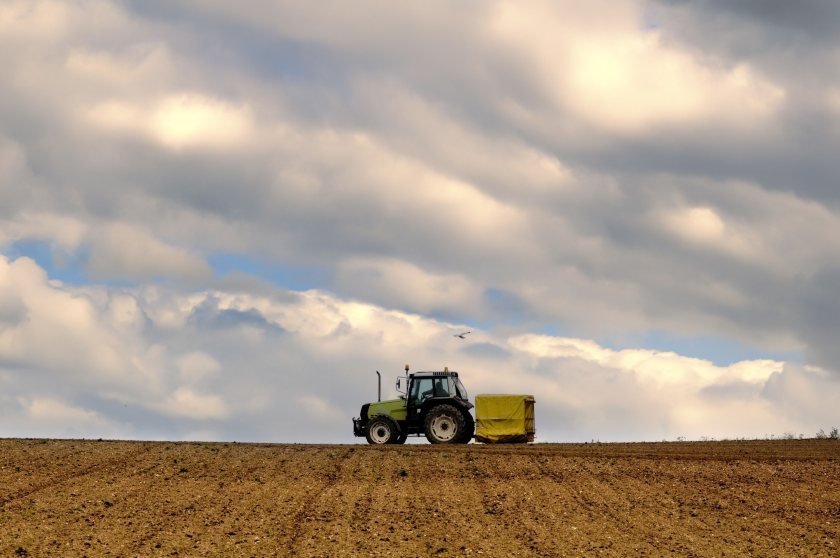
A UK-driven project claiming it can finally “see” beneath the world’s soils has launched globally today, unveiling technology scientists say could reshape food security and climate action.
The Earth Rover Program applies seismology in a new way to detect the “vital signs” of soil with unprecedented clarity. Backed by the Bezos Earth Fund and co-founded by Professor Tarje Nissen-Meyer at the University of Exeter, it began two years ago as a proof of concept and has since grown into a global research network.
Early trials show ultrahigh-frequency seismic waves can map soil properties — including volume, bulk density and moisture — at 10-centimetre resolution. Tests across Europe, Africa and South America produced consistent results, enabling researchers to distinguish ecosystems and farming systems rapidly and cheaply.
The next stage involves combining seismic mapping with new low-cost sensors and AI models to deliver scalable soil assessments. Future aims include measuring connected porosity, soil carbon and deeper moisture — all difficult and expensive to capture at scale using existing methods.
A major breakthrough has been cost reduction: sensor prices have fallen from $1,000 in 2023 to $10 today, with ambitions to cut further. The non-invasive technology avoids disturbing soil structure and could support global citizen-science monitoring through secure, open-source datasets.
Professor Nissen-Meyer said soil had long been “somewhere between dirt and invisible”, despite being “arguably the most vital terrestrial ecosystem for life on Earth”. Understanding soil, he added, is both “scientifically difficult” and “societally urgent”.
Soil degradation is a global crisis, with 75% of soils considered degraded and yields in vulnerable regions projected to fall by up to 50% by 2050. The Earth Rover Program aims to close these knowledge gaps by making soil diagnostics accessible to farmers, scientists and policymakers.
The team is already deploying “soilsmology” with partners in the UK, Kenya, Colombia and Germany, with additional surveys in France. Insights generated in near real time are designed to help farmers reduce fertiliser, irrigation and tillage while maintaining yields.
The programme has also developed ERP-GPT, a tool that converts complex measurements into practical guidance, and ultimately aims to create a global “soilcast” to forecast soil health.
Co-founder George Monbiot said that “for too long, soil has been dark to us”. Better understanding, he argued, could support high-yield, low-impact farming.
Dr Andy Jarvis of the Bezos Earth Fund said the technology offers “a way to read that hidden world without tearing it apart”, while Professor Jacqueline Hannam of the University of Greenwich said the approach has “enormous potential” to measure key soil properties without “having to put a spade in the ground”.




