

Government wants twice as many farms supporting wildlife by 2030
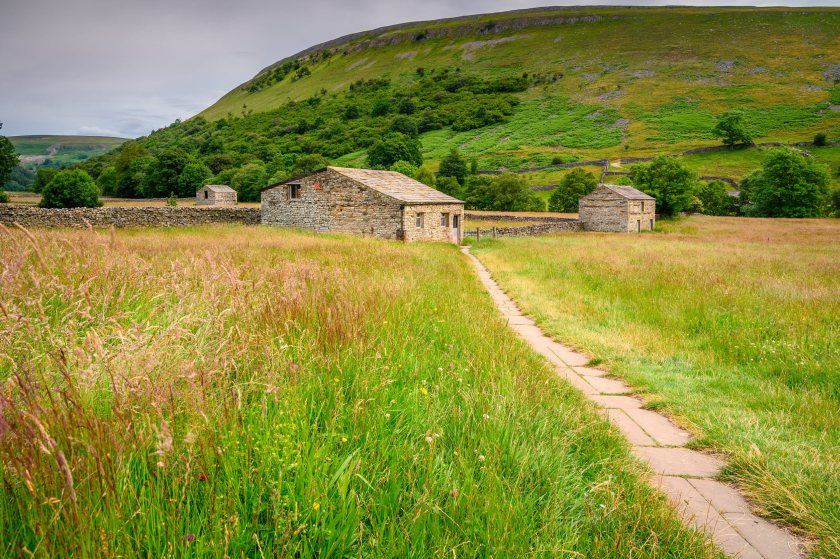
The government wants to double the proportion of English farms meeting its wildlife-support criteria from 21% to 42% by 2030, under environmental objectives published by Defra.
The plans, released on Thursday 22 October, outline how agriculture is expected to contribute to improvements in biodiversity, soil health, hedgerows and water quality.
Under the wildlife objective, farms must have a combination of eligible environmental scheme actions covering at least 7% of their agricultural area to count towards the target.
These measures must provide year-round resources for farmland birds, pollinators and other wildlife, including summer food, nesting and shelter, and winter food.
Qualifying activities include pollen and nectar mixes, flower-rich margins, overwintered stubble and designated areas for farmland birds.
Farm businesses must undertake at least one eligible action from each of the three categories, with the combined measures covering the minimum land threshold.
Defra will measure progress through qualifying activities recorded in live Sustainable Farming Incentive (SFI) and Countryside Stewardship agreements.
However, uncertainty remains over how increased participation will be supported, with Defra acknowledging that “information on future schemes is not currently available”.
The department makes clear that its projected uptake figures should not be interpreted as confirmation of future scheme availability.
The wildlife ambition forms part of 14 Farming Sector Environmental Objectives setting out agriculture's expected contribution to wider government environmental commitments.
Although the objectives establish measures for monitoring progress, they do not introduce new legal requirements for individual farmers or guarantee additional funding.
Instead, they provide a framework for assessing how environmental land management activities contribute towards existing commitments, including those outlined in the Environmental Improvement Plan 2025.
The publication also sets out ambitions for agricultural soil management, with up to 60% of England's farmland expected to be covered by sustainable management actions by 2030.
This represents approximately 5.4 million hectares of agricultural land, with the objective intended to support soil health, environmental resilience and productive farming.
However, the soil management objective remains under development, with Defra yet to finalise the minimum standards and scheme actions that will count towards the target.
Hedgerows are another priority, with plans to create or restore at least 48,200 kilometres of managed hedgerows by 2037, increasing to 72,500 kilometres by 2050.
The government also wants the farming sector and its delivery partners to create or restore 300,000 hectares of wildlife-rich habitat outside protected sites by 2042.
Water quality features prominently, with objectives to reduce agricultural nitrogen inputs by 32%, phosphorus by 39% and sediment by 37% by 2038, compared with 2018 levels.
These measures are intended to address nutrient pollution and soil erosion while supporting improvements in rivers and other water environments.
With around 70% of England's land used for agriculture, Defra sees farmers as central to delivering environmental improvements alongside domestic food production.
The objectives provide greater detail about the scale of the government's ambitions, but delivery will depend heavily on the uptake of suitable environmental land management measures.
Questions remain over whether future schemes will provide sufficient opportunities and financial incentives for farmers to participate.