

Welsh and Scottish farm groups demand wildfire action

Rural organisations in Scotland and Wales are demanding stronger action as major wildfires threaten farms, livestock, upland habitats and local communities.
Scottish Land & Estates has called for a dedicated aerial suppression unit following a major fire in the Cairngorms, while the Farmers’ Union of Wales wants an urgent escalation of resources as a separate blaze continues across the Rhinogydd mountains.
Scottish Land & Estates welcomed First Minister John Swinney’s visit to Glenmore and Strathnethy on Tuesday (21 July), saying it reflected the seriousness of the incident.
However, the organisation said the fire had exposed gaps in Scotland’s ability to respond quickly to major wildfires.
Ross Ewing, director of moorland and strategic projects at Scottish Land & Estates, said specialist aircraft needed to be available from the outset.
“Specialist helicopters were key to the response effort in the Cairngorms, but reports that a helicopter could not be sourced on day one of the fire are a cause for real concern,” he said.
“It is vital that such resources are available rapidly at the point of need.”
The Cairngorms wildfire was first reported on 15 July, near Ryvoan Bothy close to Nethy Bridge.
Dozens of gamekeepers, farmers and land managers from neighbouring holdings joined firefighters in tackling the blaze.
Prolonged dry conditions hampered efforts, with parts of the woodland continuing to smoulder.
Separately, the Farmers’ Union of Wales has called for coordinated government action as a wildfire continues across the Rhinogydd mountains, in North Wales.
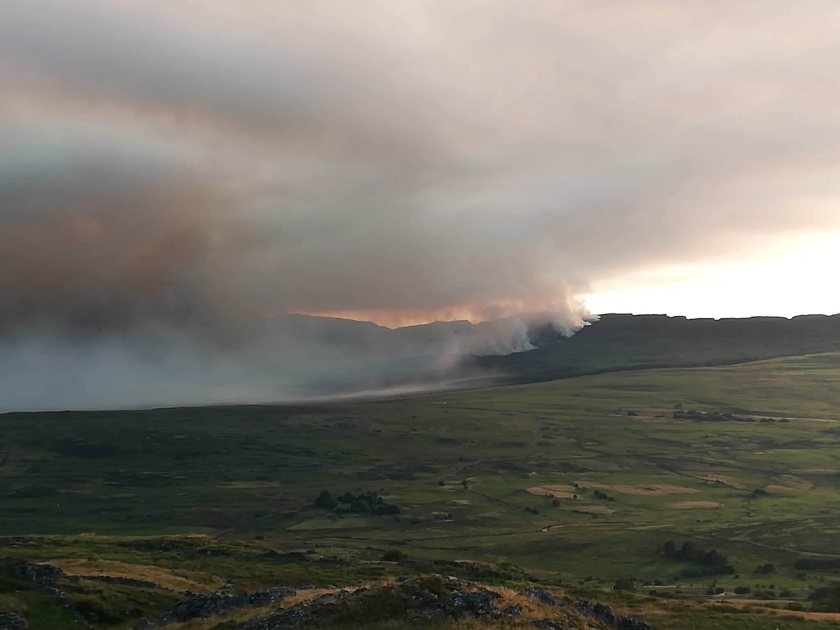
The union said the blaze was threatening farms, livestock, grazing land and internationally important habitats across one of Wales’s largest upland landscapes.
It also warned that the incident showed how difficult it can be to tackle major fires in remote rural areas.
The FUW raised the issue with politicians at the Royal Welsh Show, including representatives of the Welsh Affairs Committee.
FUW president Ian Rickman said the long-term impact on farming families and the wider rural economy could be severe.
“The Rhinogydd is not only an internationally important landscape for wildlife, but also a working landscape that supports farming families who have cared for these uplands for generations,” he said.
“The impact of a fire of this magnitude will be felt for years through the loss of grazing, damage to habitats, risks to livestock and will have a knock-on effect on the wider rural economy.”
FUW Meirionnydd county chairman Gwion Rowlands said the size and duration of the incident had caused widespread concern.
“The sheer size and duration of this wildfire are unlike anything many people in the area can remember,” he said.
Rowlands said the situation required an “exceptional response”, adding: “Every available resource should be considered to bring the fire under control as quickly as possible.”
The calls come amid wider pressure for a national approach to wildfire planning.
The NFU has warned that prolonged dry weather and a lack of rainfall have increased the risk of fires spreading rapidly across farms and rural communities.
It is calling for a National Wildfire Strategy for England and Wales, setting out clear responsibilities for prevention, preparedness and emergency response.