

British growers sound alarm over water shortages ahead of 2027
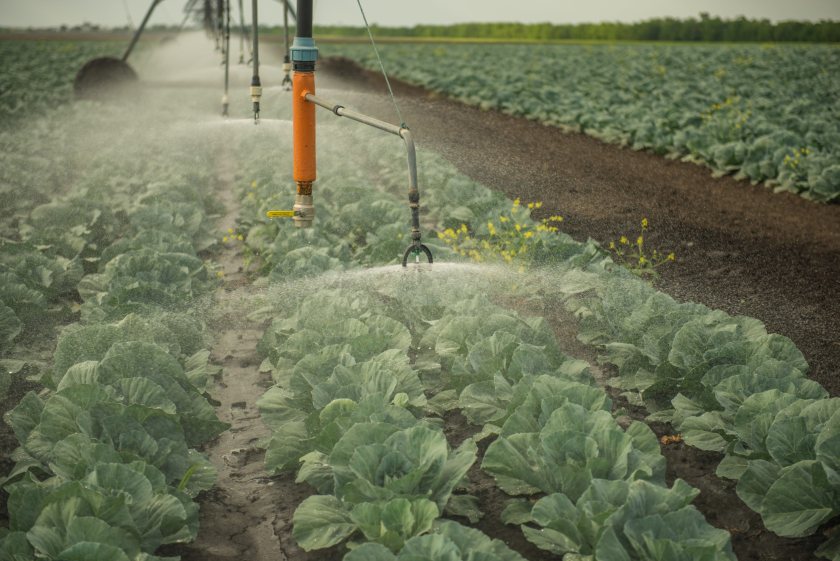
British vegetable growers are considering cutting back crops next year as depleted reservoirs and continuing drought threaten water supplies, prompting fresh calls for urgent government action.
Leading fresh produce businesses are warning that water security must become a national priority if Britain is to protect domestic food production and avoid further disruption to future harvests.
The concerns come as Environment Agency figures show that 82% of England remained in drought on 15 October, following months of exceptionally dry weather.
National reservoir storage stood at just 54% of capacity in the week ending 22 October, around 22 percentage points below the long-term average for the time of year.
The Environment Agency has warned that some farmers could struggle to refill irrigation reservoirs over winter, potentially affecting water availability for the 2027 growing season.
Some growers are already considering planting smaller areas of high-value vegetable crops because of uncertainty over future irrigation supplies.
Against this backdrop, leading growers are preparing to take their demands for stronger water security policies to the House of Lords on 17 November.
The event, hosted by former NFU president Minette Batters, will bring together farmers, retailers, researchers and policymakers to discuss the future of British food production.
Among those supporting the initiative are Jon Hammond, Director of Hammond Produce, and Andrew Blenkiron, Managing Director of Elveden Farms.
Both are calling for greater certainty over water regulation, infrastructure investment and long-term government support.
Mr Hammond said: "Food security depends on water security."
He warned that growers were willing to invest in protecting future production but needed confidence that government policy would support those decisions.
"Growers are ready to invest in the future, but that requires a clear and consistent framework that recognises domestic food production as a national priority."
The industry is particularly concerned about the ability to capture and store water during wetter periods for use when rainfall becomes scarce.
Agricultural reservoirs, improved irrigation technology and more efficient water management are among the measures growers believe could strengthen the sector's resilience.
However, businesses warn that uncertainty over future regulations and water availability can make major investments difficult to justify.
The Environment Agency has also raised concerns about the coming winter reservoir refill season, which officially begins on 1 November.
With some agricultural reservoirs at historically low levels, continued weak river flows could lead to restrictions on water abstraction licences, potentially limiting opportunities for farmers to replenish supplies.
Andrew Blenkiron, Managing Director of Elveden Farms, said many growers had already invested heavily in improving efficiency and adapting to changing conditions.
"Water storage, innovation and better use of technology all have a role to play, but businesses need the certainty to make those investments."
He warned that increasingly unpredictable weather and changing regulatory requirements were placing additional pressure on the sector.
The concerns have emerged from a year-long collaboration involving Morrisons, Harper Adams University's School of Sustainable Food and Farming (SSFF) and leading fresh produce businesses.
The project has examined how water shortages could affect British food production and developed recommendations aimed at improving long-term resilience.
Four priorities have been identified, including placing food security at the centre of national water policy and making agricultural water storage a national priority.
The recommendations also call for water quality and availability to be considered together, alongside greater investment in scientific research and innovation.
Industry representatives argue that a coordinated approach is needed to protect food production while supporting environmental objectives.
Alex Hardie, Business Development Manager at SSFF, said growers across the country had raised remarkably similar concerns about future water availability.
"Water is no longer simply an environmental issue; it is a food security issue, an economic issue and an investment issue."
He said businesses needed greater confidence in the regulatory environment before committing to substantial investments in water resilience.
Researchers have also warned that existing scientific guidance is not keeping pace with changing climatic conditions.
Jim Monaghan, Professor of Crop Science at Harper Adams University, said: "The UK has world-class fresh produce growers, but our evidence base has not kept pace with the challenges that climate change is creating."
He called for greater investment in research and data to help farmers make informed decisions about water management and future crop production.
Simon Thelwell, Strategic Director at SSFF, also highlighted the importance of recognising soil and water as essential resources supporting Britain's food system.
He argued that these natural assets remained undervalued in national policy despite their importance to food security, economic resilience and environmental protection.
Morrisons has backed the initiative, highlighting the need to safeguard the long-term future of British fresh produce suppliers.
Hugh Mowat, the supermarket's Technical and Compliance Director, said: "Water security is inextricably linked to food security."
The findings will be presented at the House of Lords on 17 November, with growers seeking stronger political commitments on water storage, investment and regulatory certainty.