

NFU demands national wildfire strategy as farms face growing threat
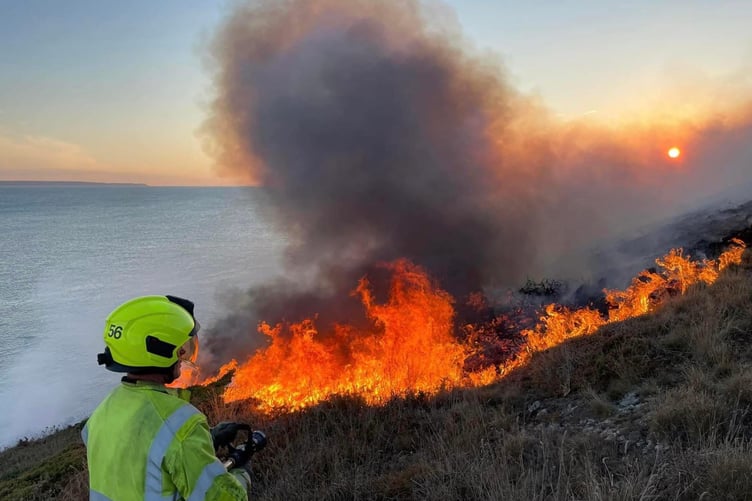
The NFU is demanding a National Wildfire Strategy for England and Wales as growing wildfire risks threaten to destroy crops, kill livestock and devastate farming livelihoods.
The union has warned that farming businesses remain vulnerable to increasingly dangerous fire conditions, calling for urgent government action to protect agricultural land and rural communities.
The calls were made at the government's first wildfire summit in Liverpool on Friday (23 October), attended by Prime Minister Andy Burnham.
The NFU was the only farming representative at the summit, where ministers, emergency services and other organisations discussed improving the country's response to wildfires.
NFU Livestock Board Chair Clare Wise warned that uncontrolled fires could have devastating consequences for agricultural businesses.
“Wildfires pose enormous risks to crops and livestock, threatening years of time and investment, as well as livelihoods,” she said.
The warning follows another summer of prolonged hot and dry weather, which left large areas of countryside vulnerable to fires.
The scale of the threat is becoming increasingly apparent, with nearly 48,000 hectares burned across the UK in 2025, seven times the annual average recorded between 2006 and 2024, according to the NFU.
Farmers have played a crucial role in tackling wildfires, often using agricultural machinery, local knowledge and equipment to assist emergency services.
The union wants their contribution formally recognised in national emergency planning, alongside stronger cooperation between government departments, fire services and land managers.
Its proposed National Wildfire Strategy would establish a coordinated approach to prevention, preparedness, emergency response and recovery.
The calls come amid concerns over Britain's preparedness for major wildfires, with growing pressure for a more joined-up national response.
The NFU is also pressing for greater investment in specialist firefighting training, equipment and resources, particularly in areas considered most at risk.
Ms Wise said the summit provided an important opportunity to ensure ministers understood the challenges facing farming businesses.
“This summit gave the NFU another important opportunity to ensure the concerns of farming businesses are heard,” she said.
“This is particularly important given the vital role farmers and land managers often play when wildfires break out, acting as first responders and using their local knowledge and equipment to support emergency services.”
Alongside improved emergency planning, the union wants government policies to support active vegetation management to reduce the risk of fires spreading across farmland and surrounding countryside.
Measures would include grazing, prescribed burning, vegetation cutting and infrastructure maintenance to reduce the amount of combustible material.
The NFU is also calling for better wildfire monitoring, including satellite technology, consistent incident reporting and improved information to identify vulnerable areas.
Greater public awareness is another priority, with calls for clearer countryside guidance and campaigns encouraging responsible barbecue use.
The union also wants stronger action against deliberate fires on farms, including improved reporting, investigations and cooperation between police, emergency services and rural communities.
With changing climatic conditions increasing the risks facing agriculture, the NFU warned that coordinated action would be essential to protecting farmland and farming livelihoods.
Ms Wise added: “As the impacts of our changing climate become increasingly clear, it is vital that actions are taken to protect farmland and rural communities.”